Scottish Outdoor Education Centres

Activities

On Site Activities...

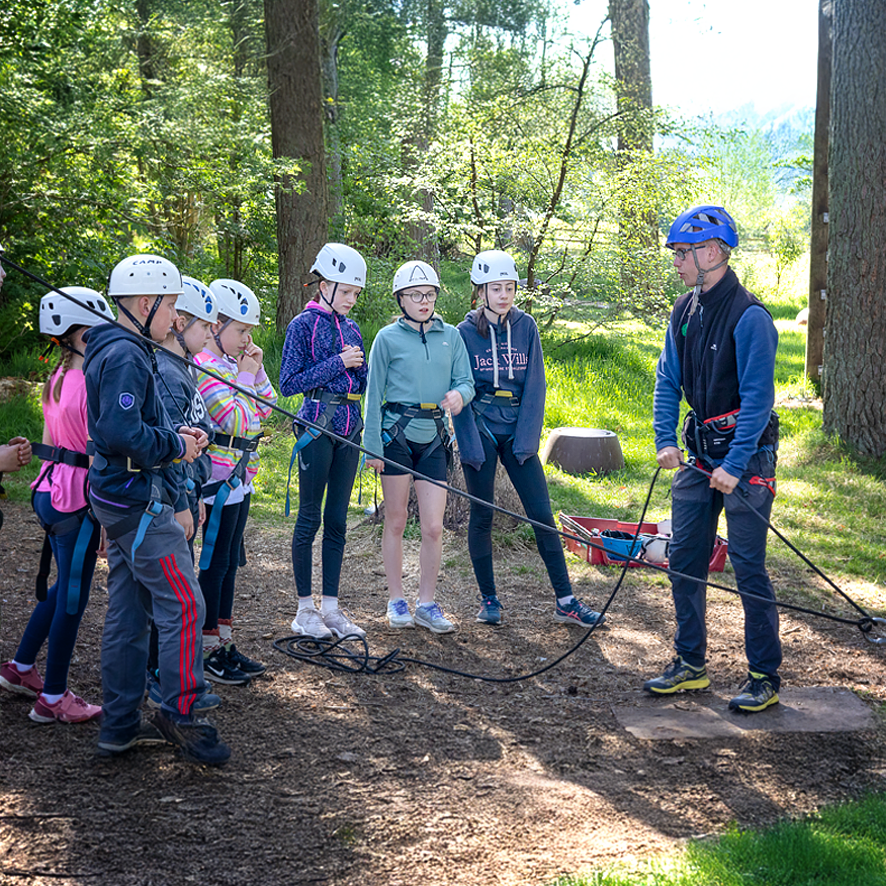
The number of activities you experience will depend on the length of your stay, but any of these can be part of your programme — we work with group leaders in advance to shape a balanced mix that delivers the planned outcomes. A full day on site typically includes three activities, run at a ratio of one tutor to twelve participants or fewer.

Archery

Archery

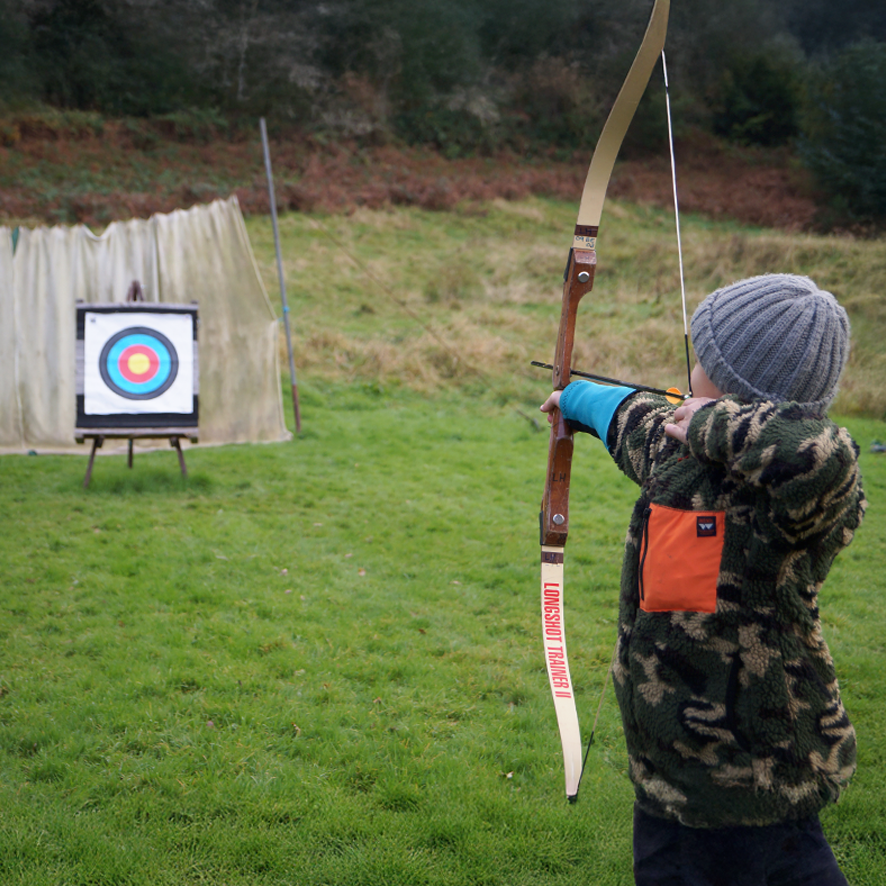
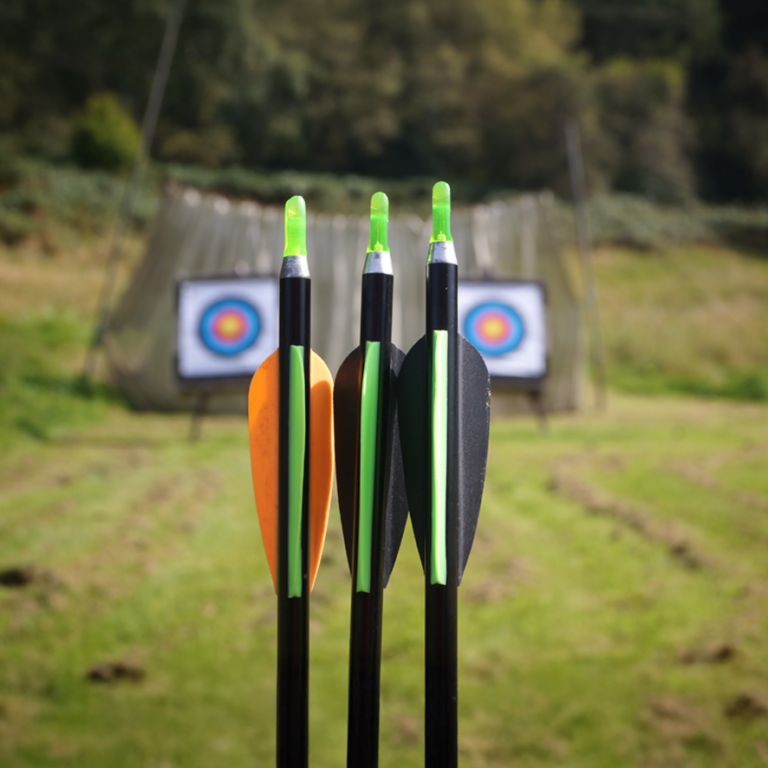
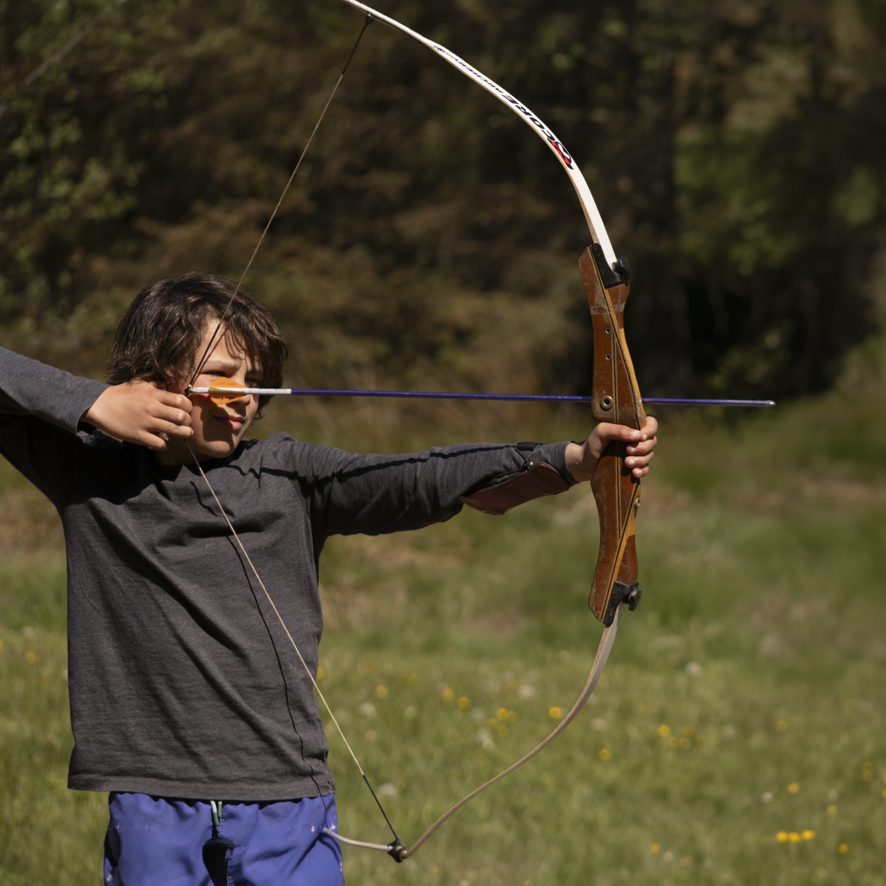
Archery looks simple: pick up the bow, nock an arrow, draw, aim, let go - boom! Then you try it yourself and discover there's a lot more to it — stance, grip, draw, aim and release all have to come together to make the perfect shot. For most beginners the first arrow will go nowhere near the target. That's normal. But while many skills take months of practice to show real improvement, in archery in one session you can make some small adjustments and see big improvements almost immediately. Most beginners go from missing everything to landing solid hits by the end of a single session — a rare, visible kind of progress on something that felt properly hard just a short while before. Guided step by step by a tutor, it's as much a lesson in patience and self-correction as anything else, and there's a real, physical thrill in feeling your own draw steady and your release smooth out, shot by shot.
SELF ■■■■■ OTHERS ■■□□□ ENVIRONMENT ■□□□□
Self: Archery is more about self-control than natural talent — a tense grip, a held breath or a rushed release can throw the shot off just as much as poor technique, so progress depends on genuine bodily self-awareness and the tenacity to keep adjusting after every miss. Others: Groups quickly settle into encouraging each other's shots rather than competing, since everyone's working on their own technique rather than against anyone else's score. Environment: Held outdoors on a real range, it's a calm, quietly focused way to spend time outside — the opposite of a rushed, high-adrenaline activity, and valuable for exactly that reason.

My first five missed completely and I nearly gave up — then my sixth one hit, and after that I couldn't stop — Aaron, age 11

"It's the calmest I've ever seen my most easily-distracted pupil — and the proudest, once he started hitting the target." — Class teacher, P6 group

BELMONT ✓ BROOMLEE ✓ DOUNANS ✓

Bush Craft
Bush Craft

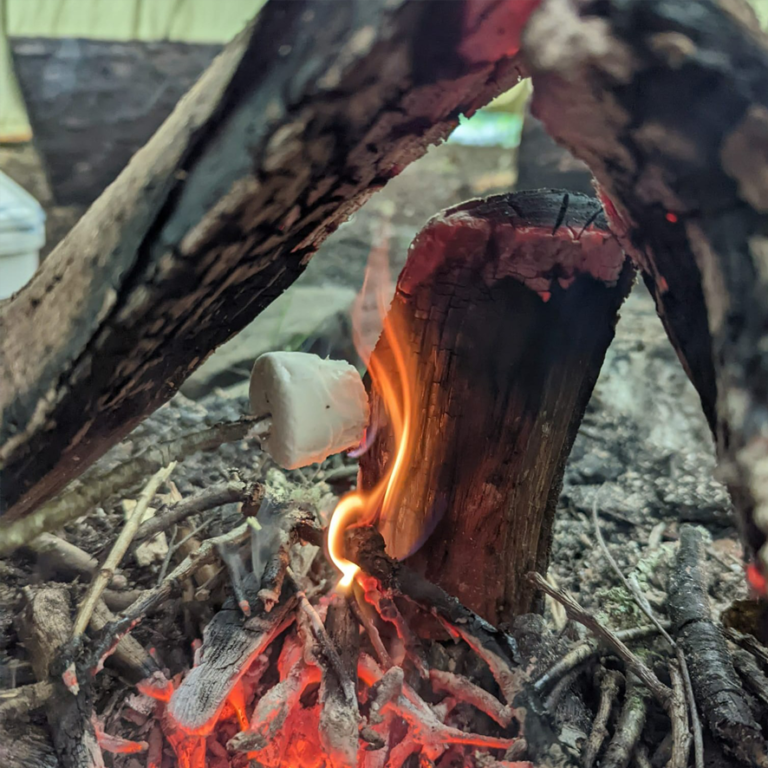
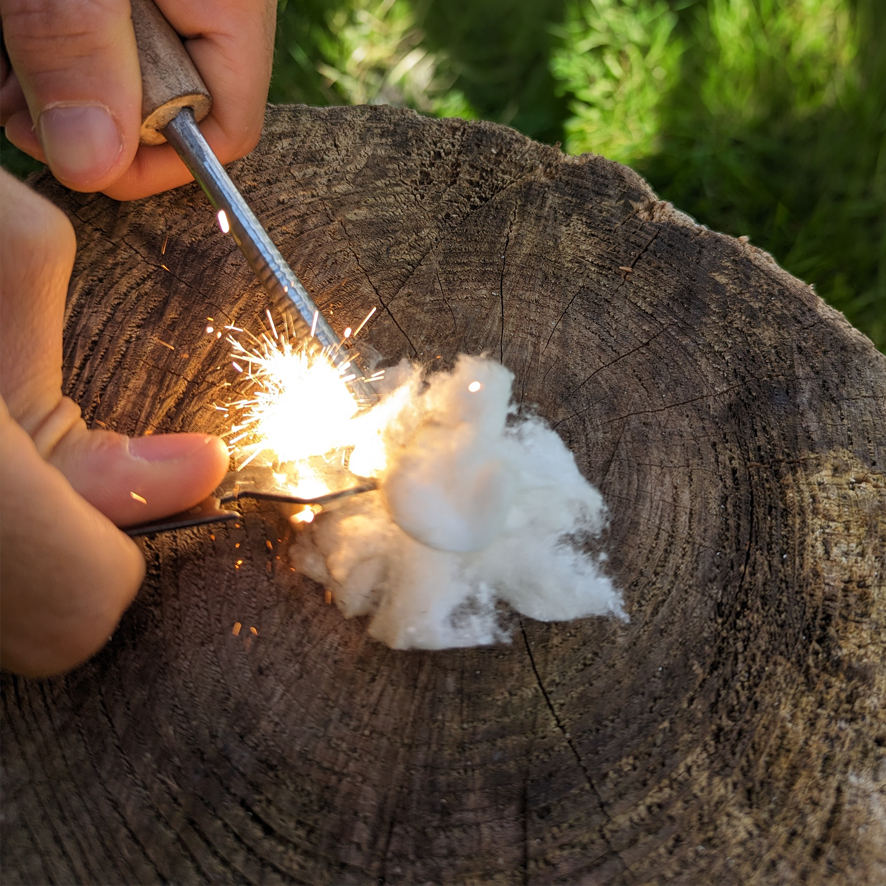
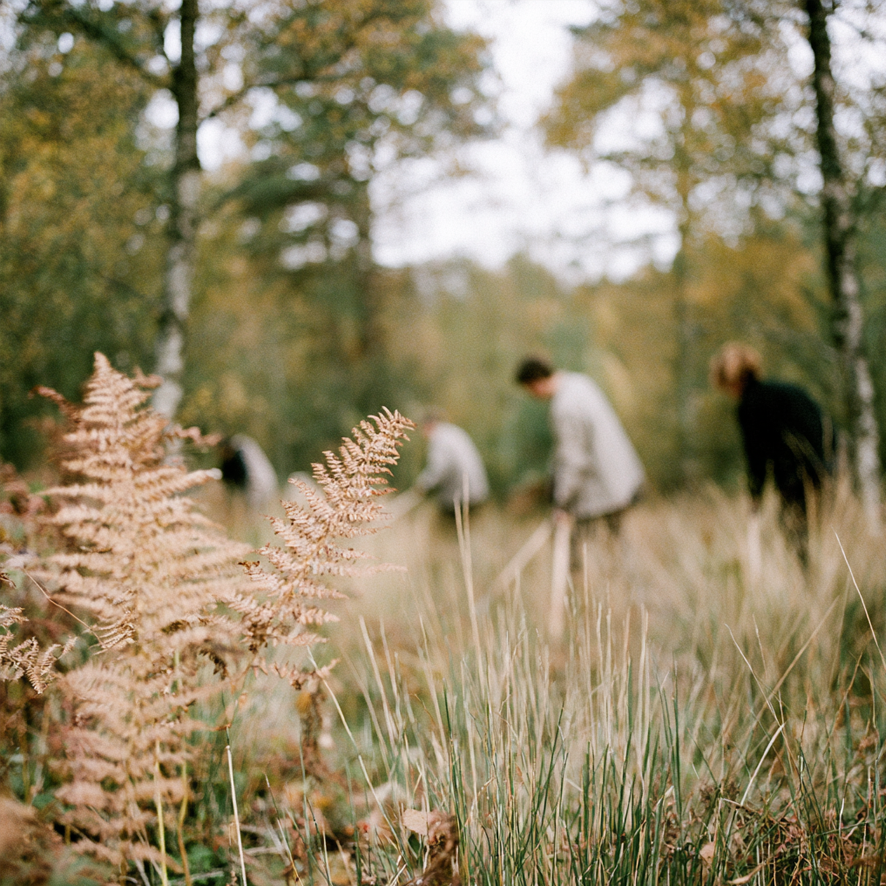
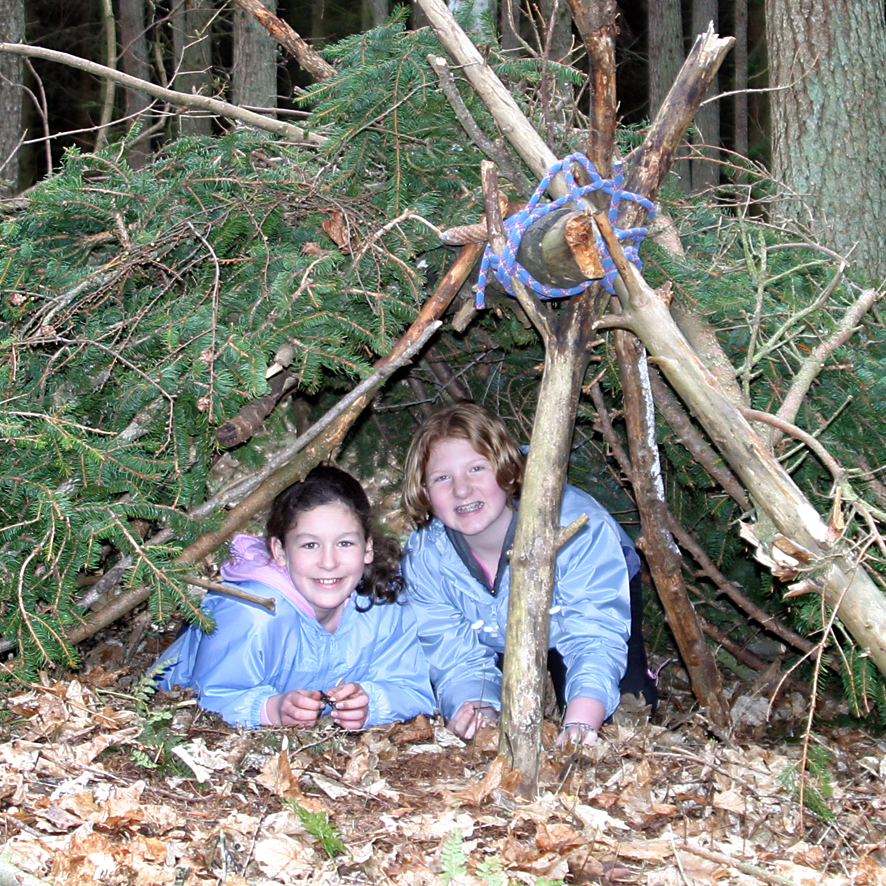
In Scotland we all have the Right to Roam — the freedom to walk, camp and explore almost anywhere in the countryside. But having the right to be out there is one thing, having the skills to actually thrive once you are is another. That's what bushcraft is really about, and it covers a broad set of skills — shelter building, fire lighting, foraging, and more — a typical session will most often focus on introducing one or two skills: you might build a shelter from branches and bracken, or light a fire by striking a spark from a ferrocerium rod until it finally catches; you might use that fire to toast a marshmallow or boil a pot of nettle tea foraged nearby. The first attempt rarely goes smoothly — sparks that won't catch, shelters that sag — and that's part of the point: bushcraft rewards patient, honest effort.
SELF ■■■□□ OTHERS ■■■■□ ENVIRONMENT ■■■■■
Self: There's real pride in lighting a fire or building something with your own hands that actually works. Others: Shelters and fires get built faster, and better, as a team than alone, so groups naturally start pulling together. Environment: Working with natural materials builds a hands-on respect for what the woodland actually provides.

We built our own shelter and it actually kept us almost totally dry — I couldn't believe it." — Young person, age 11

They came back covered in mud and prouder of getting that fire alight than anything they'd done all term." — Parent

BELMONT ✓ BROOMLEE ✓ DOUNANS ✓

Cat Walk
Cat Walk

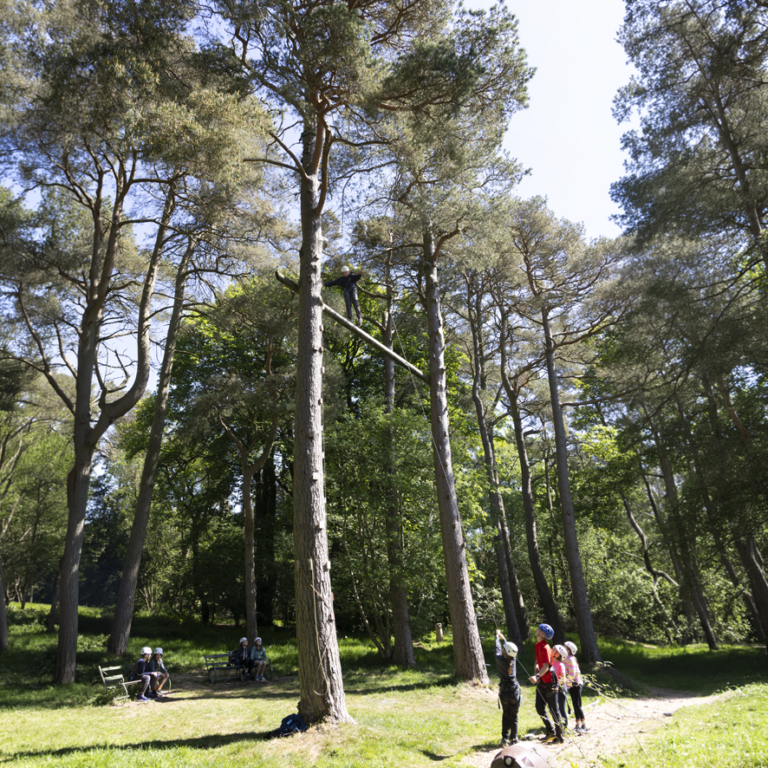
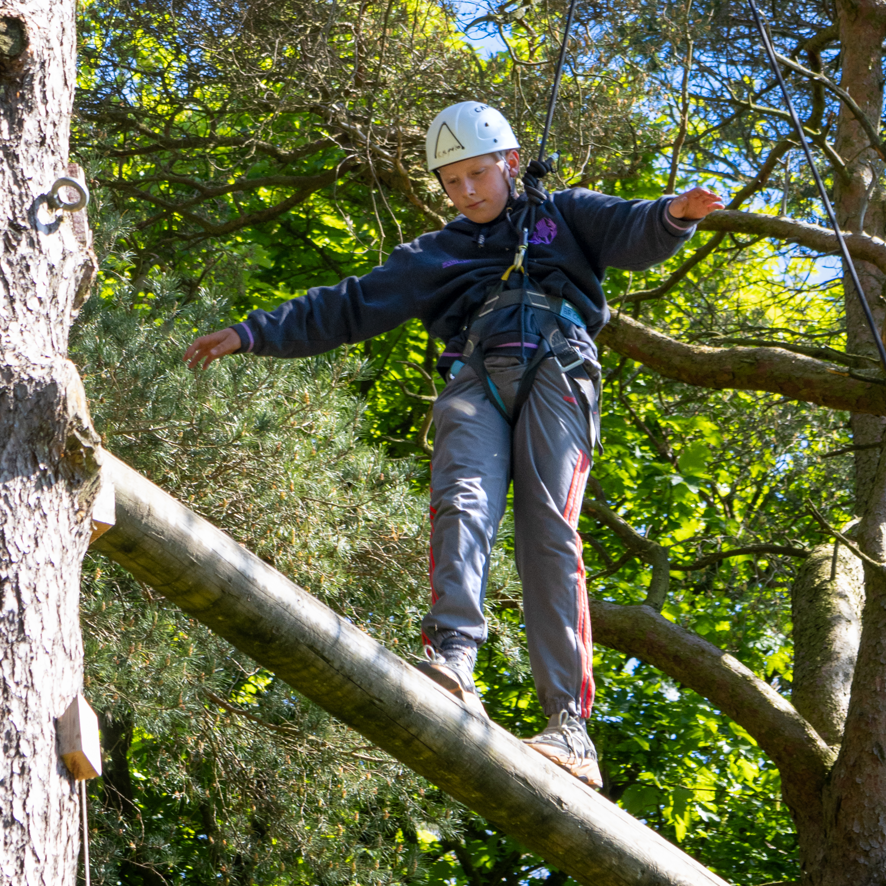
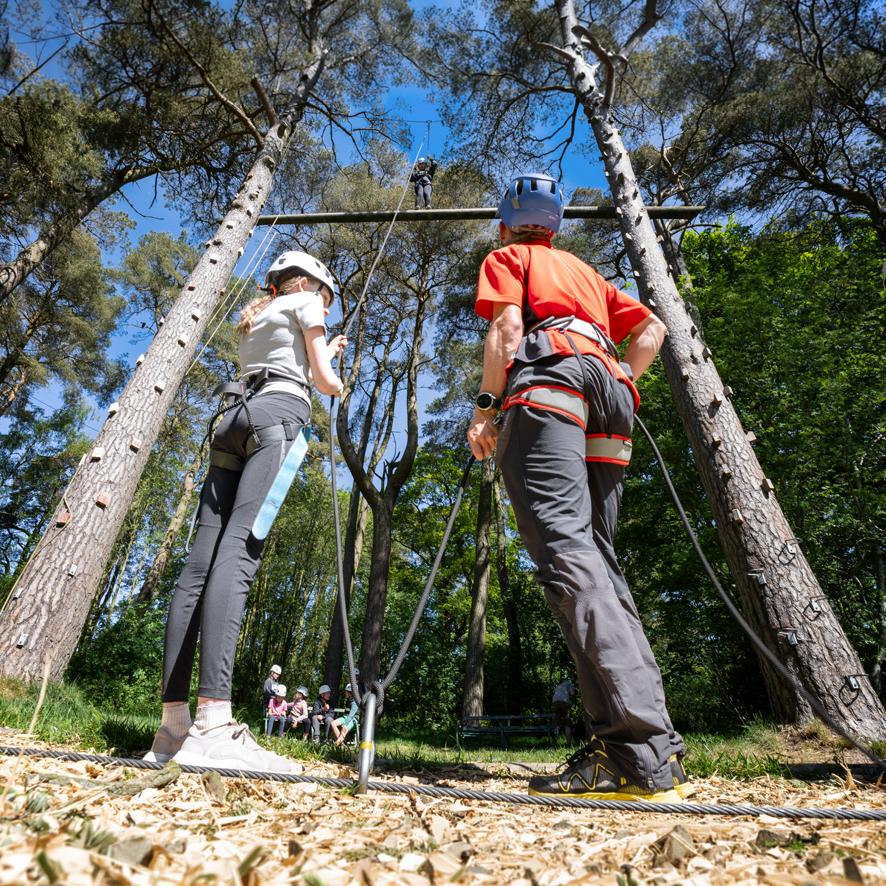
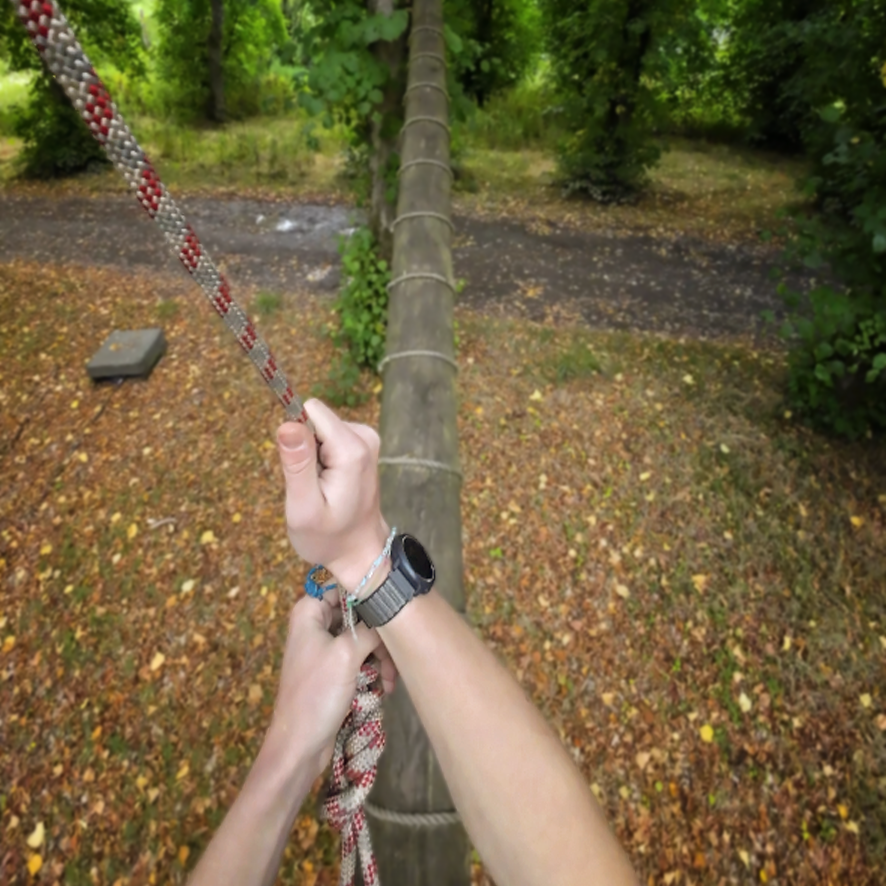
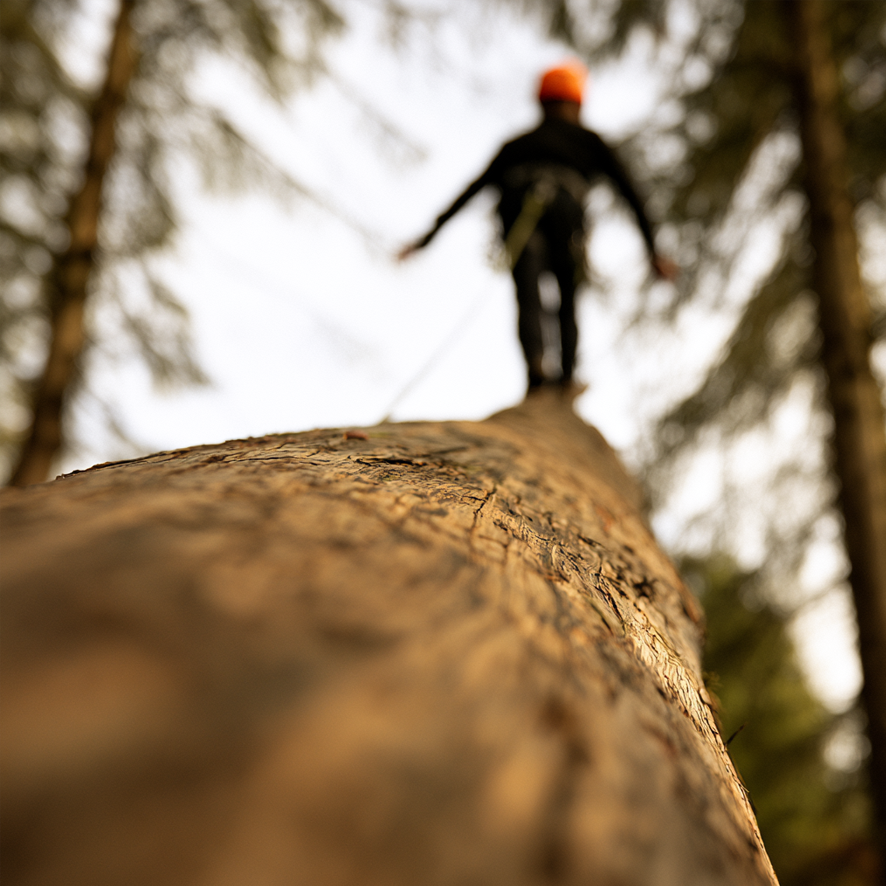
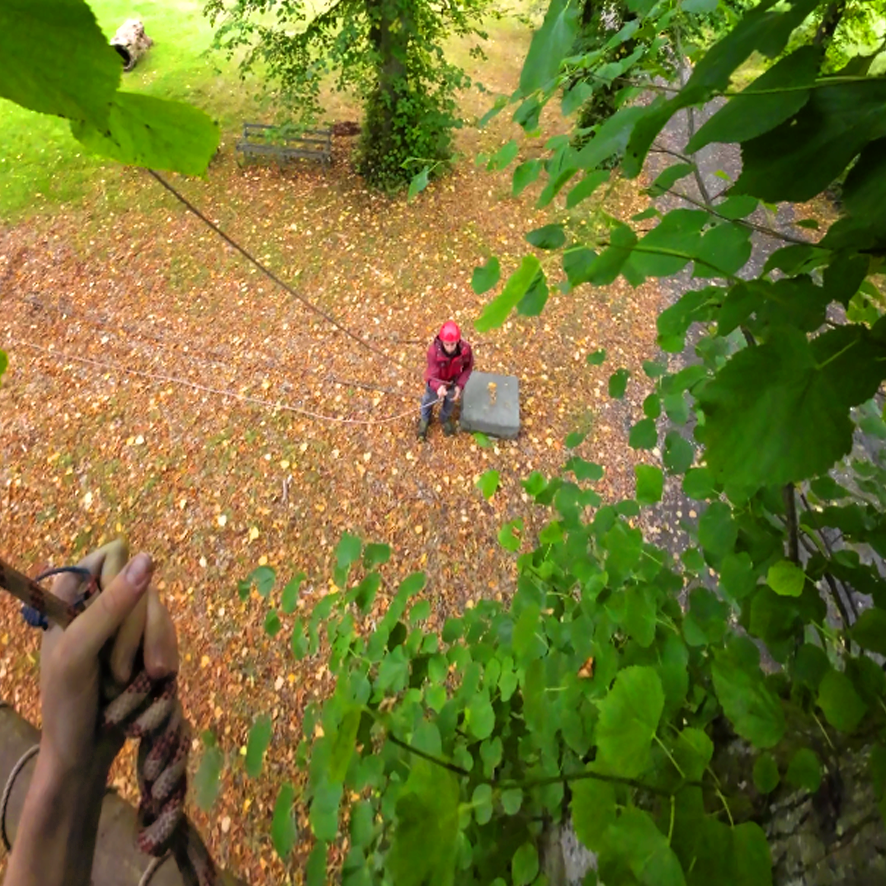
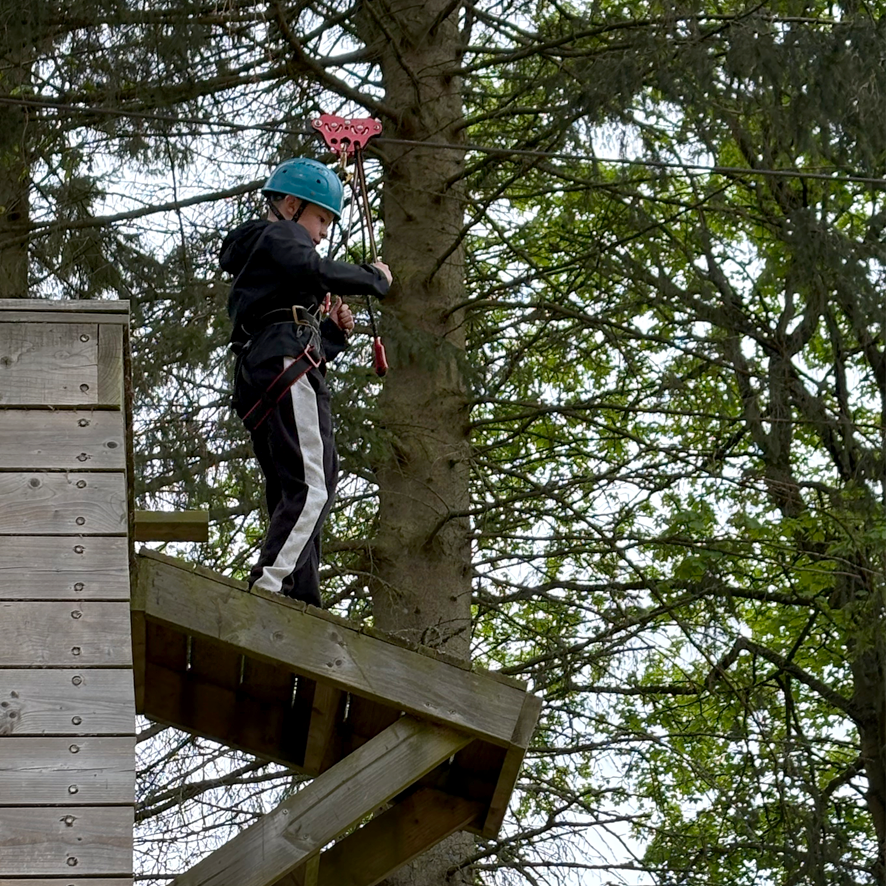
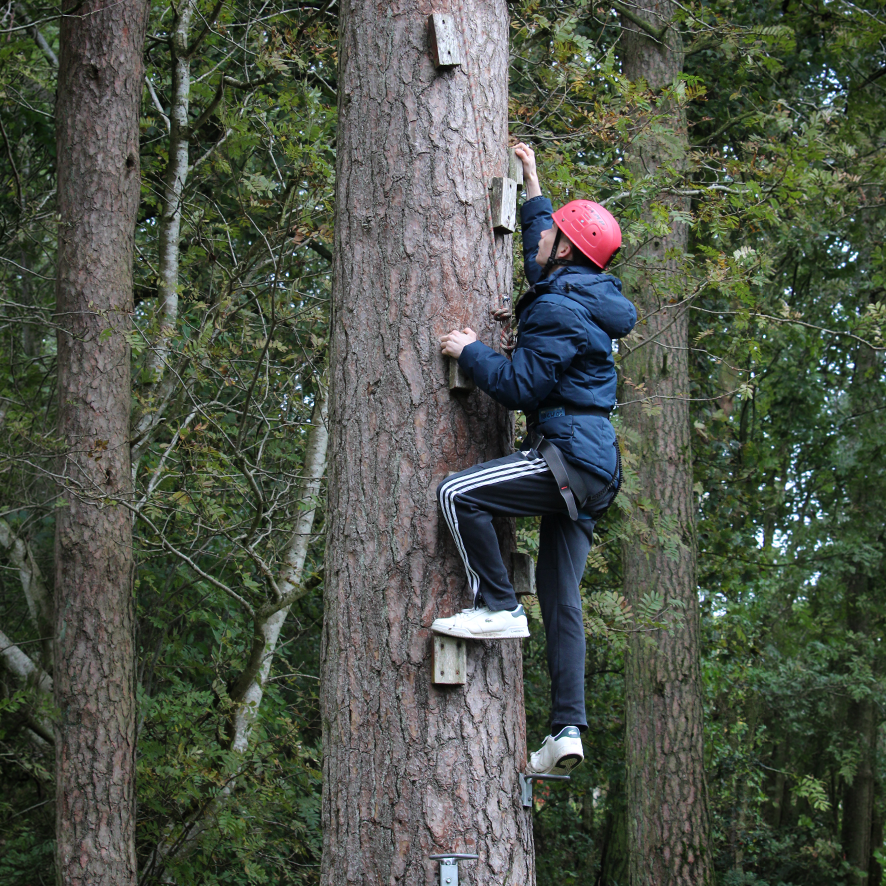
Cat Walk begins with a climb up the right-hand tree, fully harnessed and belayed throughout — but at the top, instead of ringing a bell, you step out onto the Cat Walk itself: a narrow log suspended high between two trees. From there, you walk all the way across to the far tree, and if you feel like it, give it a hug. Then head back toward the middle, and see what else you can do up there — a few dance moves, a yoga pose, whatever your balance and nerve will allow — before being lowered back down on the rope. It's less a single test of nerve than an evolving one in which each person finds their own level that they feel able to push themselves to.
SELF ■■■■■ OTHERS ■■■□□ ENVIRONMENT ■□□□□
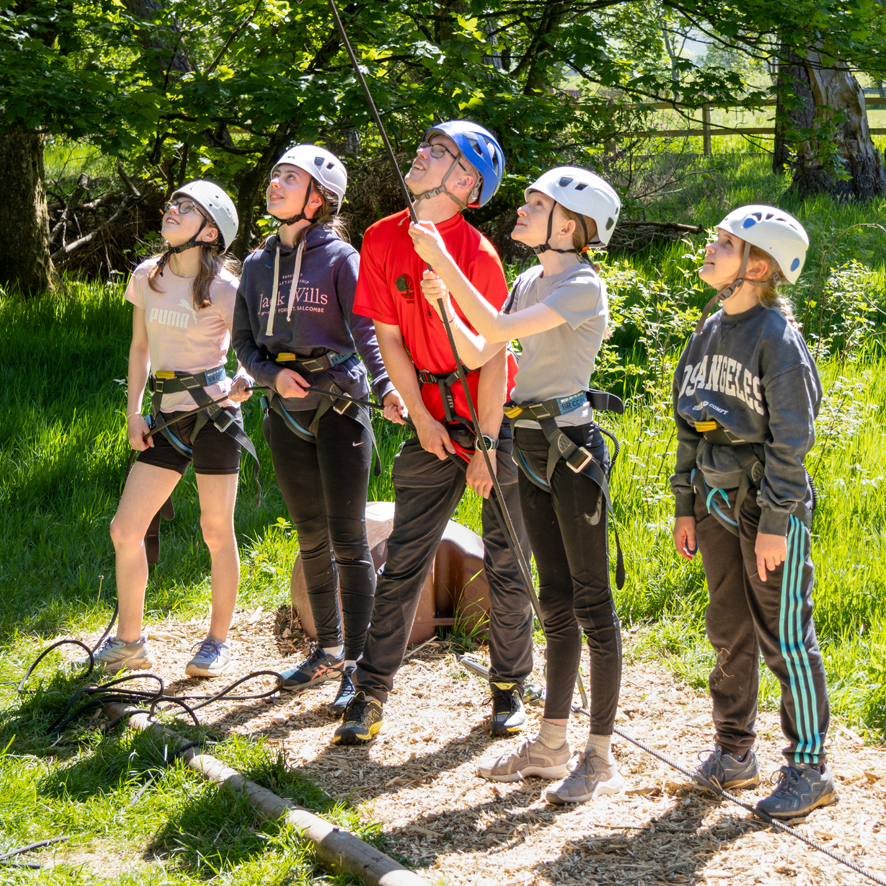
Self: Staying calm and physically steady, high in the trees, is the whole game — and because the challenge doesn't stop at "get across," there's always a next, self-chosen edge to test. Others: The group below manages the safe handling of the ropes and finds the most helpful way of encouraging each climber, and it makes a genuinely measurable difference to how far people are willing to go. Environment: Held high in the trees, it gives a genuinely different, elevated view of the woodland below — a perspective you only get by being properly up in the canopy.

My legs were shaking the whole way across, but I didn't stop." — Isla, age 12

I watched her freeze halfway across, but then she took a deep breath, and somehow kept going — I am so proud of her." — Parent

BELMONT ✓ BROOMLEE ✓ DOUNANS ✓

Crate Climb

Crate Climb

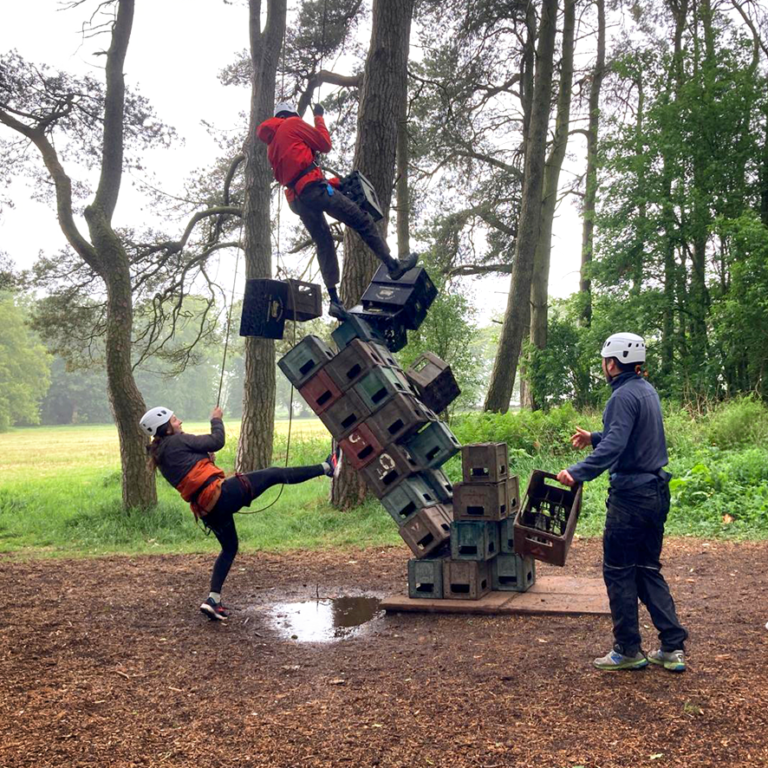
One person climbs, while the rest of the group divides into a few managing the belay and the rest who will build a tower of crates which is what the climber is actually climbing. There is a limited supply of crates of different shapes and sizes, so the task of creating a tower as high and as stable as possible is a genuine design problem. It's noisy, a little chaotic, and one of the best full-group activities we run precisely because nobody is just standing around watching. Once the stack gets too tall to pass crates up by hand, the group can use a crane system together too. Each climb ends up being a full team achievement: how high the climber gets depends entirely on how well the group built what they're standing on.
SELF ■■■□□ OTHERS ■■■■■ ENVIRONMENT ■□□□□
The climber decides, moment by moment, how far to push it, balanced on a stack that's only as stable as the group beneath them made it. Others: Everyone else has a real, physical job — choosing which crate goes where, stacking, steadying, calling out encouragement — so success depends on the group's combined judgement as much as any one person's nerve. Environment: Held outdoors in a woodland clearing, with the whole activity taking place at ground level except for the one person balanced at the top.

I really enjoyed climbing on the crates, but the building part was just as much fun." — Jake, age 13

The whole group was in it together, not just the one on the rope; it didn't feel competitive at all because they all took pride in how high they could build the structure each time." — Youth Group Leader

BELMONT ✓ BROOMLEE ✓ DOUNANS ✓

Environment Investigation

Environment Investigation

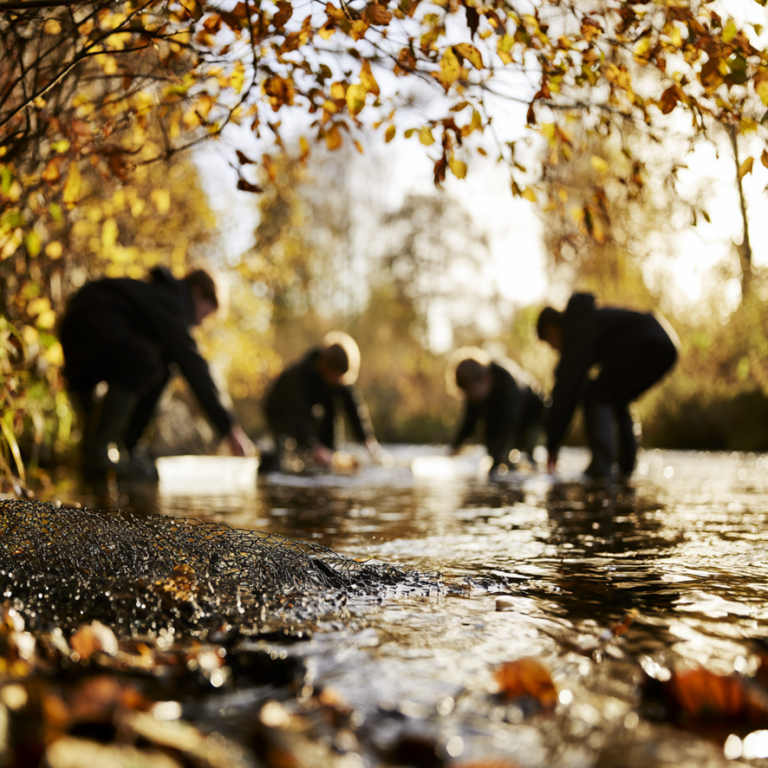
These sessions take advantage of the quieter areas of our sites and can take place in woodland, marshland, rivers or ponds. We grab some magnifying glasses, some collection pots and tray, a net and some identification materials, and we go looking for what's living in the water, the long grass, and under logs etc — minibeasts, tadpoles, and all sorts of things most people walk straight past every day.
SELF ■■□□□ OTHERS ■■■□□ ENVIRONMENT ■■■■■
Self: There's a quiet satisfaction in learning to really look and really listen, to hear or spot things nobody else had noticed. Others: Small groups work together to search, identify, and compare finds. Environment: This is the most direct, hands-on way to discover just how much life is going on right under your feet.

I can tell a robin's song from a blackbird's now and I check every time we're outside — Alice, age 9

We pulled apart an owl pellet and found actual tiny bones inside — that was the best bit of the week for some of them. — Class teacher, P4 group

BELMONT ✓ BROOMLEE ✓ DOUNANS ✓

Habitat Restoration
Habitat Restoration

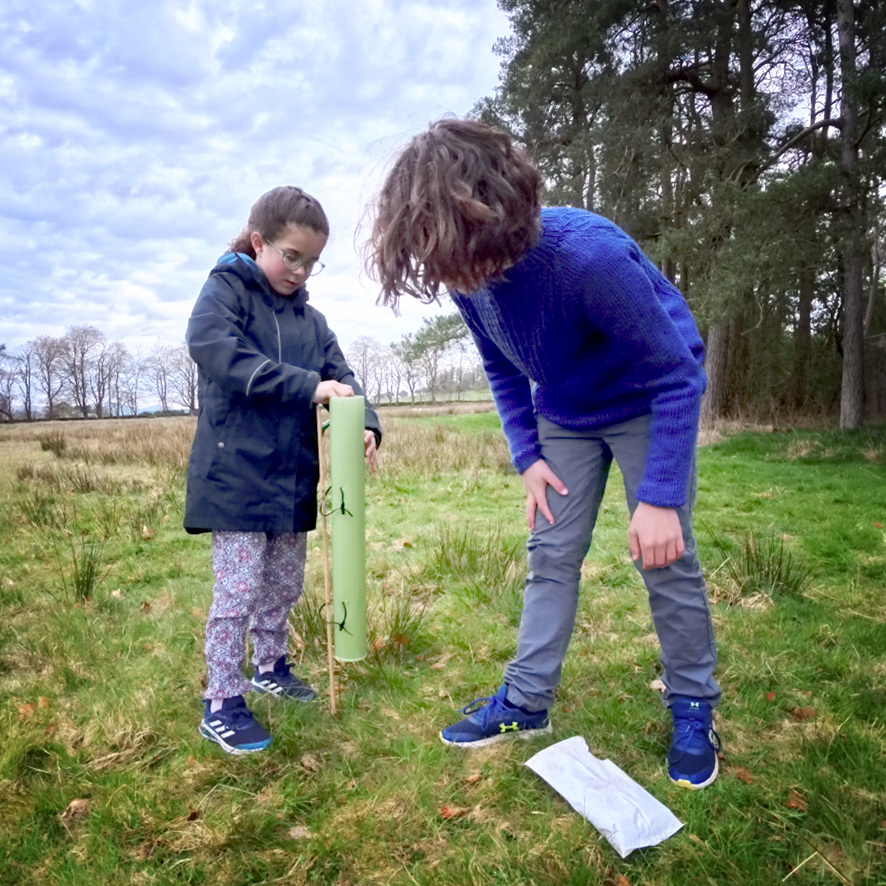
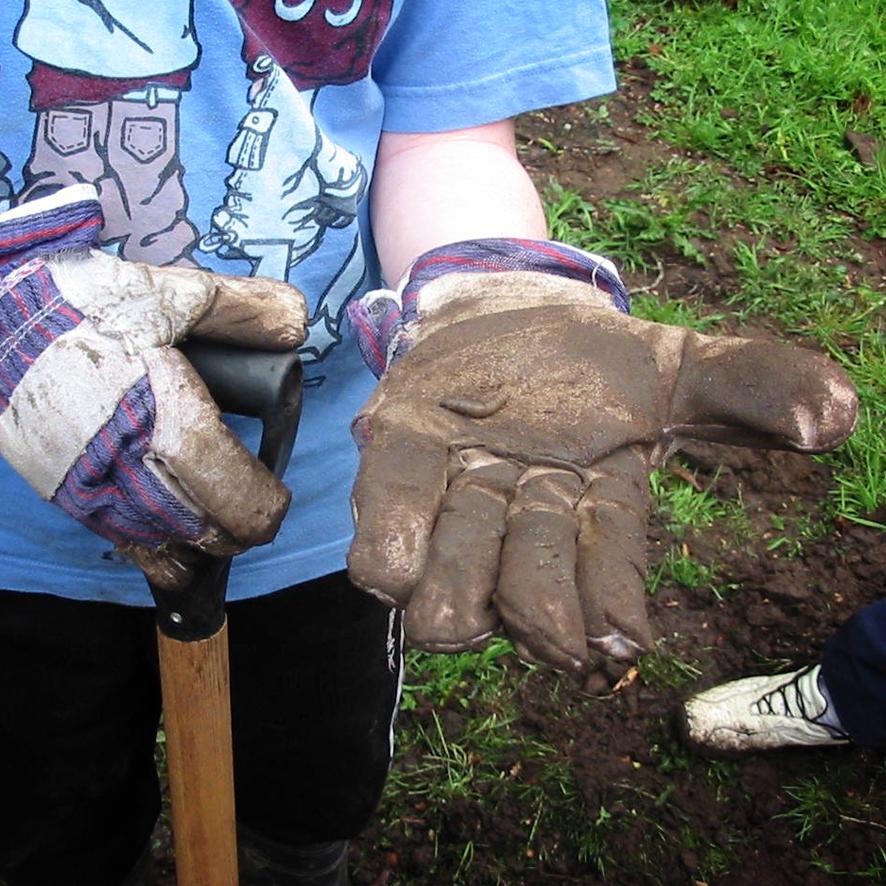
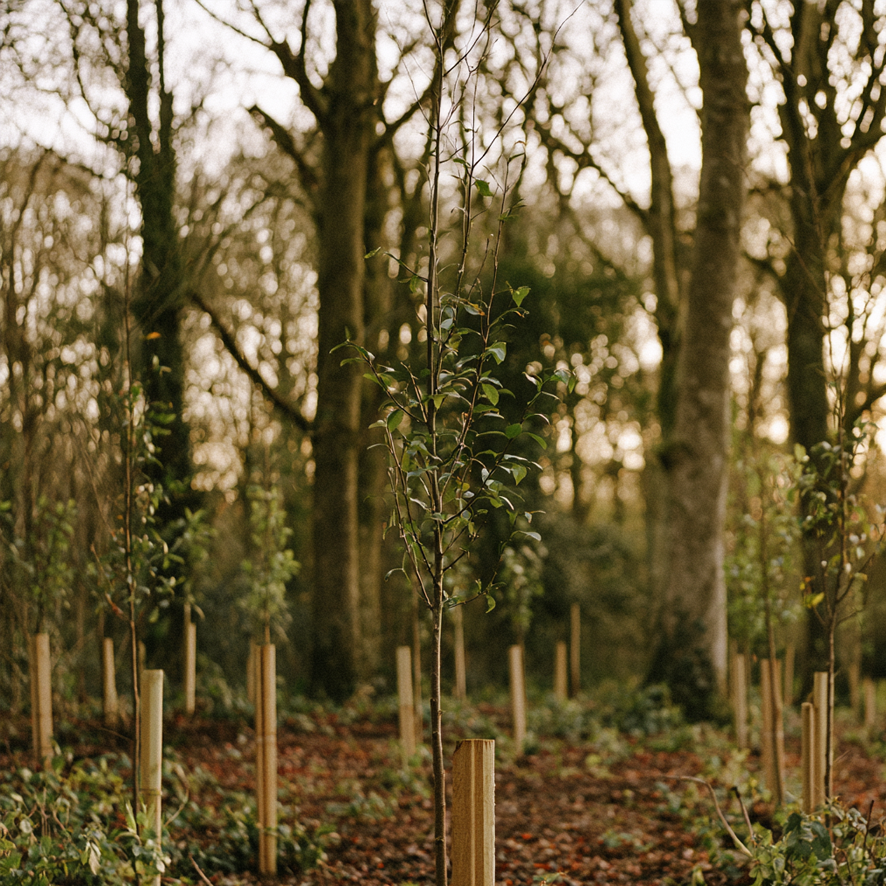
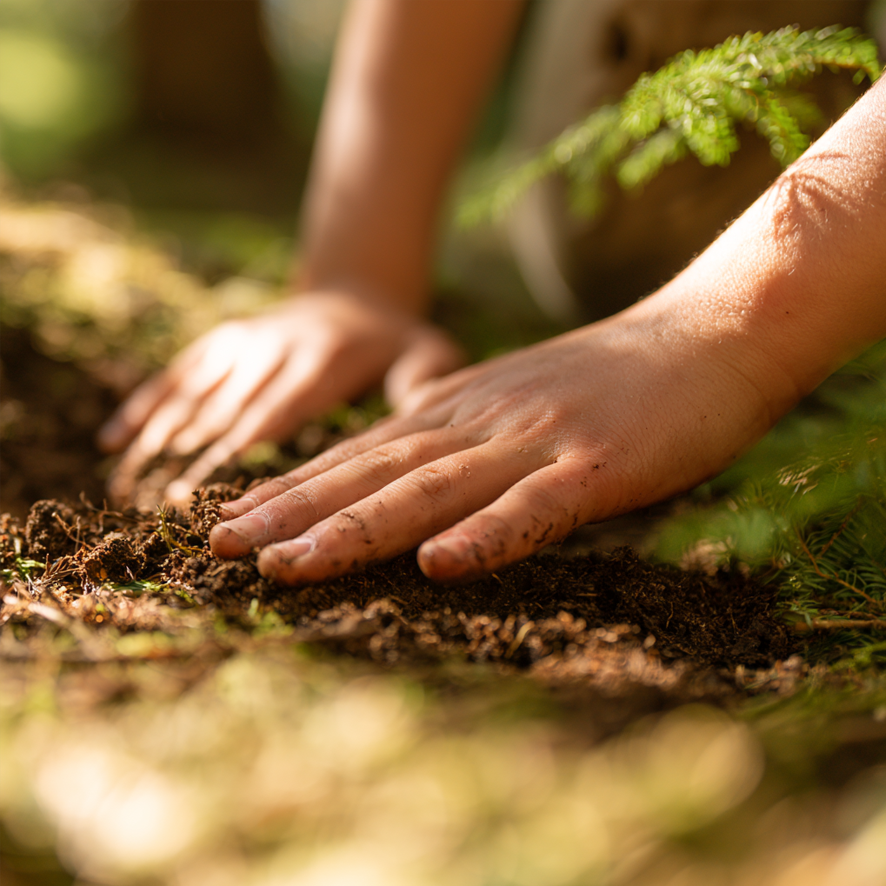
These sessions are about protecting and restoring the habitats and corridors used by wildlife (deer, foxes, stoats, red squirrels, owls, songbirds, and all sorts of other creatures) on site. We might plant trees or hedgerows, or clear invasive species — this is genuine, hands-in-the-earth conservation work.
SELF ■■□□□ OTHERS ■■■■□ ENVIRONMENT ■■■■■
Self: There's real, lasting pride in a job that visibly changes a place for the better.
Others: The results only come from the whole group working steadily together.
Environment: This is conservation in its most direct form — participants leave something behind that keeps doing good long after they've gone.

I was so happy to see that the tree I planted on the last Holiday Club is still alive, and I got to plant another one today. — Josie, age 10

Handing thirteen-year-olds proper tools and real responsibility changed how they carried themselves for the rest of the week. — Class teacher, S2 group

BELMONT ✓ BROOMLEE ✓ DOUNANS ✓

Inclined Log
Inclined Log

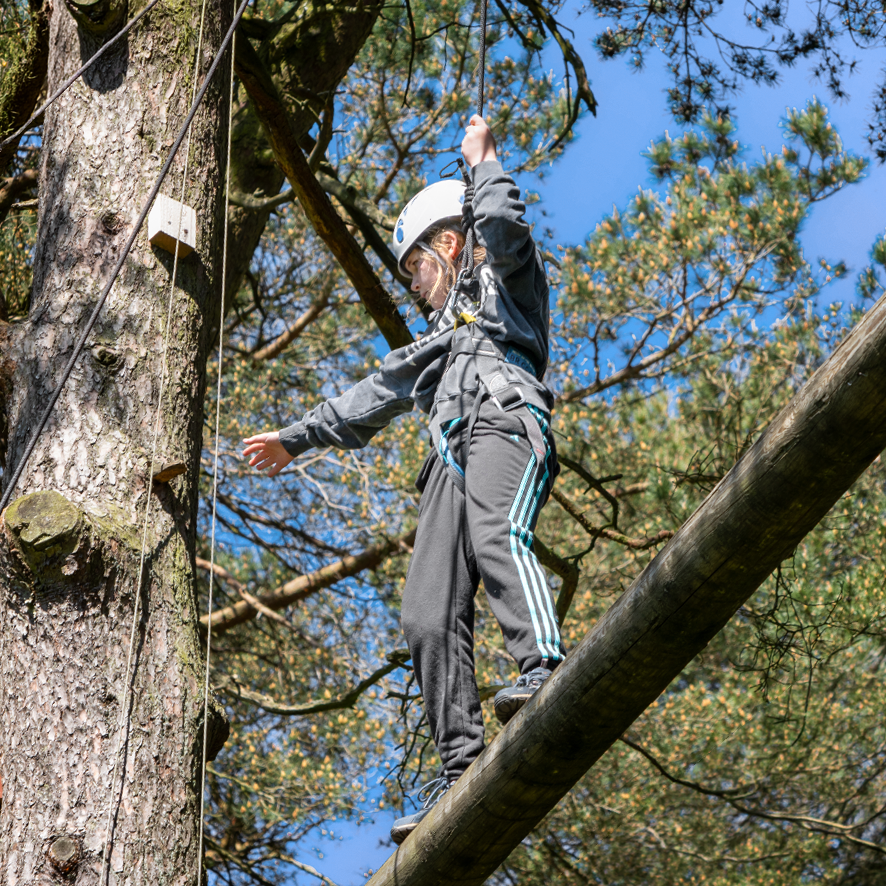
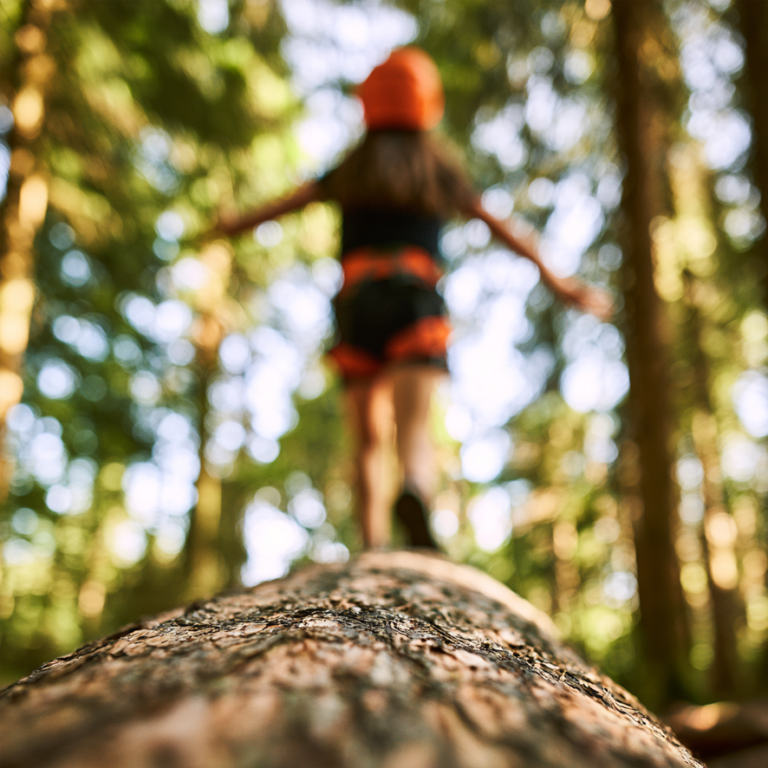
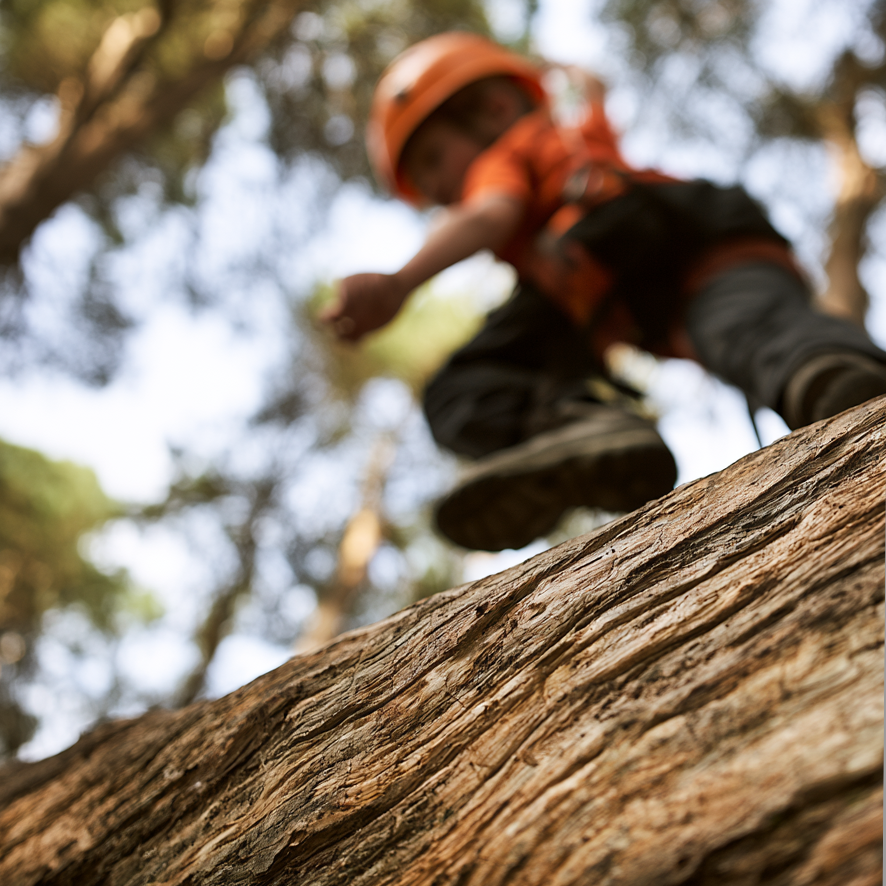
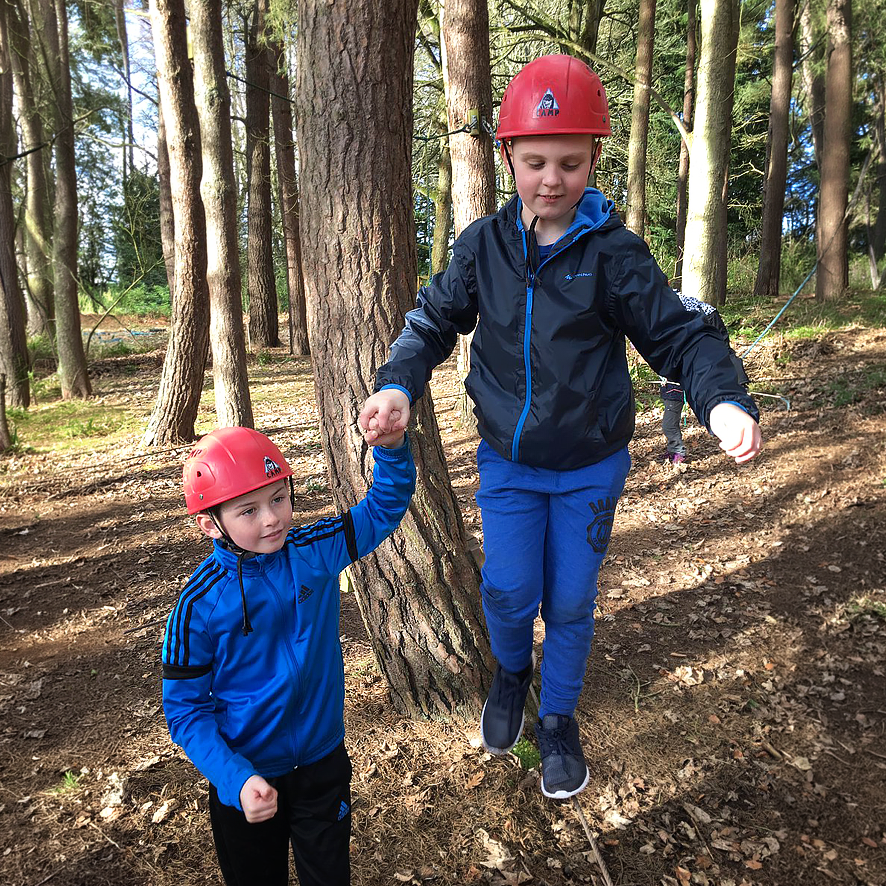
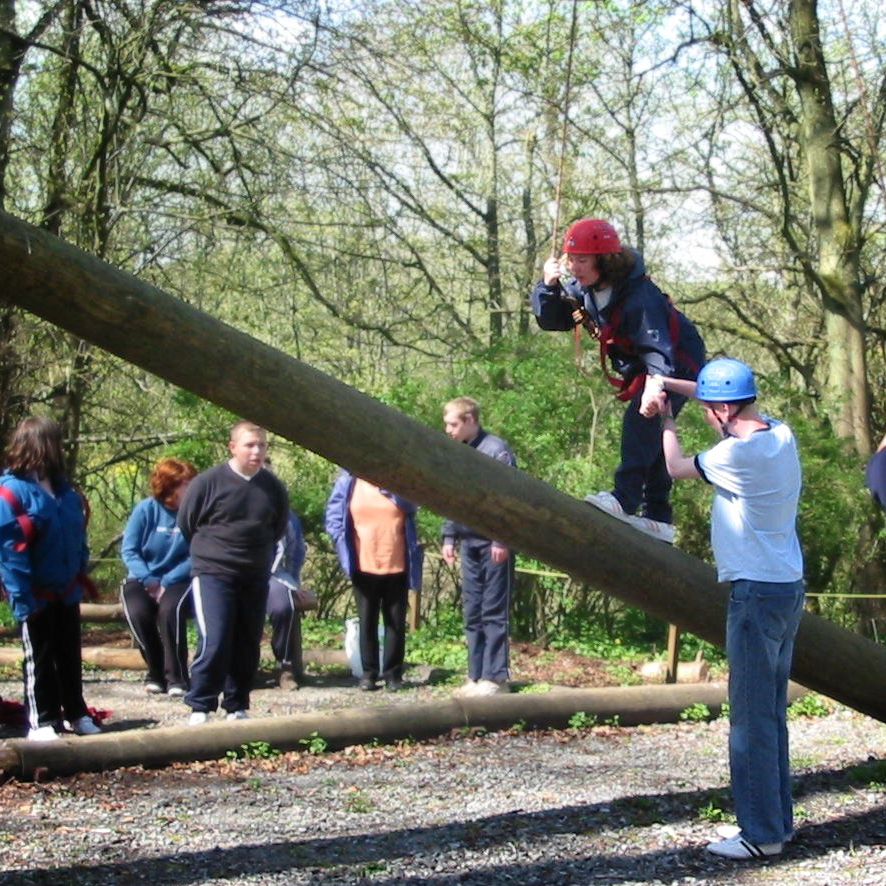
Balance your way along a log that tilts steadily upward as you go — gentle at first, then genuinely testing, until the smallest wobble near the top feels a good deal more consequential than it did at the bottom. Fully harnessed, and closely spotted by friends either side of you for the first few steps, it is a surprising test of nerve and balance in which every further step is entirely your own decision to make. Most people find the first couple of steps straightforward, but the difficulty builds steadily as you ascend. This is the one activity on our list bound by a strict age limit — designed for, and offered only to, primary-school-age participants and younger, since both the log's height and the system supporting it are calibrated specifically for smaller, lighter climbers.
SELF ■■■■■ OTHERS ■■□□□ ENVIRONMENT ■□□□□
Self: How far you go is entirely your own call, and because the log tilts at a sharp angle, you feel your own nerve tested in real time, one small step at a time.
Others: The group below spots and encourages every step, and that encouragement genuinely alters how far people are prepared to go.
Environment: Set right among the trees, this activity allows you to take in a different part of the site to the other high rope activities.

I got further than my big sister did I will never let her forget it — Poppy, age 8

"For a child who struggles with most physical activities, this was the one where she genuinely shone." — Parent

BROOMLEE ✓

Leap of Faith

Leap of Faith

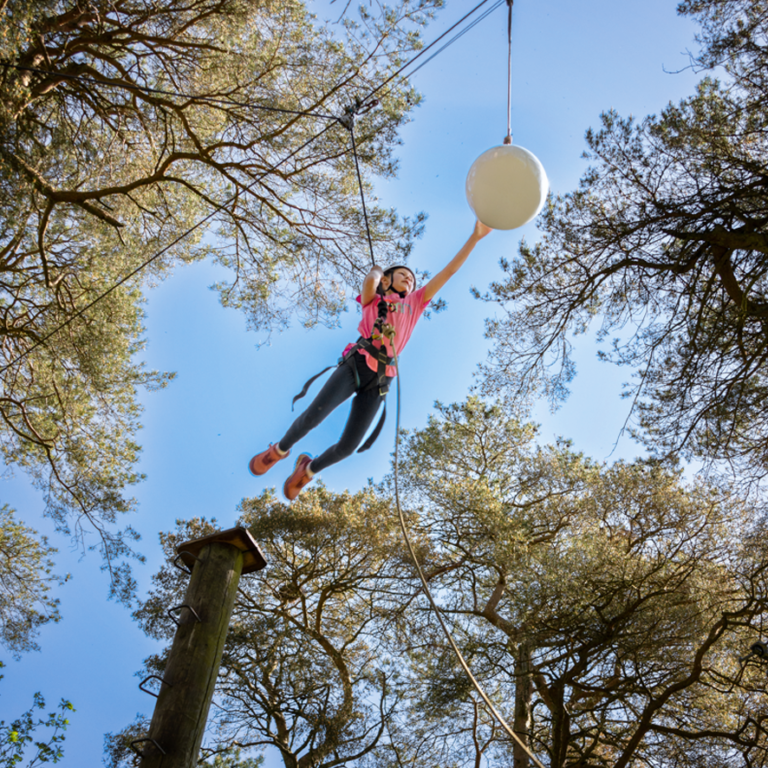
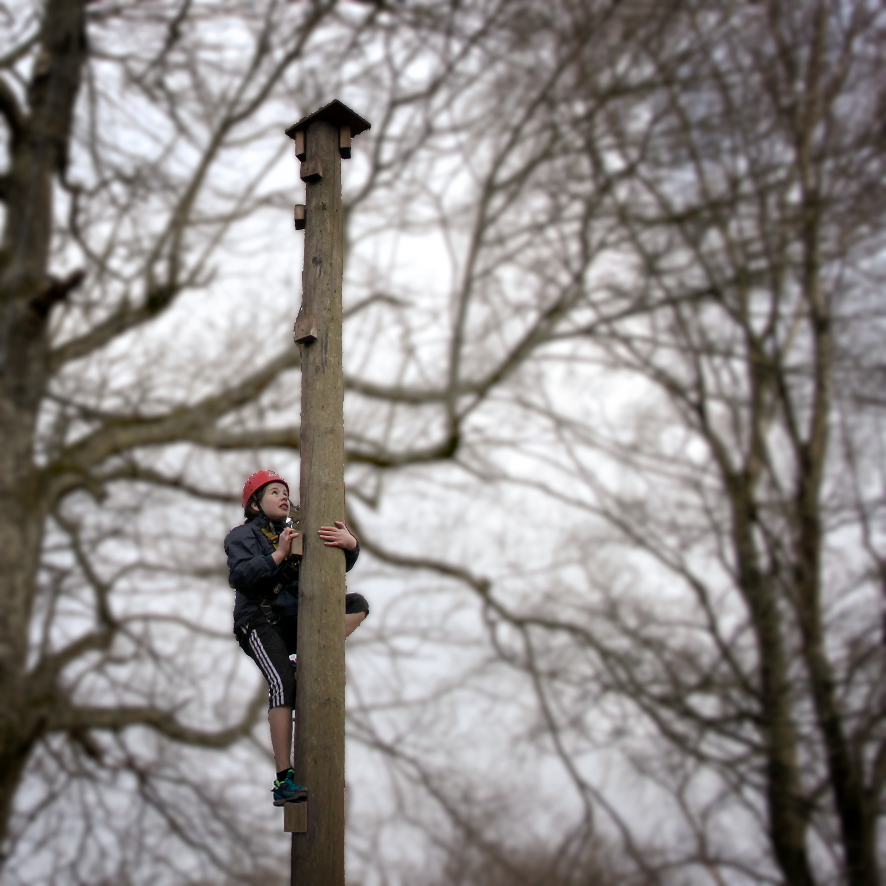
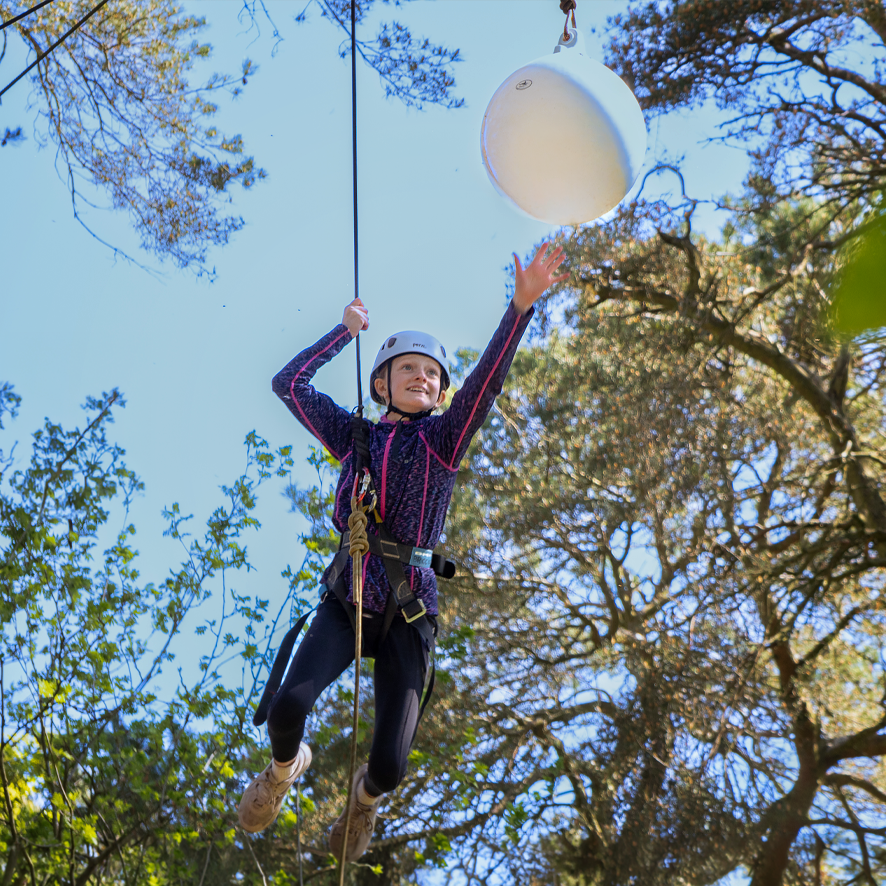
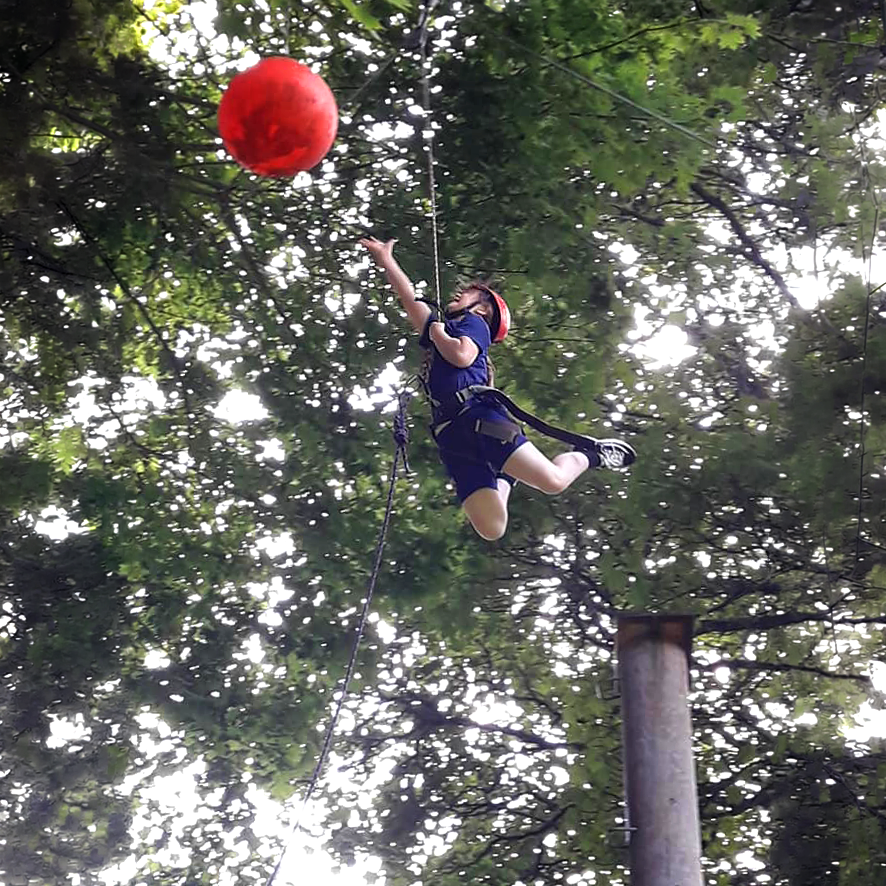
Climb a really tall pole, find your footing on the small platform at its top, and then jump — reaching out to touch a buoy that hangs in the air at your own height, some distance away. Exactly how far is a matter for the group: the distance can be set closer or further, so the challenge is never quite fixed from one climber to the next. For some, simply getting half way to the top is the whole of the challenge, and a considerable achievement in its own right. For others, the climb presents little difficulty, and it is the moment of standing on that platform, with nothing ahead but a huge drop, and choosing to leap off it - that is a real test of nerve. It is one of our most iconic activities precisely because of that moment of decision and full commitment. Whether you reach the top, make the leap, or just get a few rungs off the ground, success takes a different shape for everyone.
SELF ■■■■■ OTHERS ■■□□□ ENVIRONMENT ■□□□□
Self: The true challenge can lie in the climb itself or in the jump at the top, because the true challenge is when your body tells you it doesn't want to move any further and then it is down to your mind to choose whether to try push past it, even by a little, or whether to stop right there. Either way you are testing your limits and learning to listen to yourself and make your own decision.
Others: The whole group will be involved in encouraging one another, and if a climber decides to jump, the group will often give them a countdown followed by a huge cheer.
Environment: Standing atop the pole, even for a few seconds, offers another excellent view and gives a different perspective on the world.

I didn't touch the buoy but I still climbed the whole pole and that felt like enough — Finlay, age 11

Watching a boy who is scared of everything decide, on his own, to jump — I'll remember that for a long time. — Class teacher, S2 group

BELMONT ✓ BROOMLEE ✓ DOUNANS ✓

Low Ropes

Low Ropes

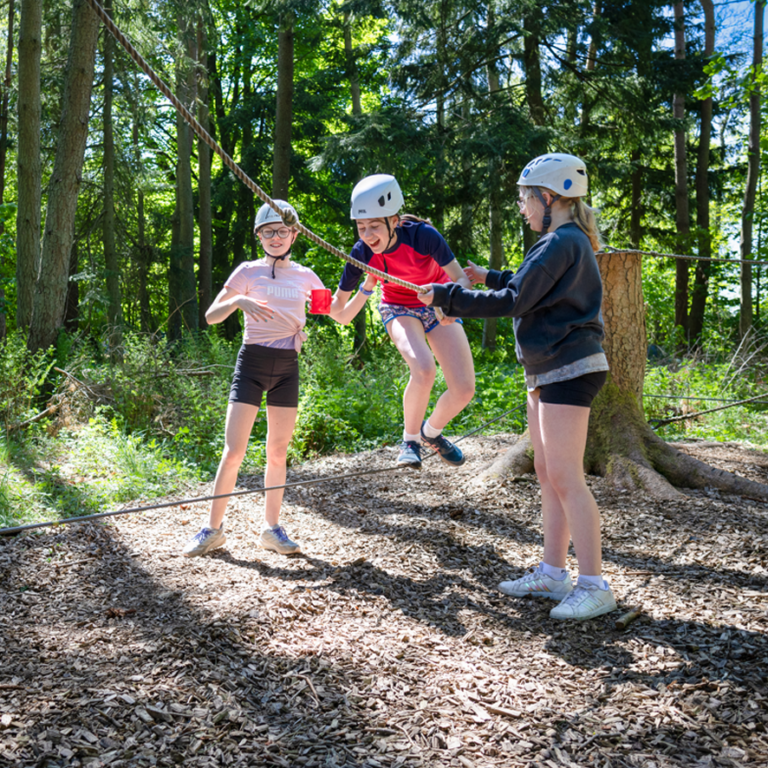
Working in threes, you make your way along a wire strung between the trees while your two companions spot either side of you — close at hand, ready to steady a stumble or soften a fall, though never simply holding you up. There is no single correct method for crossing any section; groups usually discover smarter methods with each attempt. Once every section has been crossed once, new and more demanding challenges and games are introduced.
SELF ■■□□□ OTHERS ■■■■■ ENVIRONMENT ■□□□□
Self: There is a modest but genuine test of trust here — not in a rope or harness, since there is none, but in your own balance and in the two people standing ready beside you. Others: Spotting is a discipline in itself: attentive without hovering, present without taking over, alert always to the hazards around. A strong level of trust can be built up over the session. Environment: Set at knee height among the trees, there is a different kind of interaction with the woodland than in the high ropes activities.

By the end, we were catching each other without even having to ask — Sophie, age 12
I found a way across the wobbly bit that nobody else had thought of — Toby, age 12
Being a spotter turned out to be harder than crossing — you have to watch everything at once — Lewis, age 13

"It's the first activity where I saw two kids who don't normally get on actually working as a pair." — Class teacher, P6 group
"By the third section they'd stopped needing instructions — they'd worked it out themselves." — Class teacher, P6 group
"Turns out the new challenges are harder than the whole first round put together." — Youth group leader, Dounans

BELMONT ✓ BROOMLEE ✓ DOUNANS ✓

Nightline
Nightline

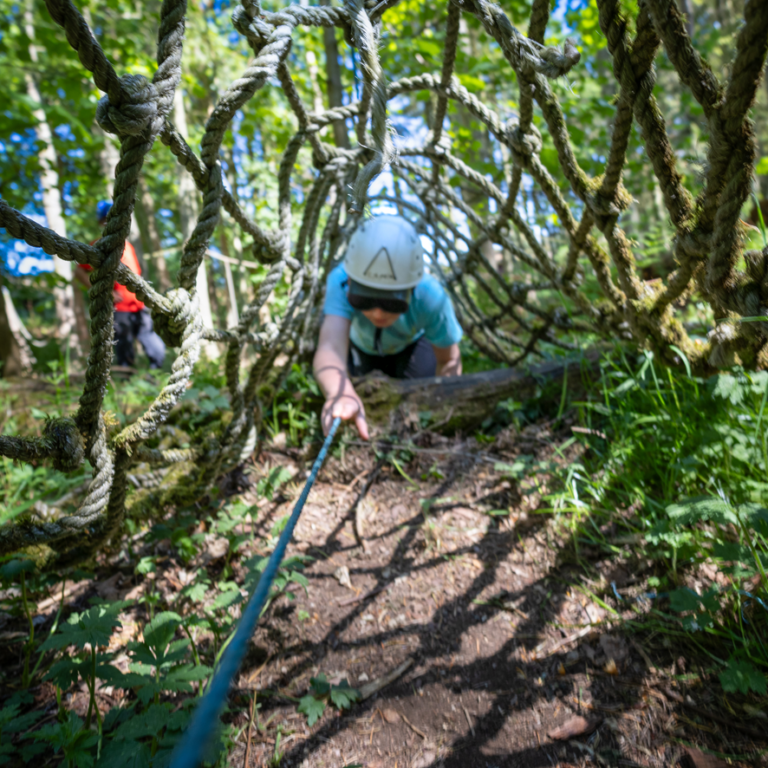
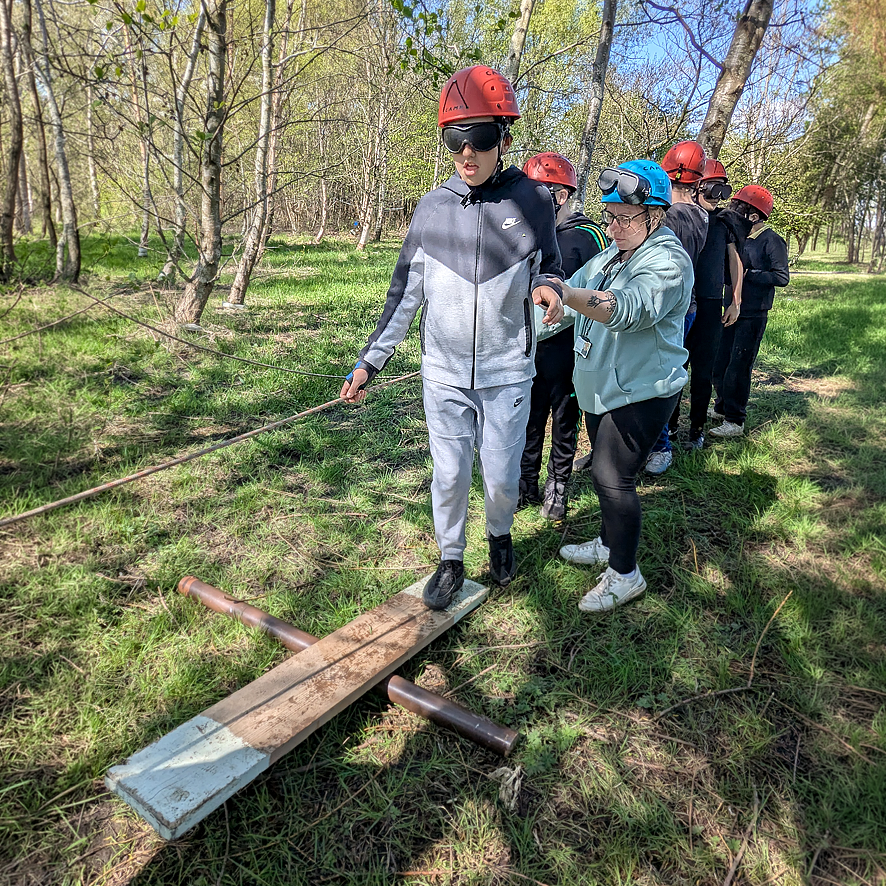
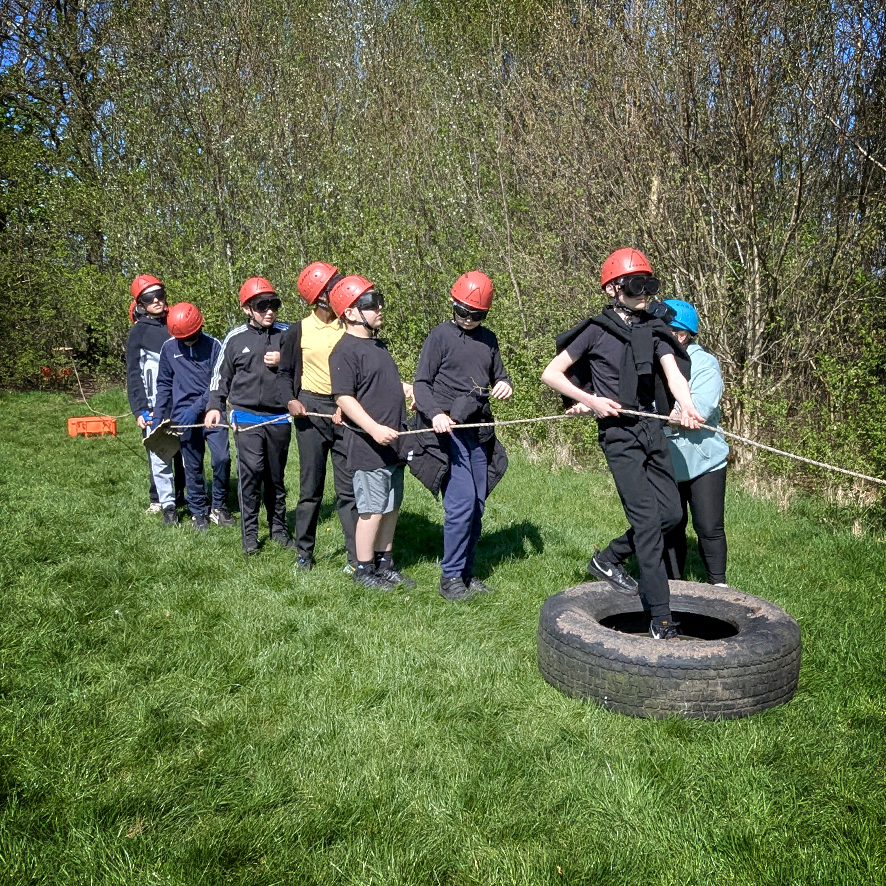
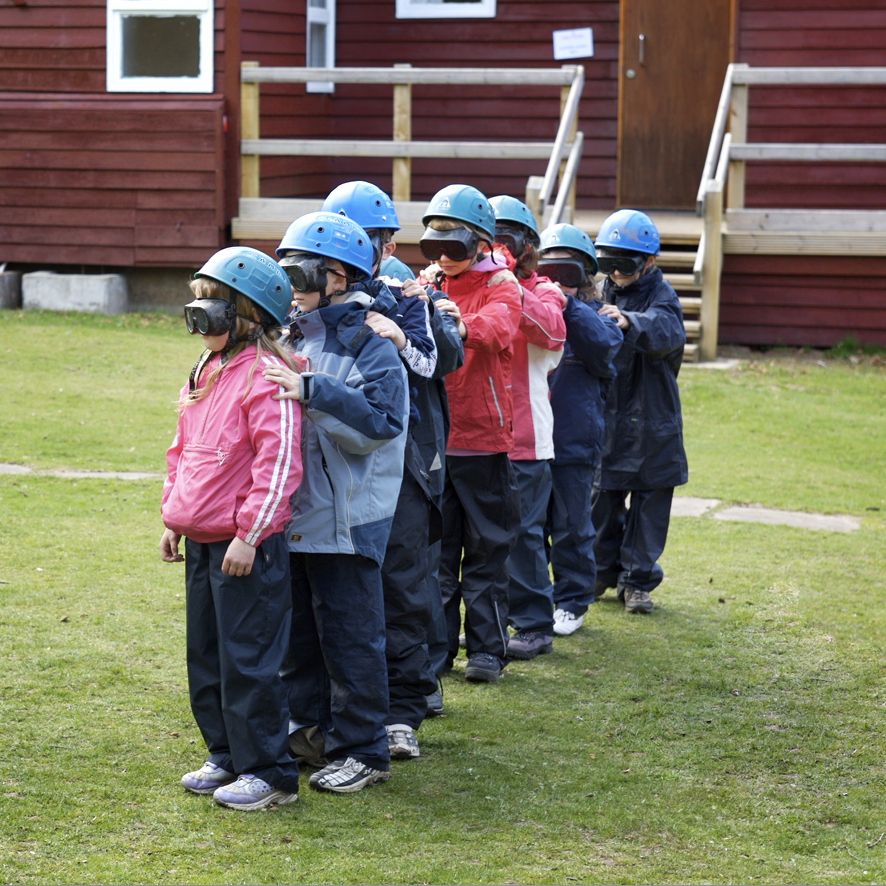
Blindfolded, your team has to find its way along a rope strung through the trees that will lead you around, over, under, and through all sorts of obstacles. You'll need to rely on touch, sound, and each other to get all the way through. The rope keeps you on the path, and it'll be your teammates' voices that keep you moving with any confidence at all. This is an exercise in trust, listening, bravery, and teamwork. It's disorientating, at some points a little nerve wracking, at others just very funny, and it's consistently one of the most talked-about activities on programme, precisely because it asks for two kinds of trust at once: trust in yourself to keep going, and trust in the people around you to guide you and have your back.
SELF ■■■□□ OTHERS ■■■■■ ENVIRONMENT ■□□□□
Self: Losing your sight, in a safe and contained space, is a small, low-stakes way to find out how much you can trust your own instincts when your usual sense of control is gone. Others: Nightline asks for real, active trust — someone else's voice is genuinely all you have to go on, and giving clear, helpful, honest instruction when it's your turn is just as much the test as following it. Environment: Even in broad daylight, the blindfold makes a familiar space feel completely unfamiliar; it introduces a genuinely different way of experiencing the outdoors and highlights the benefits of being attune to all of our available senses.

I was terrifying and so much fun. I haven't laughed and screamed some much at once like that before. — Freya, age 13

The group were listening to each other far more carefully than every before. — Youth group leader from Fife

BELMONT ✓ BROOMLEE ✓ DOUNANS ✓

Orienteering
Orienteering

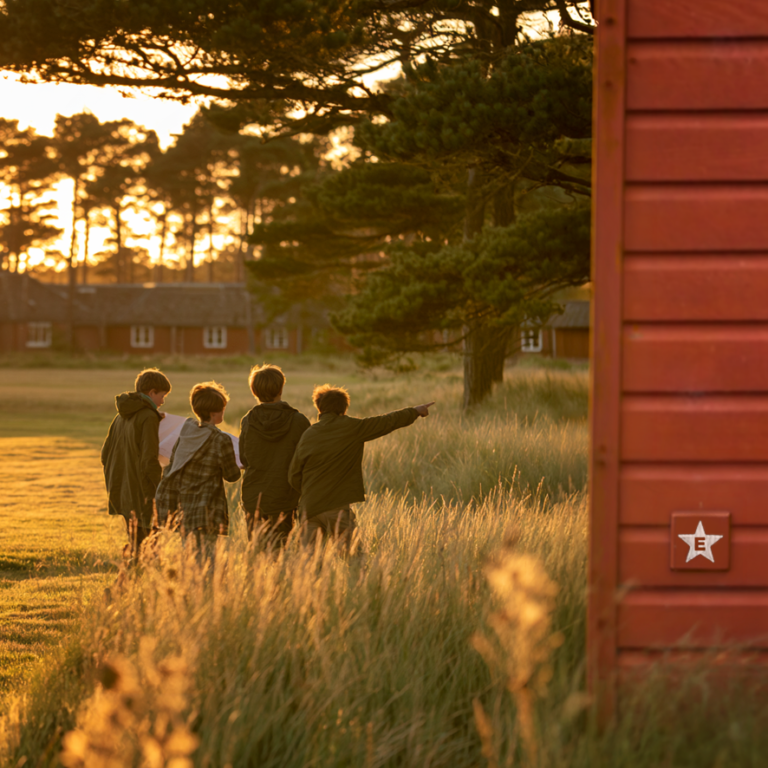
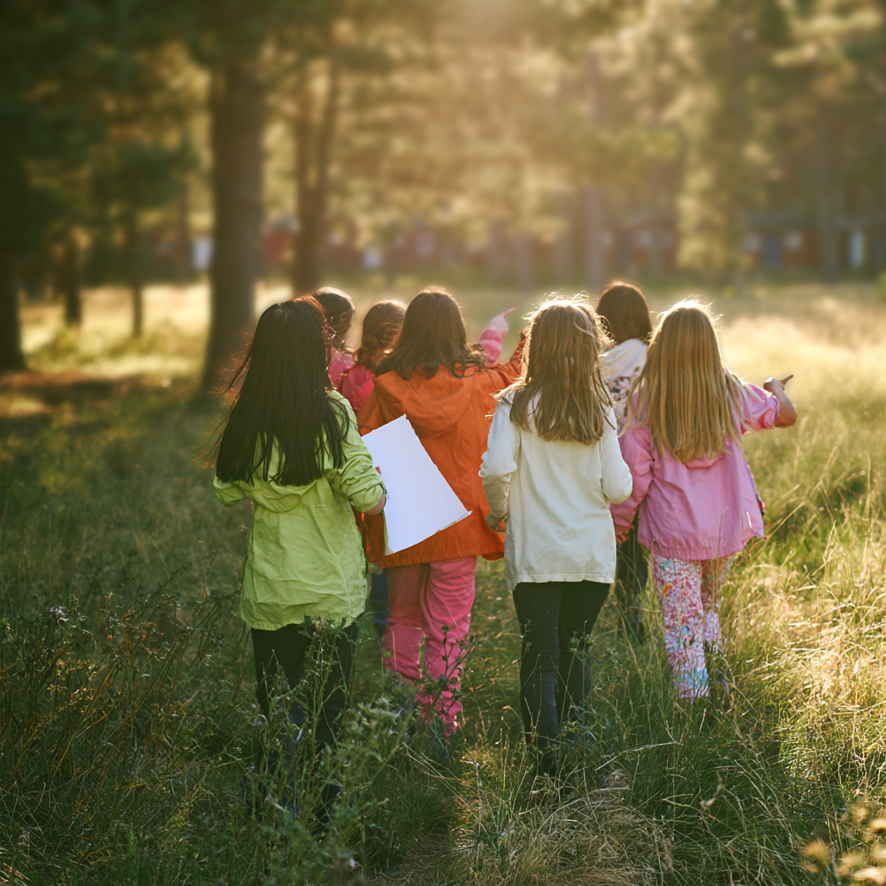
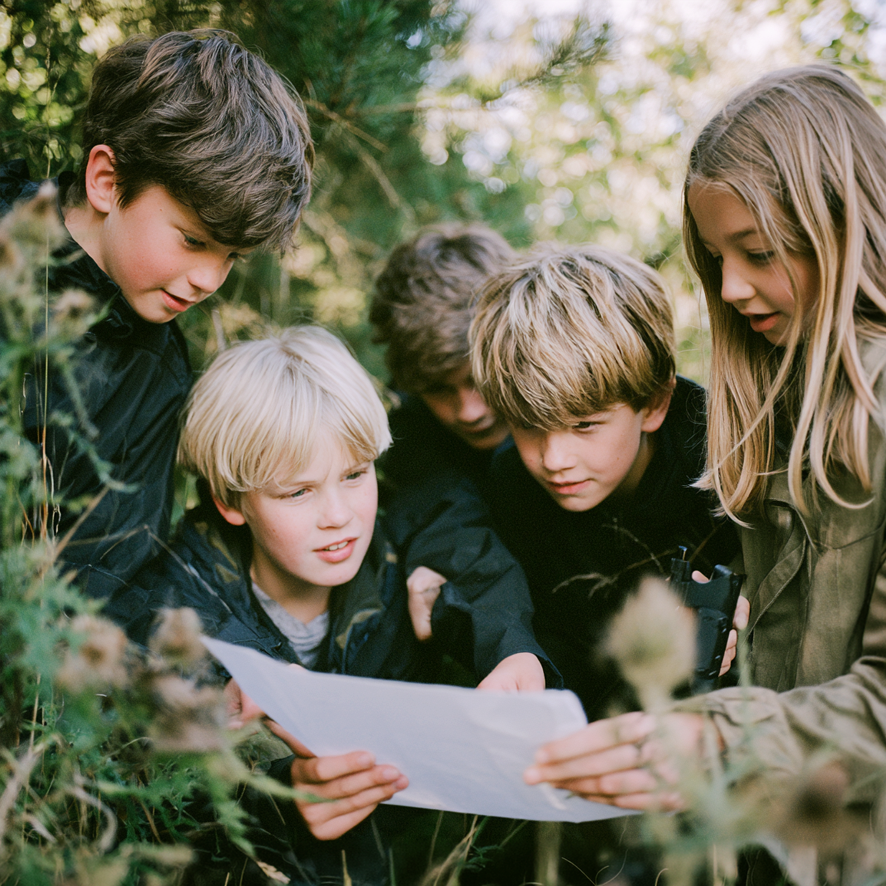
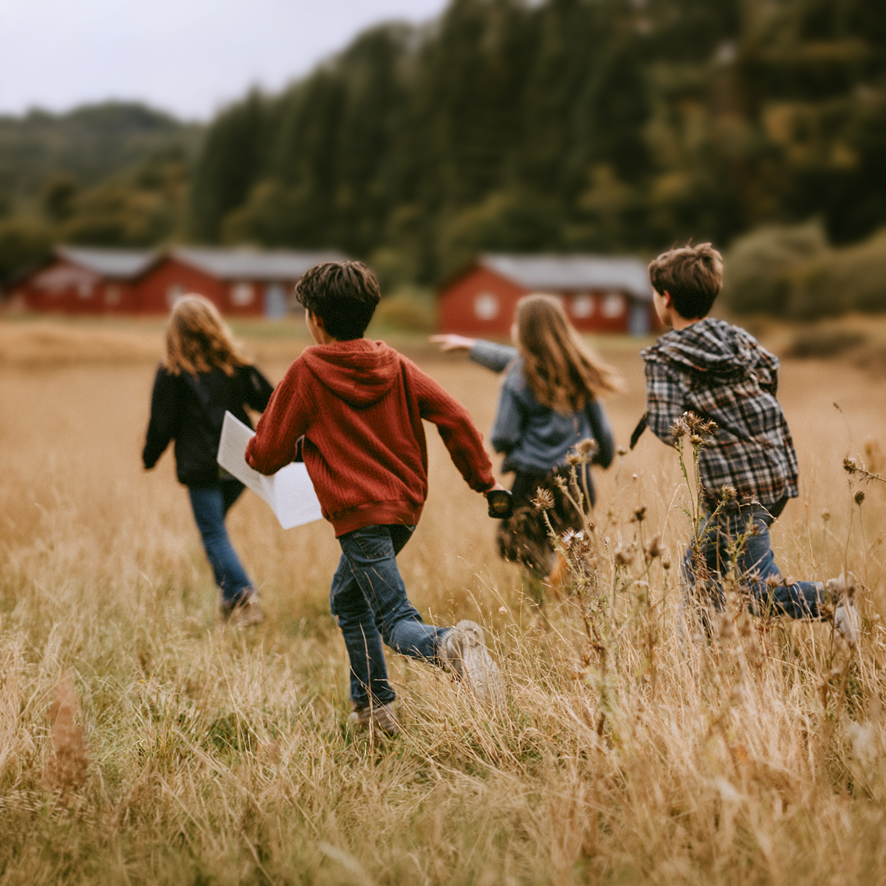
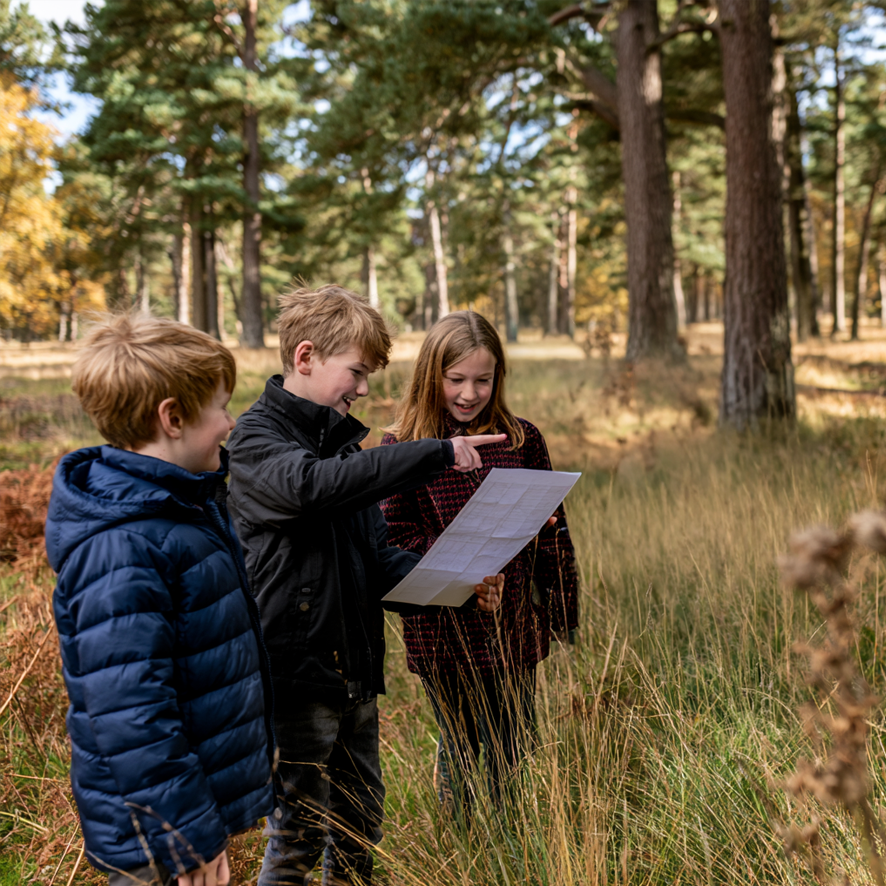
Orienteering covers more ground than the name might suggest. Some sessions send your team out with a ready-made map and a trail of hidden checkpoints, each revealing a clue that builds toward a larger puzzle to be solved by the end. Others invert the challenge entirely: you have to create a map and hide items yourselves for the other team to find whilst you take on their challenge. Certain sessions will also bring proper map-and-compass navigation into the mix. This is an activity that often sounds and feels really easy at first, but most teams lose their way, or their patience, at least once - and sure enough, they find it again!
SELF ■■■□□ OTHERS ■■■□□ ENVIRONMENT ■■■□□
Self: Reading a map, or building one, and trusting your own judgement even after getting it wrong, is a valuable and transferable skill.
Others: Small teams must agree, disagree, and adjust as they go, taking it in turns to be in charge of the map.
Environment: This activity forces you to look more carefully at everything around you, and is a really great one for getting to know your way around the site!

I really loved the main activity which felt like a treasure hunt, but setting a challenge for the other team was even more fun — Freya, age 9

They came back arguing about whose map-reading was better — in the best possible way. — Class teacher, S2 group

BELMONT ✓ BROOMLEE ✓ DOUNANS ✓

Problem Solving

Problem Solving

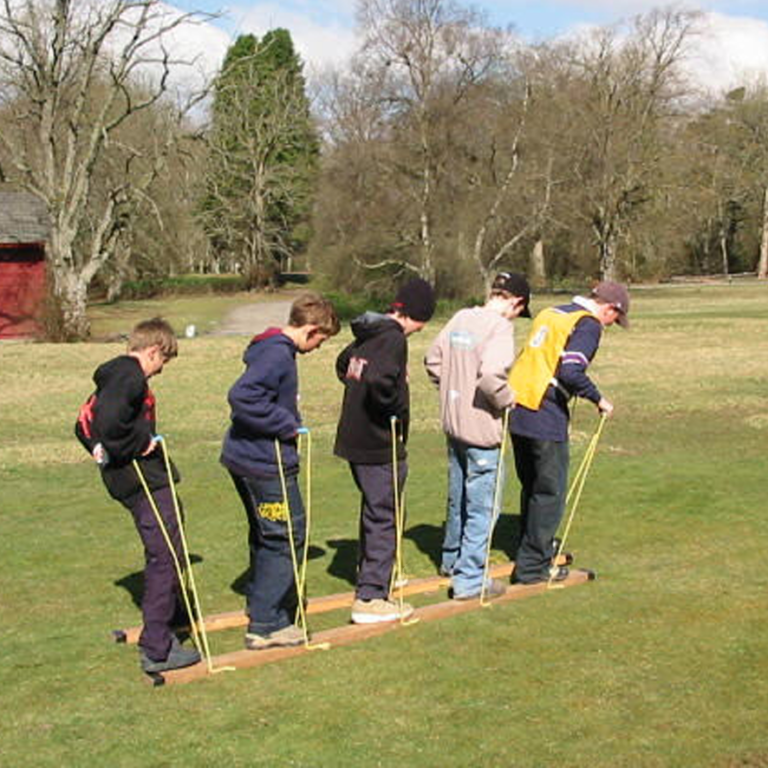
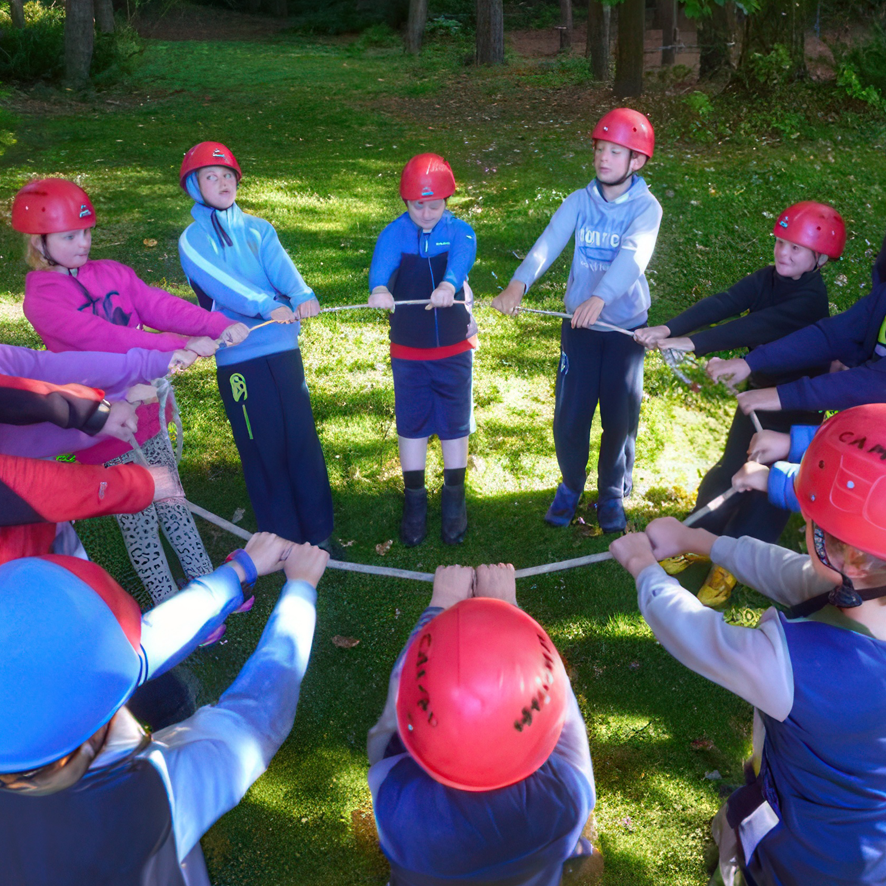
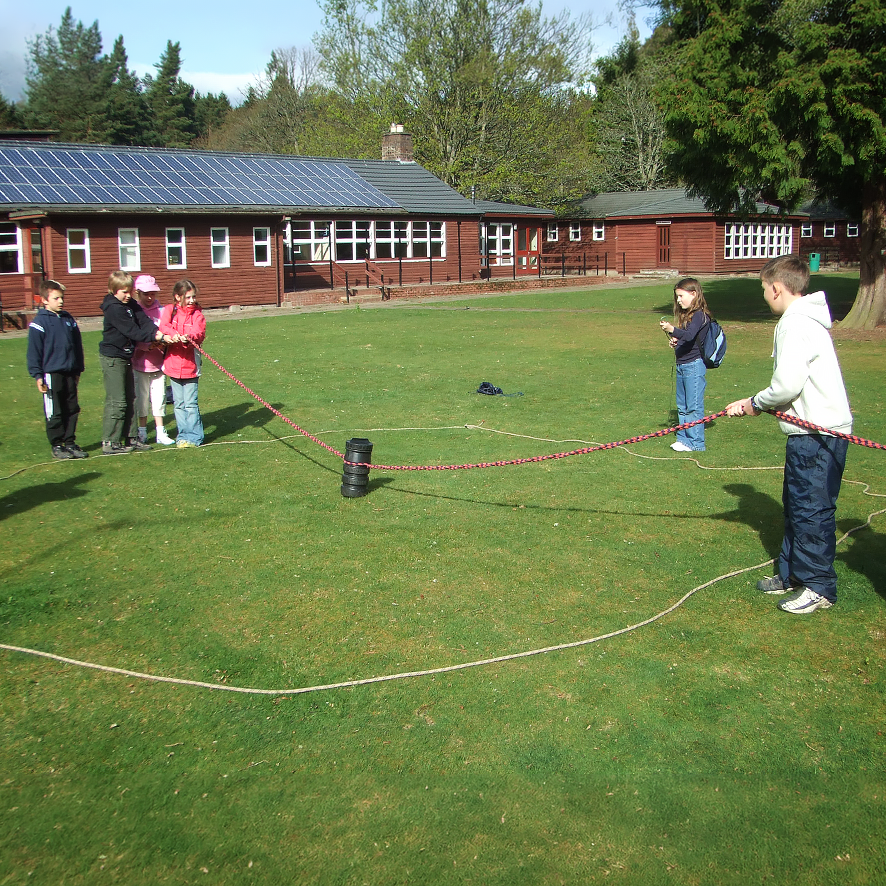
We have a lot of gnarly problems to be solved - way more than even the smartest group could complete in a whole session - and they are all very different from one another... there are usually a few simple pieces of equipment and a fairly simple premise, and the group then have to figure out an answer (there is not always one right solution); some are like games, others involve an imagined scenario; the balance between mental effort and physical exertion shifts from one challenge to the next — some are puzzles through and through, others ask the group to lift, balance, or move something as part of working out the solution. What Problem Solving really tests is whether a group can communicate and co-operate under a little pressure, and whether each person can find their role in that moment: who organises instinctively, who notices the detail everyone else missed, who is willing to suggest the idea that sounds ridiculous — and whether the rest of the group is generous enough to actually listen and try it out.
SELF ■■□□□ OTHERS ■■■■■ ENVIRONMENT ■□□□□
Self: Every contribution genuinely stands a chance of being the one that works, regardless of who is usually loudest or quietest. Each problem has different facets to it, allowing different individuals with different skillsets a chance to shine.
Others: Success rests entirely on how well the group listens to, and builds upon, each other's thinking — and on finding the role that suits each person, rather than any one person trying to carry it all.
Environment: All the challenges take place outdoors, though the group is usually so focused on the challenges that they could be anywhere!

I was so impressed by my classmates. I thought one of the challenges was actually impossible until suddenly Jamie and Sasha had a brainwave. — Orla, age 13

They were fully in character for a made-up scenario for twenty minutes straight; they were certainly behaving like they thought their lives actually depended on their feet not touching the grass - it was brilliant! — Youth group leader, Peebles

BELMONT ✓ BROOMLEE ✓ DOUNANS ✓

Raft Building
Raft Building

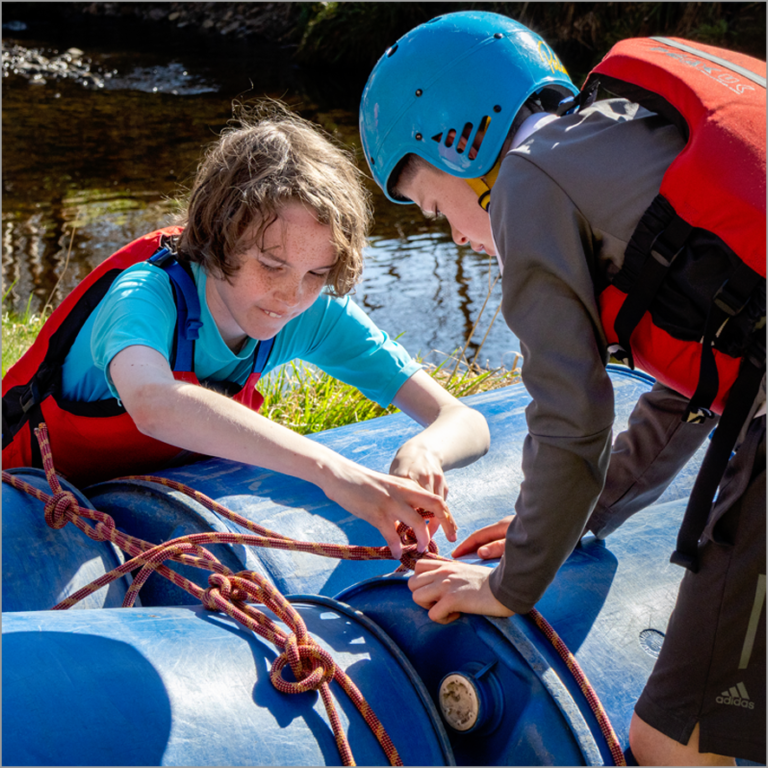
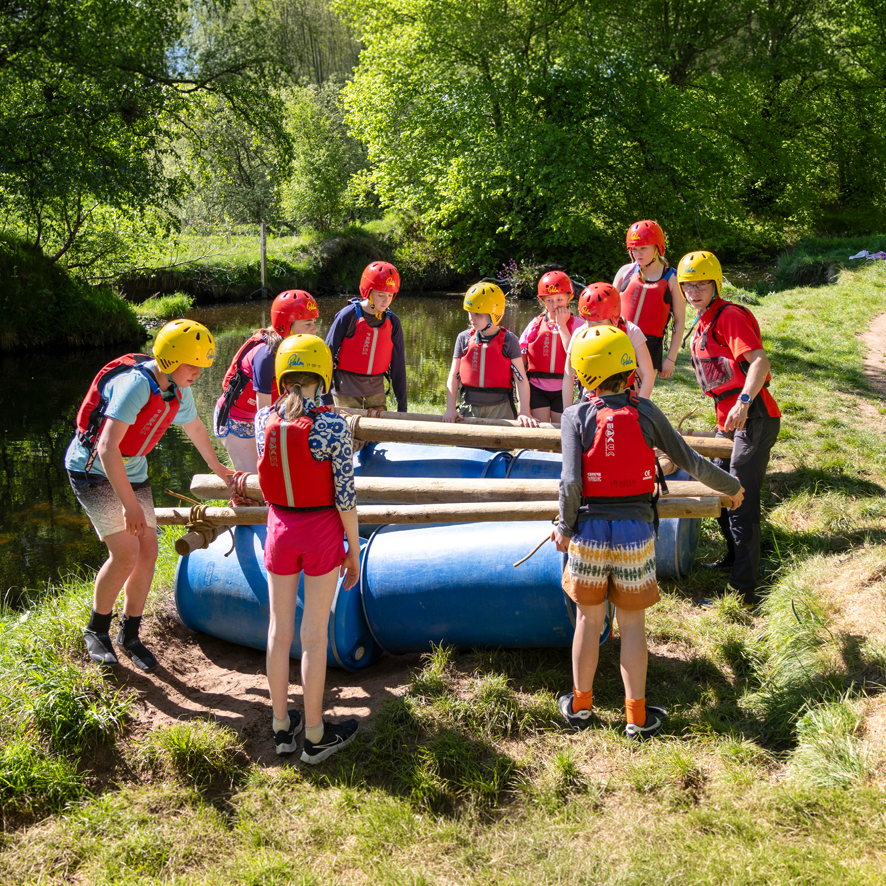
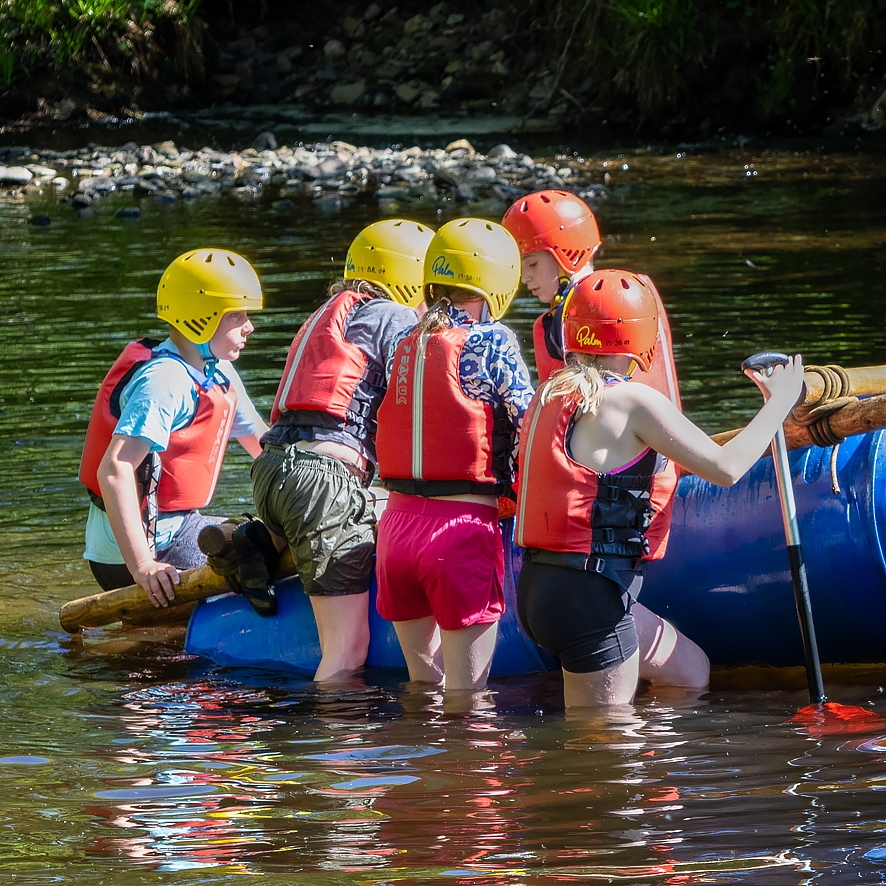
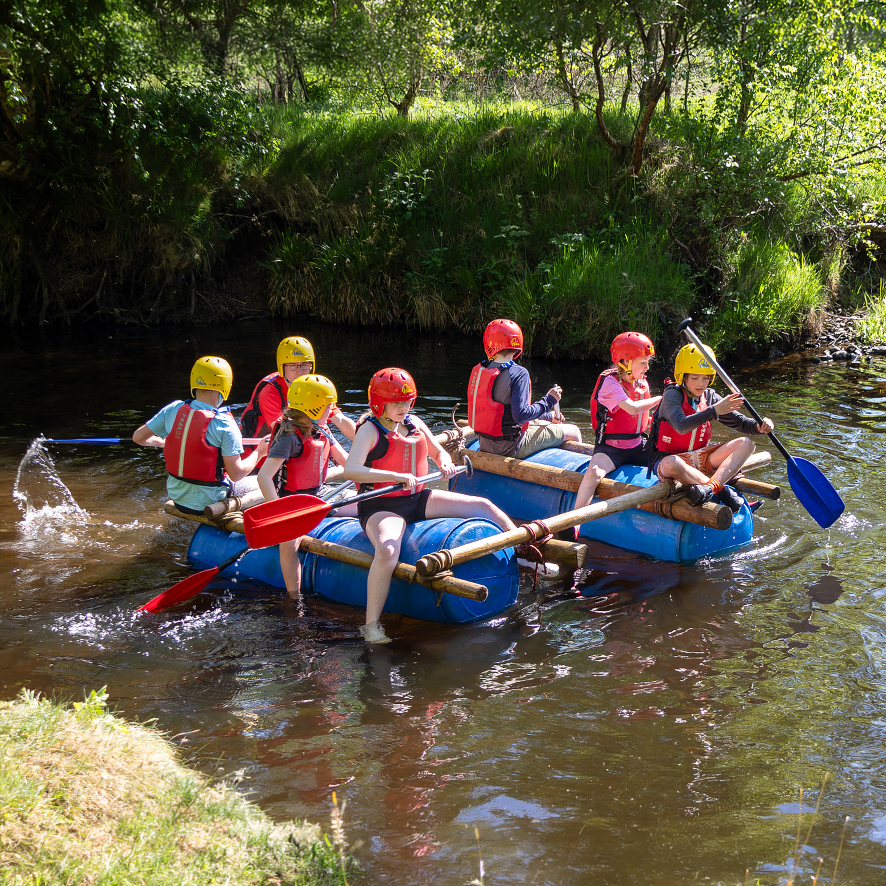
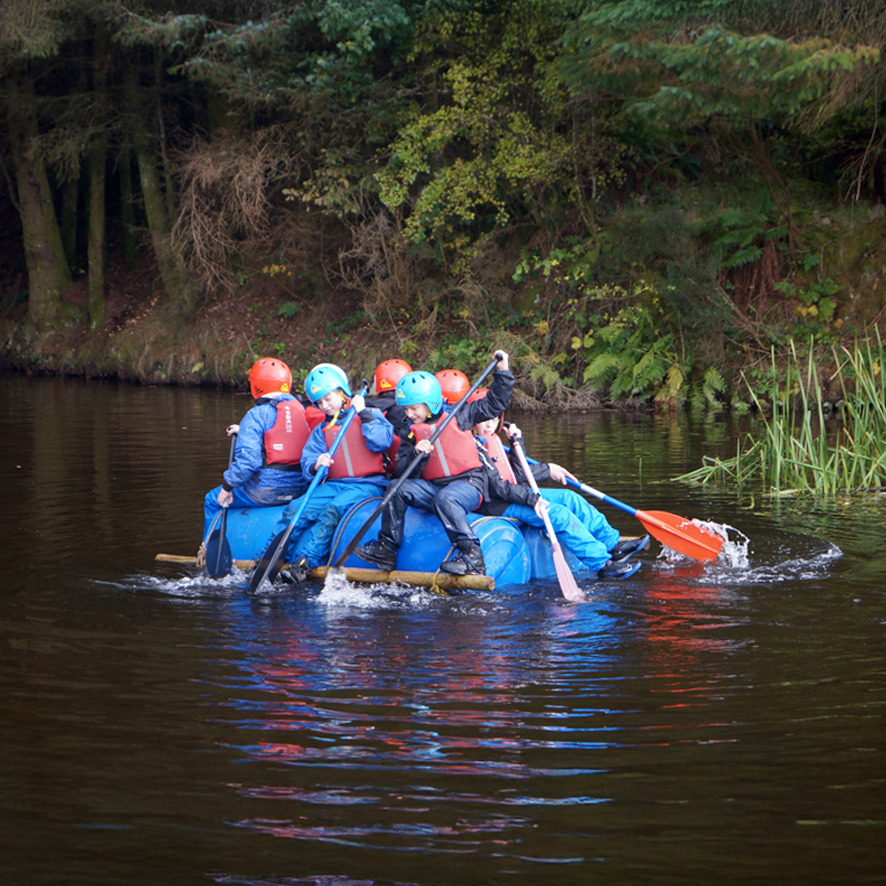
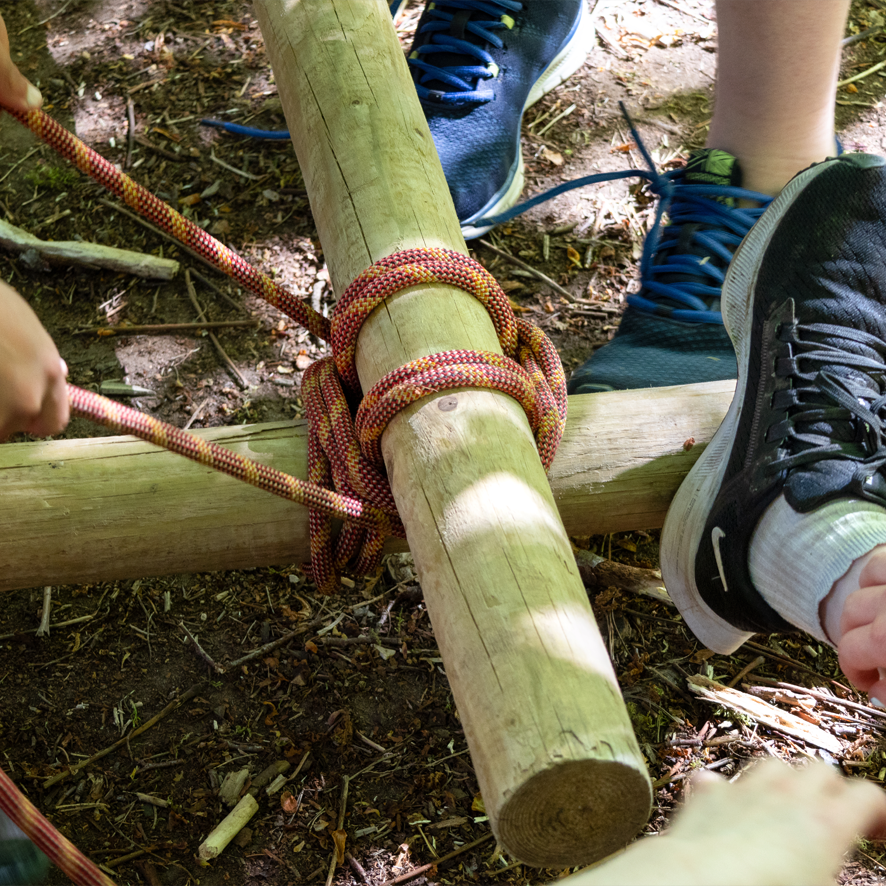
Design and build a raft that will carry your whole team, using poles, barrels and rope, then discover how it actually handles on the water. There is a lot to think about: how the structure holds together, how weight distributes across it, how to carry it into the water once it is built... the time will come to test it in the water for a paddle about. Most rafts wobble, list to one side, or demand a mid-session repair. Usually a group who has to patch their broken raft together, laughing and thoroughly soaked, takes just as much from the experience as one that built something impressively sturdy on the first attempt.
SELF ■■■□□ OTHERS ■■■■■ ENVIRONMENT ■■□□□
Self: There is a genuine sense of ownership in a raft your own hands helped design and build, whether or not it ultimately handles the water especially well.
Others: A raft built by committee, imperfectly, still floats, usually — planning and compromise matter rather more here than any one person's individual effort or expertise.
b]Environment:[/b] Getting out on open water, even for a short paddle, offers a different kind of immersion in the natural environment.

Our raft totally fell apart, but luckily we did get to paddle it quite a long way before that happened — Finlay, age 12

"Watching them argue, compromise, find a route forward and actually get it onto the water was worth the trip alone. — Class teacher, S1 group

BROOMLEE ✓ DOUNANS ✓

Tree Climb

Tree Climb

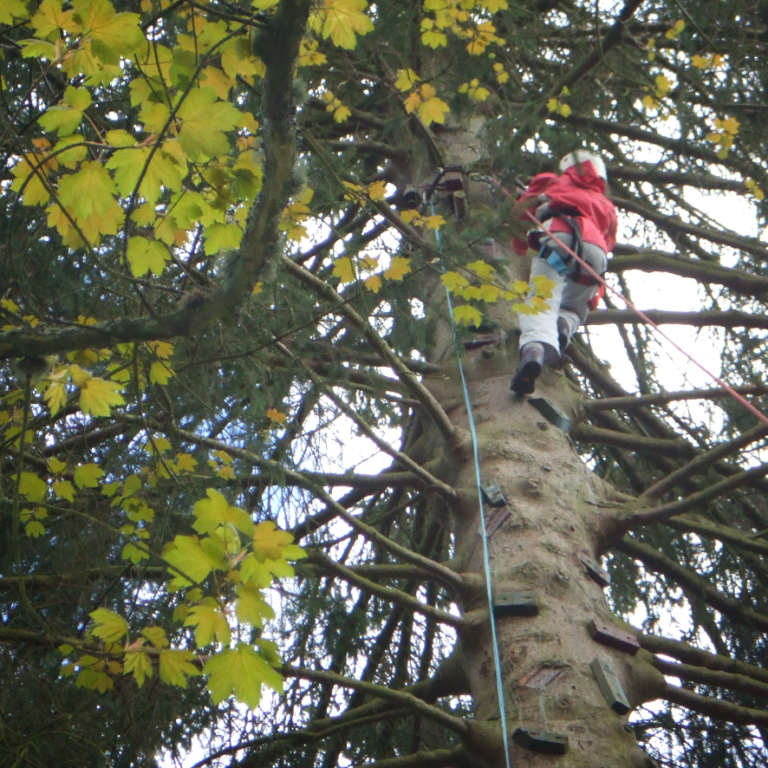
Climb right up into the tree tops, ring the bell at the top, and take in a view over the whole site before descending — fully secured on a harness throughout, so the only real barrier between you and the bell is how far you are willing to keep going. The holds are not placed in a uniform pattern, so finding and choosing the best hand and footholds takes a bit of trial and error. There is nowhere to hide from the fact that the only way to ring the bell is to keep going past the point where stopping would plainly be easier, so it is the determined and persistent who make it to the top.
SELF ■■■■■ OTHERS ■■□□□ ENVIRONMENT ■■□□□
Self: The only way to ring that bell is to continue past the point where it would be easier to stop, making this one of our clearest, most physical tests of perseverance.
Others: The group below have to work out what encouragement the climber needs; some people want silence, so want instructions step by step, others want loud cheers and encouragement.
Environment: Treetop height literally gives you a birds eye view, but you also get to see the tree tops themselves up close, which is another reward for the physical effort of getting there.

My arms were shaking but I could see the bell, so I just kept going — Oscar, age 11

The sound of that bell ringing, over and over, all afternoon, was honestly wonderful to hear because each time was a massive triumph for one of our kids. — Youth group leader, Glasgow

BELMONT ✓ BROOMLEE ✓ DOUNANS ✓

Zipwire & Abseiling
Zipwire & Abseiling

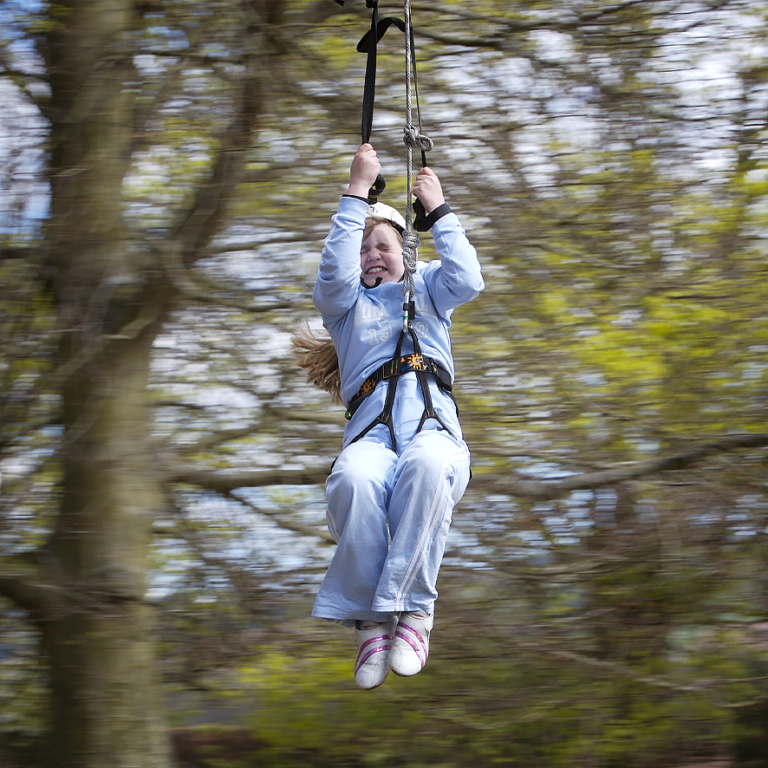
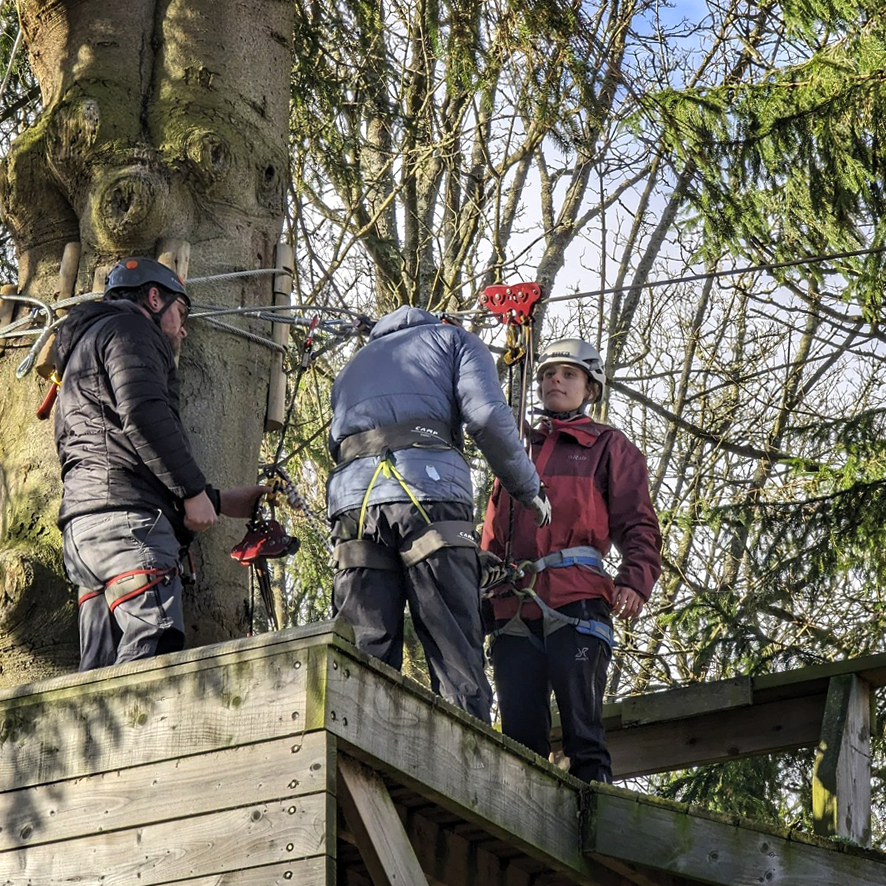
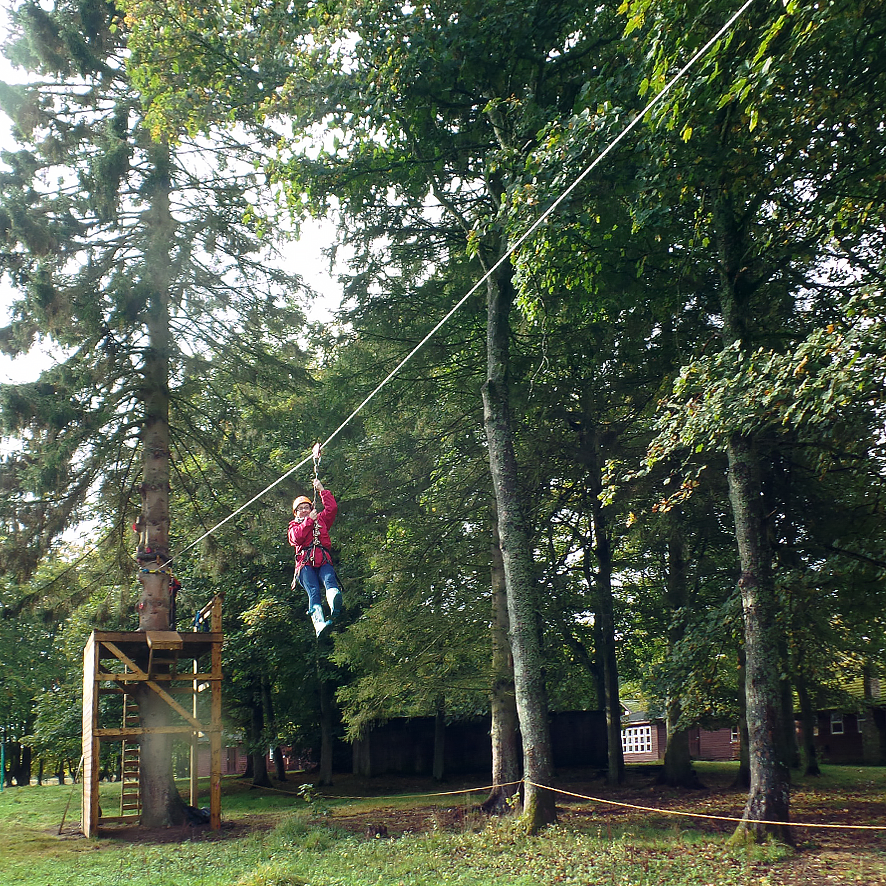
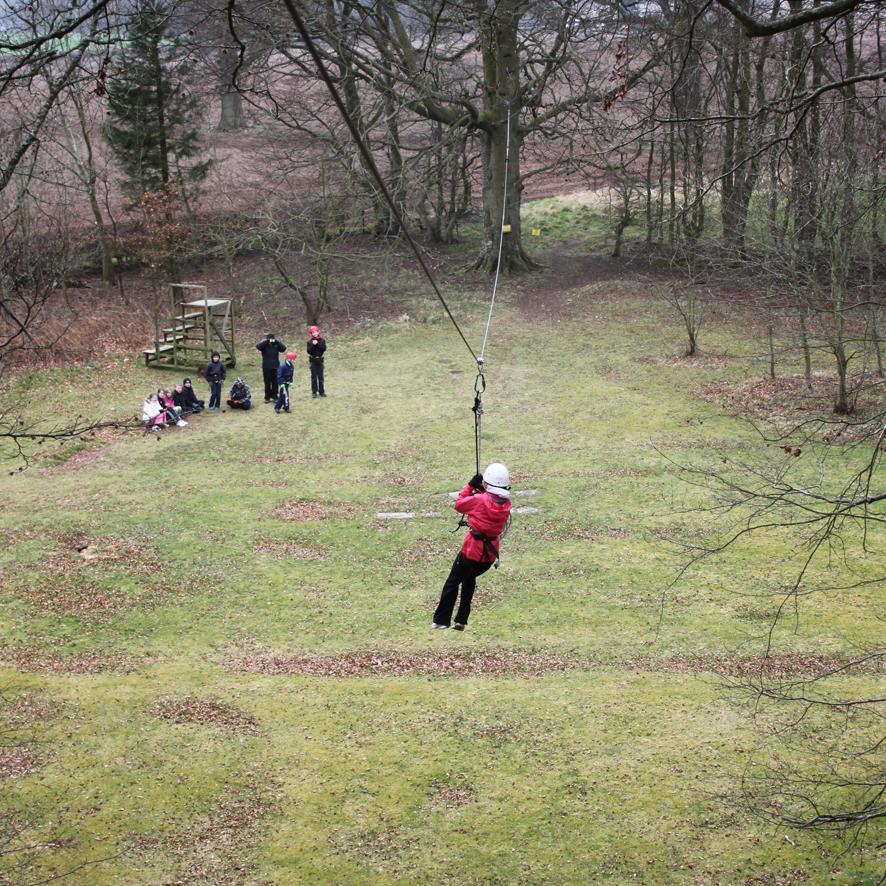
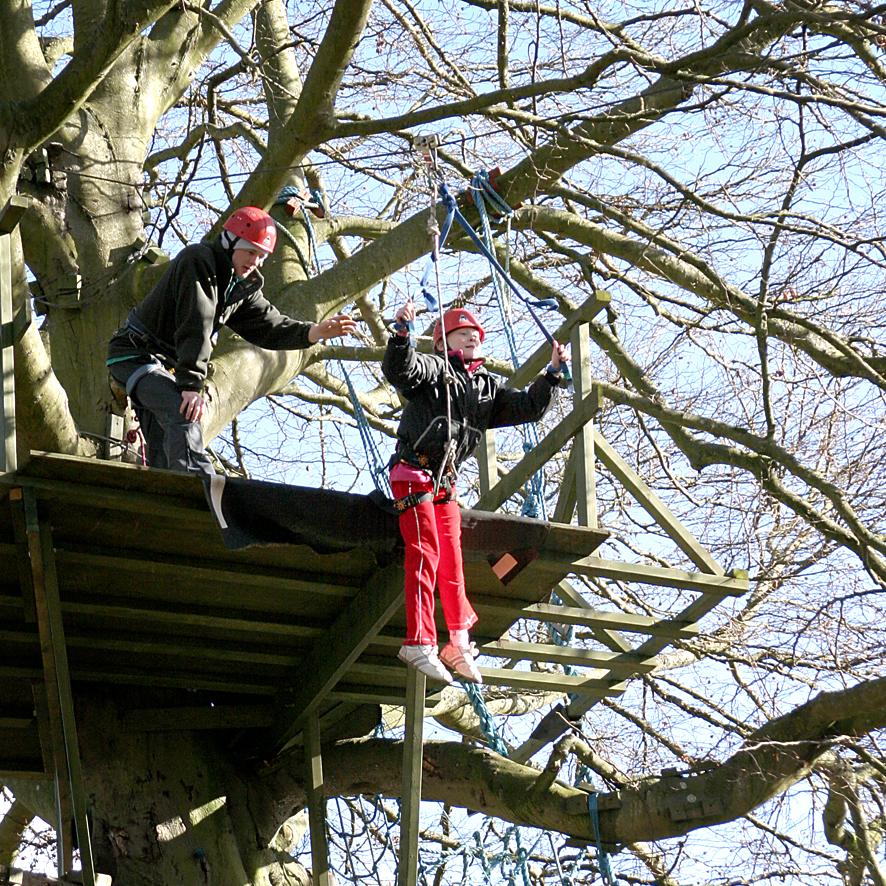
Climb the tower, then choose your route back down: a controlled, steady abseil, or a fast, exhilarating zipline. Abseiling calls for calm, controlled trust in the rope, while the zipline demands a wholly different kind of commitment — a willingness simply to let go and feel your stomach drop. Both are over quickly, and usually end with a slightly stunned grin, and an immediate question as to whether there is time to go again.
SELF ■■■■■ OTHERS ■■□□□ ENVIRONMENT ■□□□□
Self: Both the abseil and the zipline require courage and trust; the first is more gradual and sustained, the second is a lot for just a moment..
Others: There is always a small crowd at the bottom cheering everyone in.
Environment: The view from the top of the tower gives a good view over the site, even if most people are too focused on what comes next to properly take it in!

I'm terrified of heights and I still did the zip line - twice! — Logan, age 10

Watching the same child who cried at the bottom of the tower ask to go up again was the whole week in miniature. — Parent

BELMONT ✓

Off Site Activities...

With the exception of Burn Scramble, Exploration Walk and Hill Walking — which can be included in any programme at no extra cost — off-site activities carry an additional charge due to the travel, additional specialised tutors, and specialised equipment they can require. Most off site activities involve taking a packed lunch and in a day's programme would be paired with one on site activity.

Abseiling

Abseiling

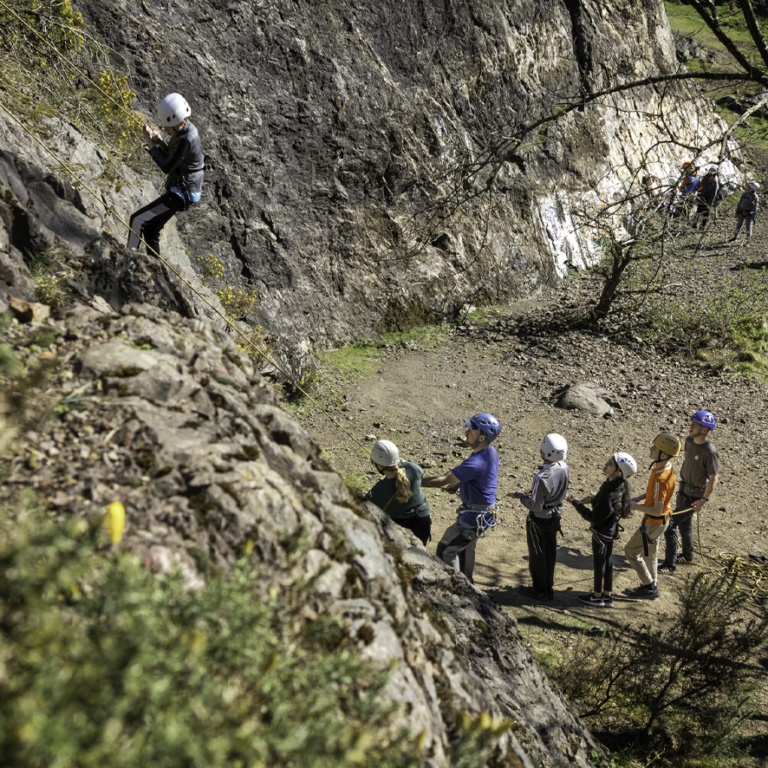
We head out to a crag off-site and abseil down an actual rock face, safely roped and guided by a qualified tutor. The rock is uncompromising, uneven and slightly unpredictable in a way nothing built for the purpose ever is, and the exposure as you lean out over the edge can feel as daunting as it is exhilarating when you see a vast landscape expanding out beneath you. Trusting the rope here is a real mental and physical test - the physics of how the system works is all very simple to understand and reassuring beforehand, but holding your nerve and your knees steady is a little more challenging when you are hanging from a rockface wholly reliant on what you previously believed to be true actually being so. The thrill and confidence that comes from mustering the courage to see the abseil through to completion is a truly unique experience.
SELF ■■■■■ OTHERS ■■□□□ ENVIRONMENT ■■■□□
Self: Abseiling on one level is a test of your trust in your own knowledge (about the safety of the system) because you literally put everything on the line, over the edge of a serious drop. This calls for a courage and strength of conviction that can be rare to see; success reaps huge rewards in terms of confidence and readiness to take on other challenges.
Others: On the other hand it is also test of your trust in others; watching a friend go first, going first for someone else, reassuring one another, being the trusted friend on the belay rope - all of these matter, as they contribute to an exchange and establishment of courage.
Environment: Being on an actual crag connects the physical challenge directly to the actual landscape it's happening in; once you have taken on a serious rock face, it instils a lasting awe and respect for the sheer scale and uncompromising forces of the natural world.

The bit nobody warns you about is how loud your own heartbeat gets. My legs went completely to jelly and I nearly chickened out, but I held it together and actually did it and I am so proud of myself! — Toby, age 11

The tutor explained it really well, so they knew they were safe, they just had to believe it when the moment came! Seeing how supportive of one another they were was so lovely to see and hear. — Class teacher, S3 group

BELMONT ✓ BROOMLEE ✓ DOUNANS ✓

Burn Scramble
Burn Scramble

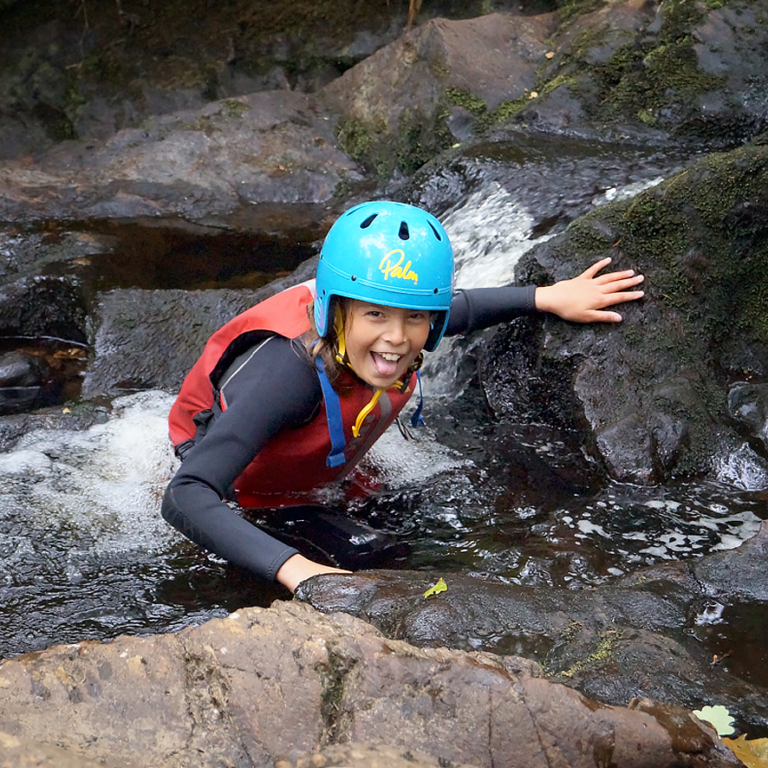
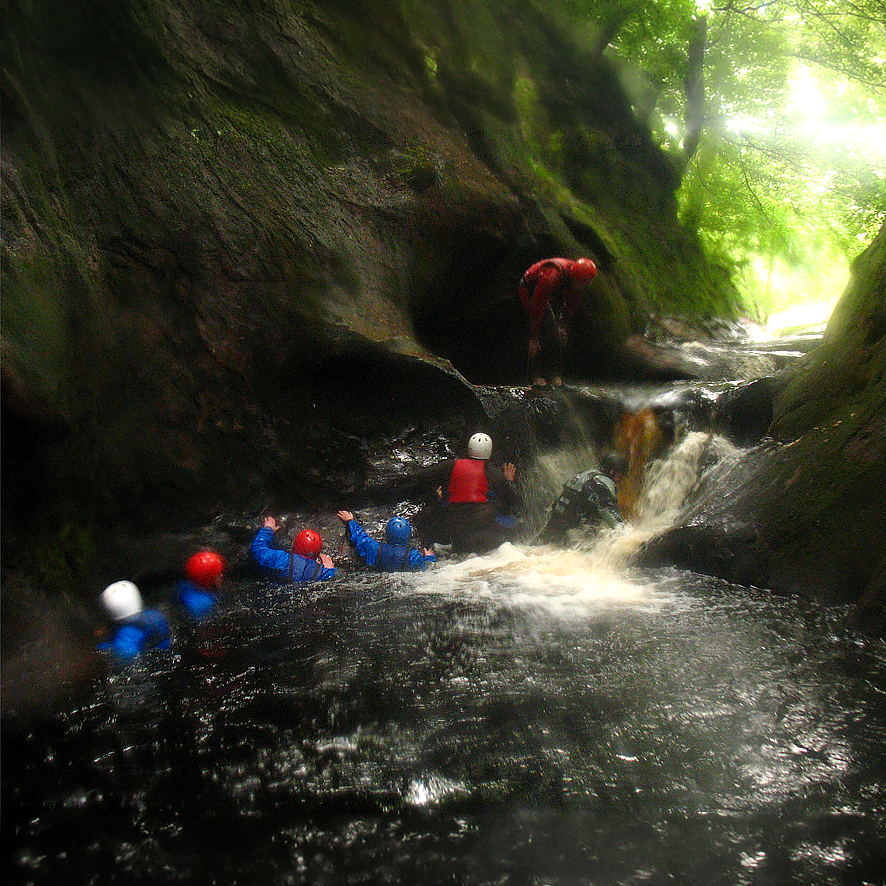
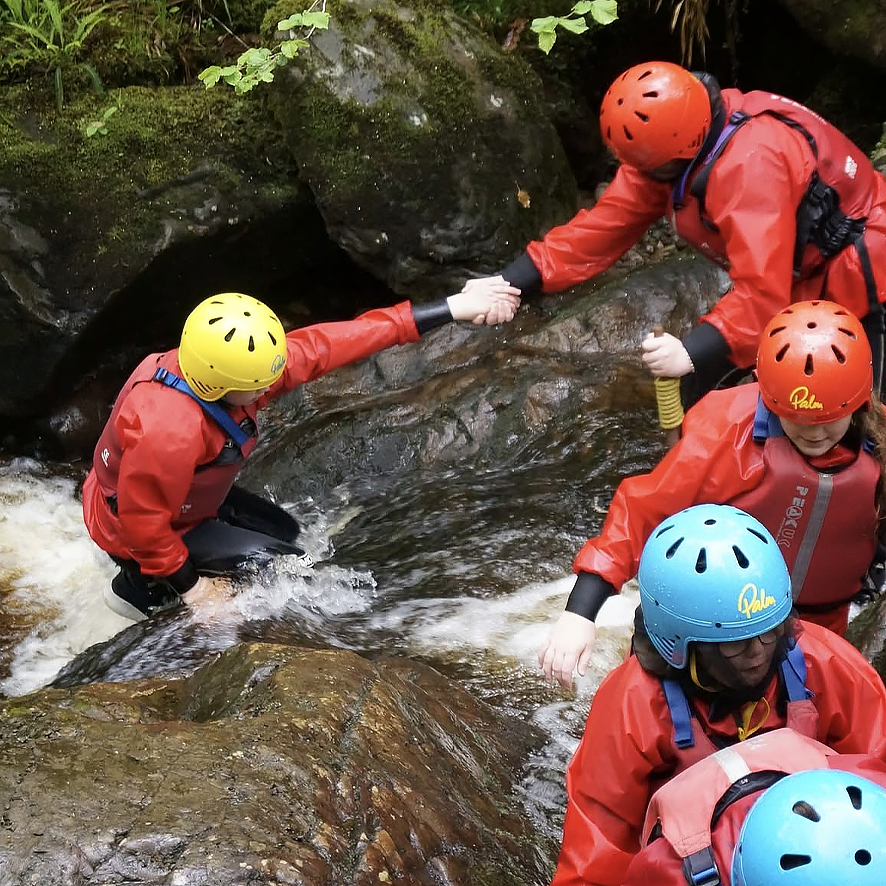
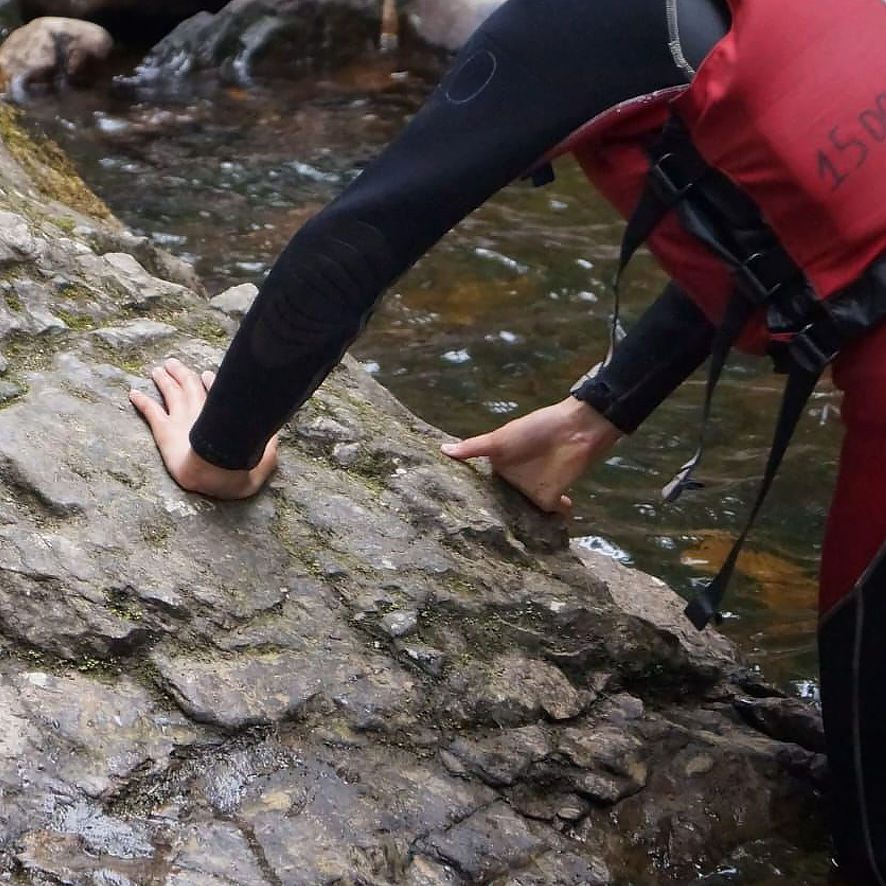
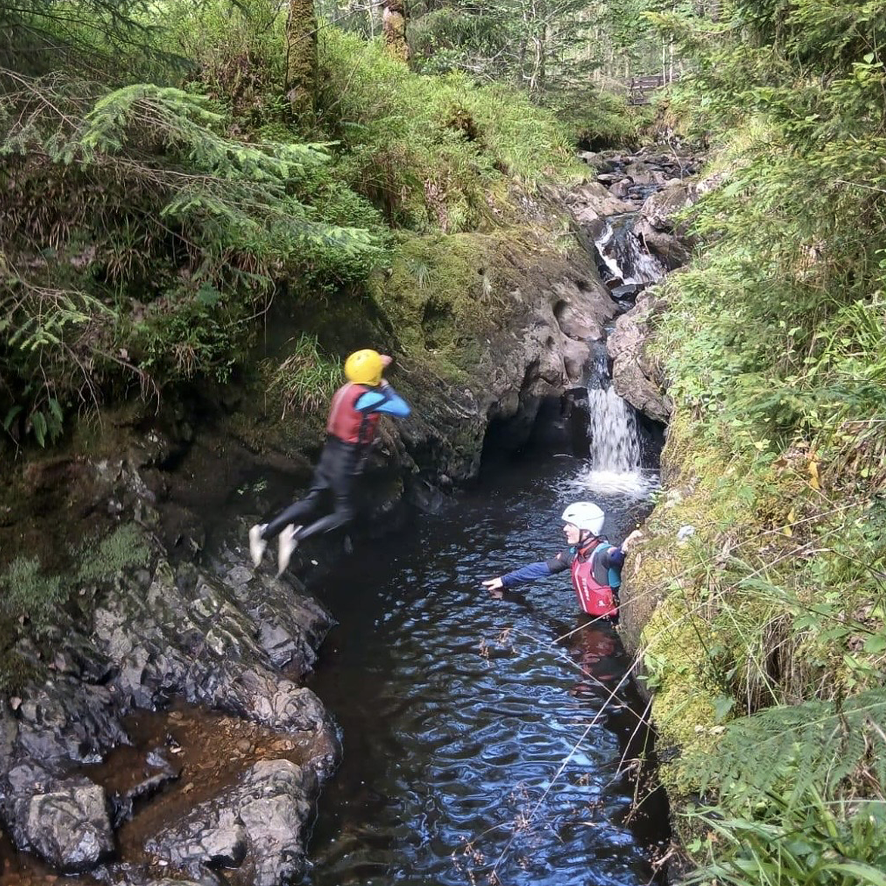
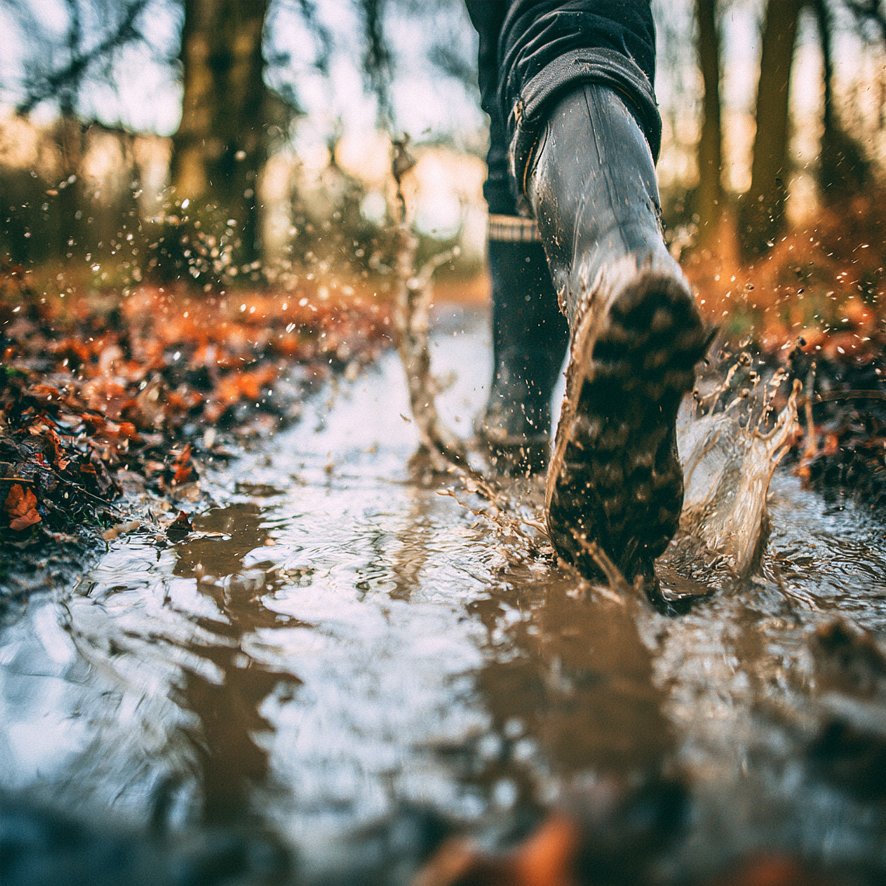
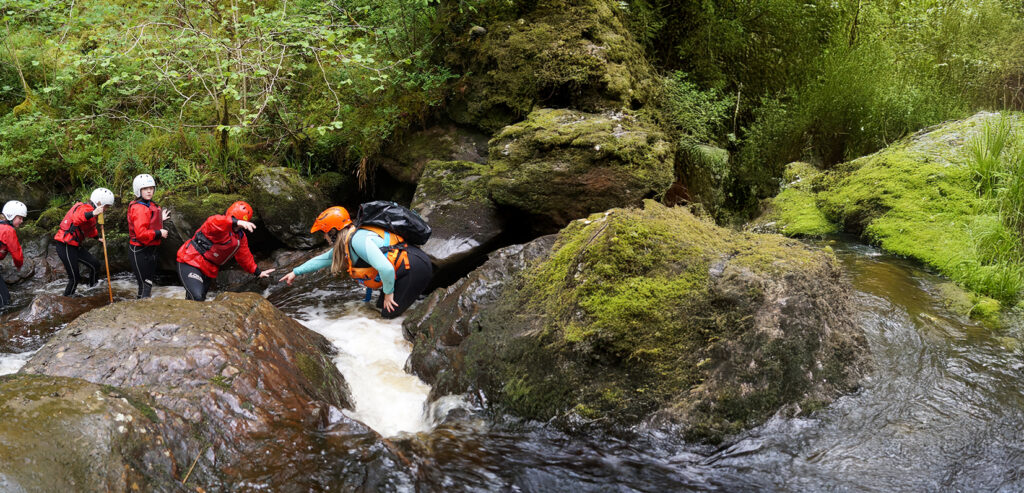
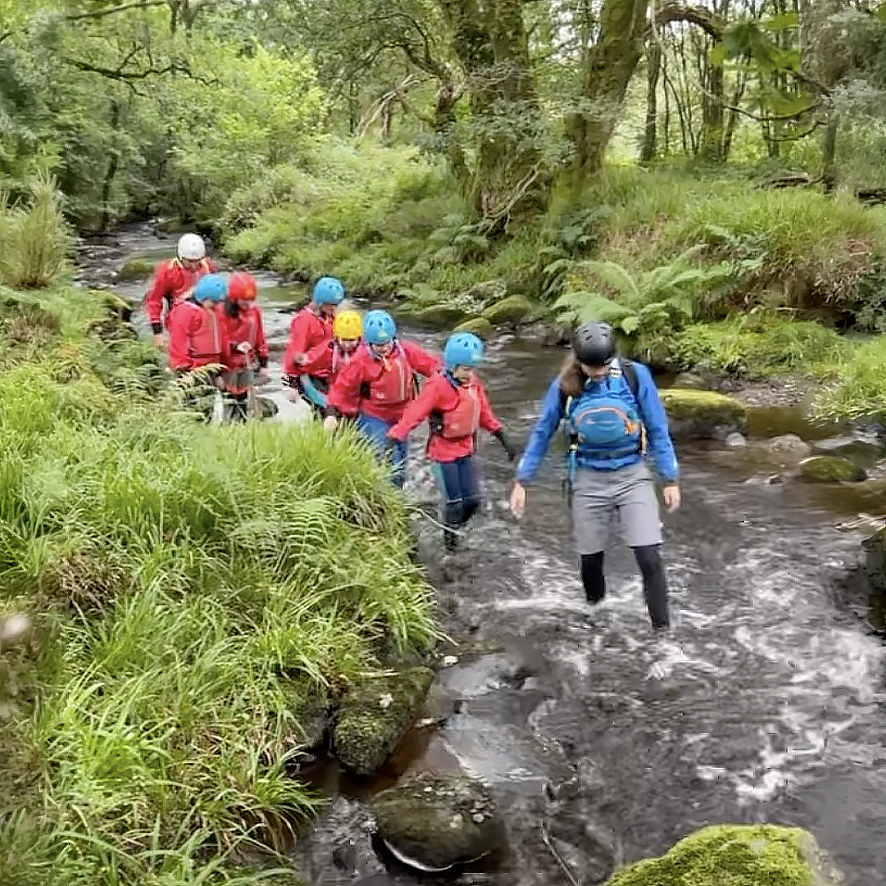
We scramble, wade and climb your way along the burn, working with the water and the rock rather than attempting to stay dry and avoid them. There is no marked route to follow, only the river itself, and a tutor helping you choose a safe and sensible line through it. It is hard physical work: hauling yourself over slick rock, wading through water considerably colder than expected, finding footholds that shift slightly beneath your weight. Most groups return soaked, cold, and thoroughly delighted about it, which tells you most of what you need to know!
SELF ■■■□□ OTHERS ■■■□□ ENVIRONMENT ■■■■□
Self: Picking your own physical route and footings through a genuinely unpredictable landscape builds a quiet, practical confidence.
Others: Groups naturally end up helping one another over the trickier sections, offering a hand or calling out a warning about a slippery rock.
Environment:This is as close and direct a physical connection to the landscape as any activity we offer: you are not looking at the burn, you are well and truly in it!

I've never been so wet and so happy at the same time — Ruaridh, age 12

"They came back soaked, freezing, and grinning ear to ear." — Parent

DOUNANS ✓

Canoeing

Canoeing

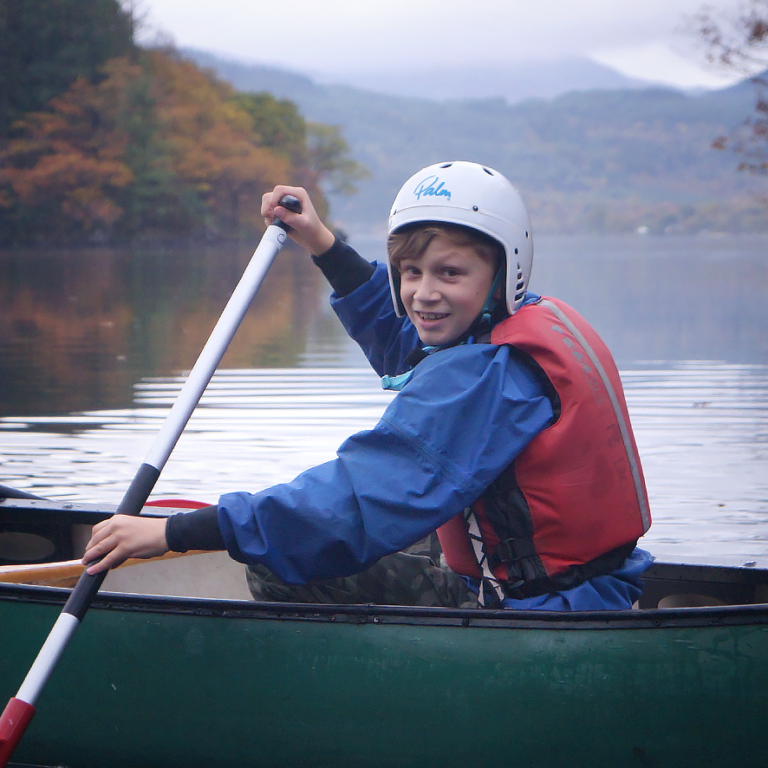
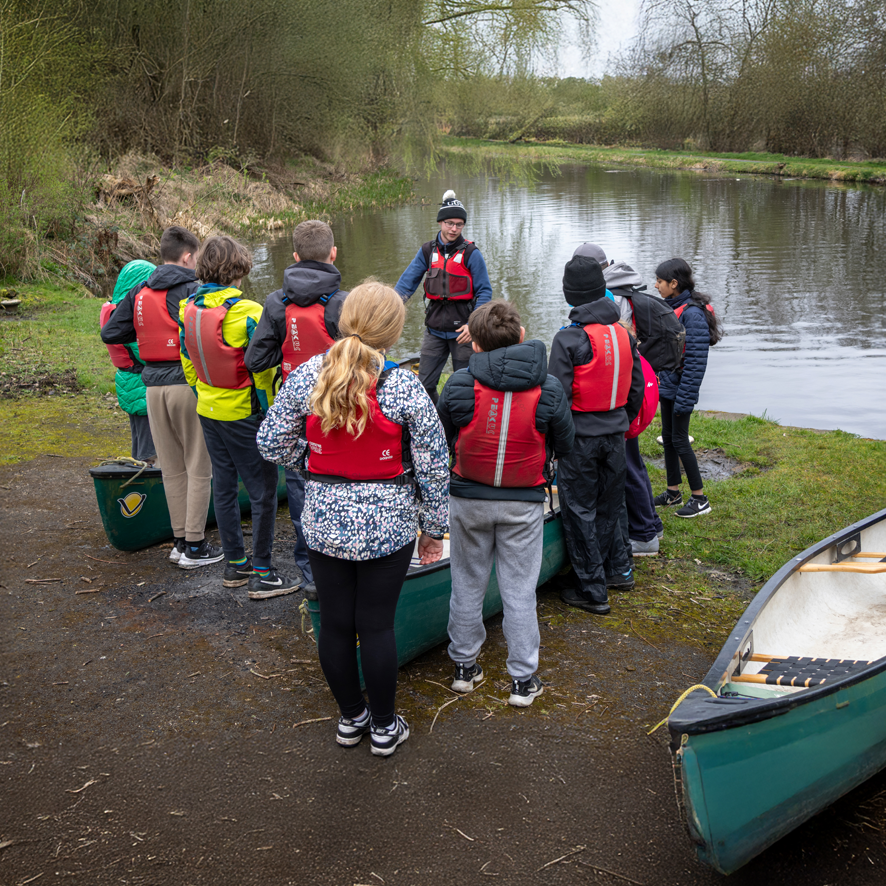
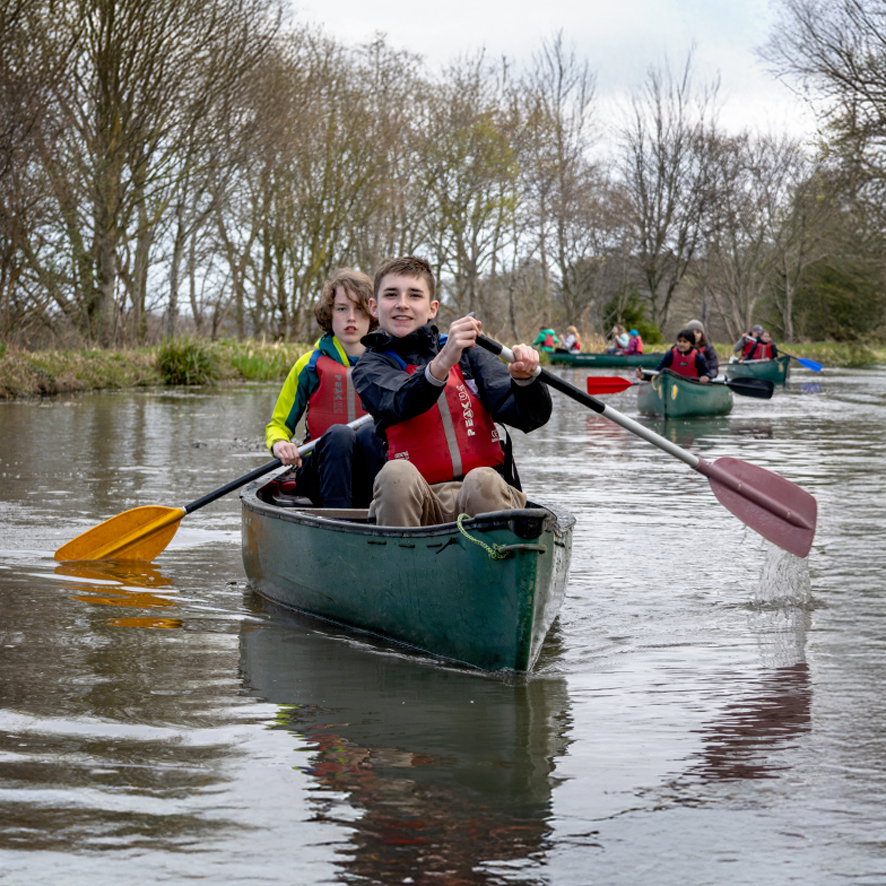
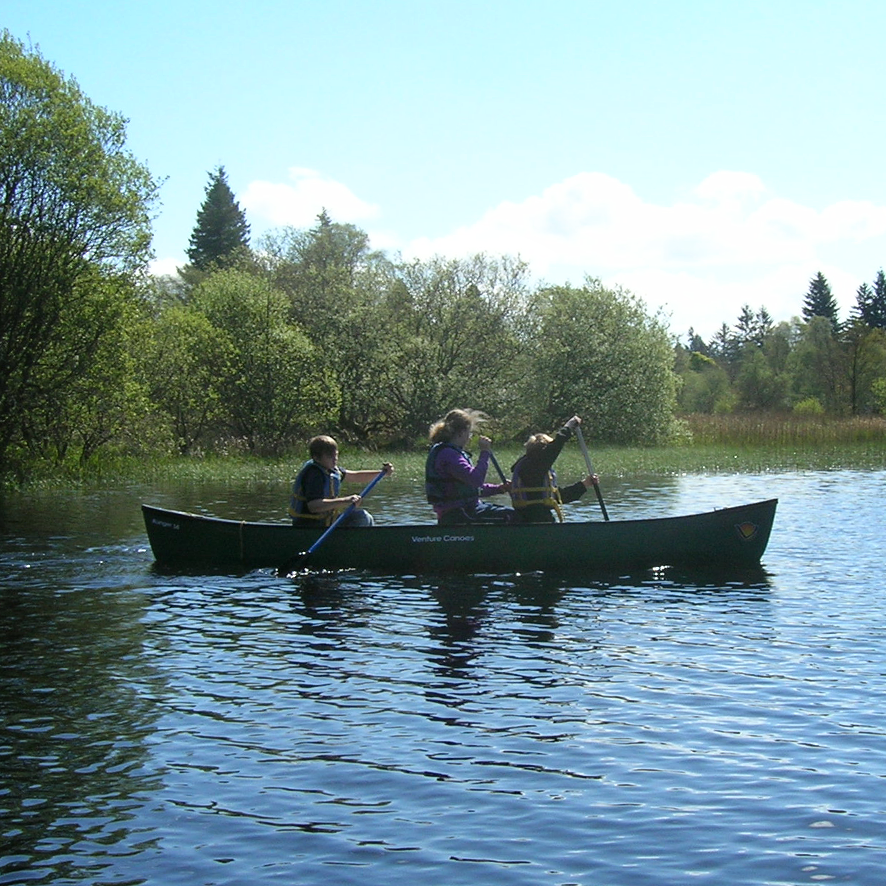
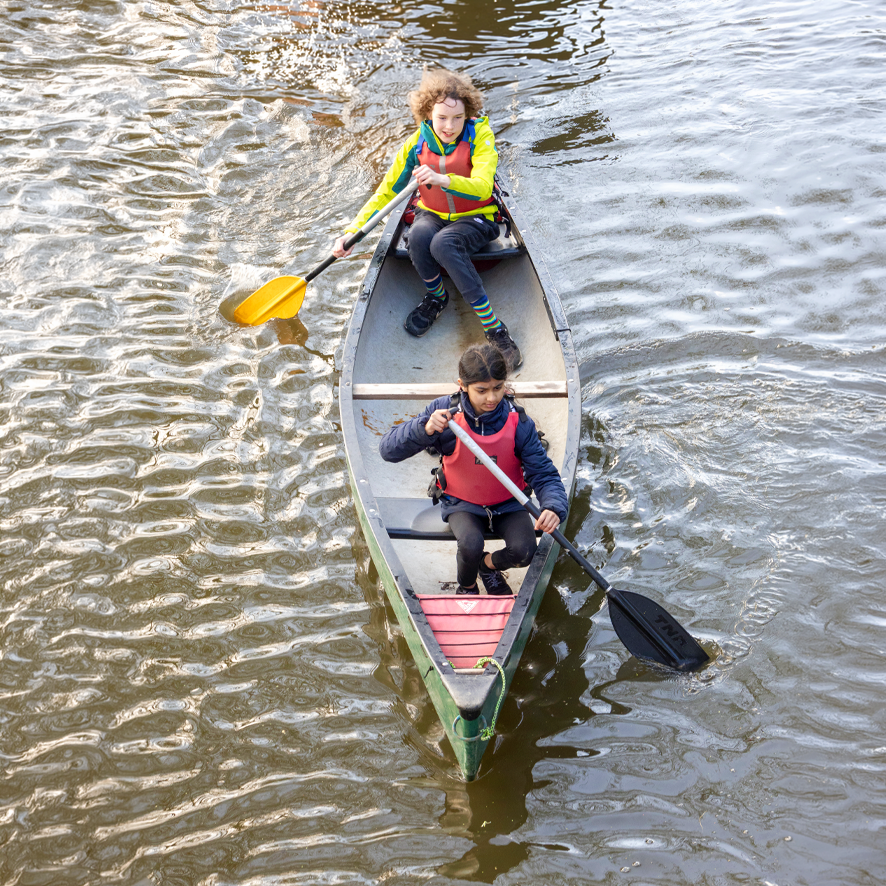
Take to the water in an open canoe with up to two others, learning to steer, paddle in time with one another, and actually reach where you are aiming for. It takes a few minutes of trial and error to click: too much power on one side and you spin, too little and you scarcely move; you just have to figure it out together, stroke by stroke. Once it clicks, though, the boat will glide rather than lurch, and there is a calm, almost meditative quality to moving smoothly across open water, a world away from the slightly chaotic first five minutes.
SELF ■■■□□ OTHERS ■■■■□ ENVIRONMENT ■■■□□
Self:There is real, physical satisfaction in a skill that comes together only through practice and correction, never through instruction alone. Others: A canoe moves smoothly only when everyone aboard paddles in time, so good communication and coordination are essential. Environment: Being out on open water offers a wholly different, quieter vantage point than you ever see from land.

It felt so wobbly and chaotic to start with because we hadn't got a clue, but once we figured out how to paddle the same and in time it was so much fun. — Poppy, age 11

Watching them problem-solve their way out of going in circles, without any help from us, was genuinely satisfying to watch — Youth group leader, Edinburgh

BELMONT ✓ BROOMLEE ✓ DOUNANS ✓

Exploration Walk
Exploration Walk

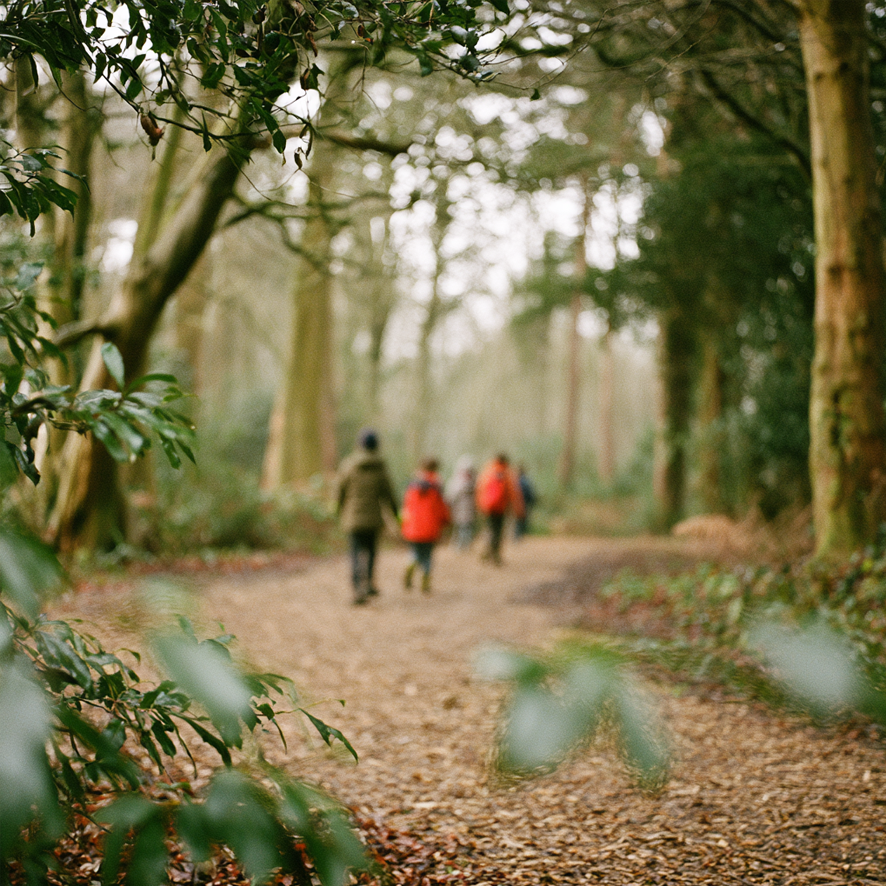
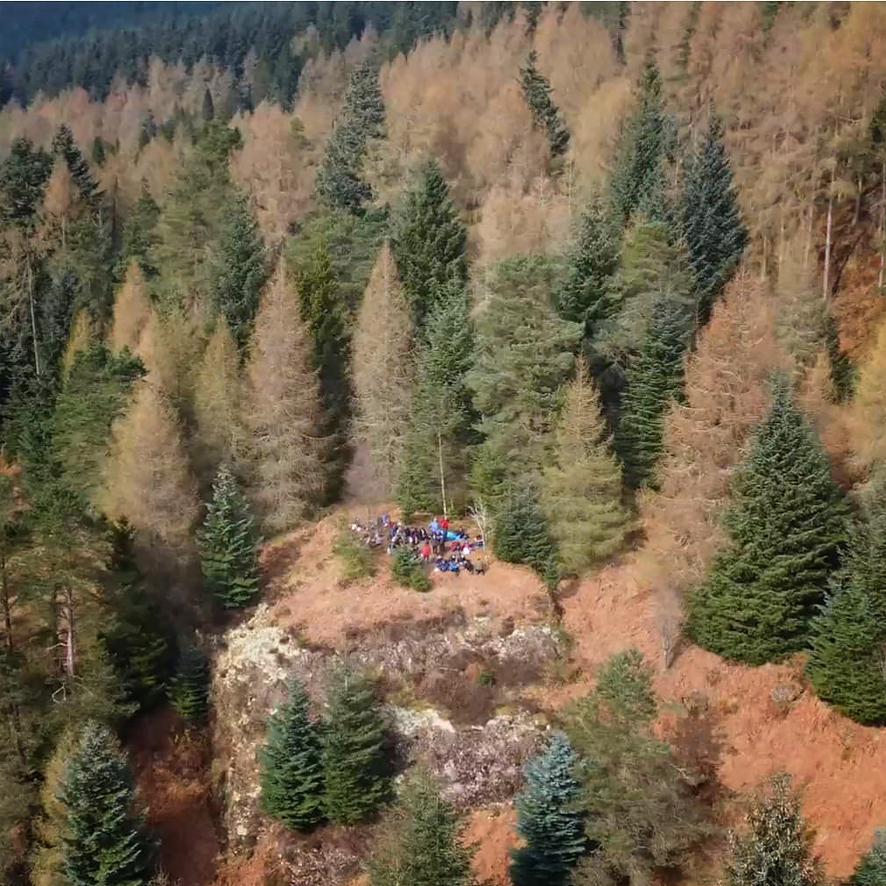
A guided walk through the Centre and nearby surrounds. The route differs from centre to centre, and even from visit to visit, though the spirit stays constant: a relaxed walk with a genuine sense of discovery built into it. A game or two may be woven in along the way, and depending on what you encounter, there may be things to discover about the local wildlife, about geology, about biodiversity, about flood plains, iron-age forts, Roman road, or folklore... every landscape has many stories to tell if we pay close attention. No technical skill is required, only a willingness to notice what surrounds you, and to get a little muddy along the way.
SELF ■■□□□ OTHERS ■■■□□ ENVIRONMENT ■■■■■
Self: A gentle, achievable challenge that nonetheless feels like a genuine adventure, rewarding curiosity above any particular skill or strength. Others: Groups naturally slow and talk more on a walk of this kind, with no set pace to keep up with. Environment: Among the best ways to actually notice a landscape, rather than simply pass through it — you never quite know what you might come across.

The waterfall was one of the most beautiful things I've ever seen, and the Red Squirrel was almost as good — Emily, age 9

It was fantastic to discover and learn so many things along a relatively short walk. I think we will all be paying closer attention to our surroundings in the future.— Class teacher, P6 group

BELMONT ✓ BROOMLEE ✓ DOUNANS ✓

Mountain Biking
Mountain Biking

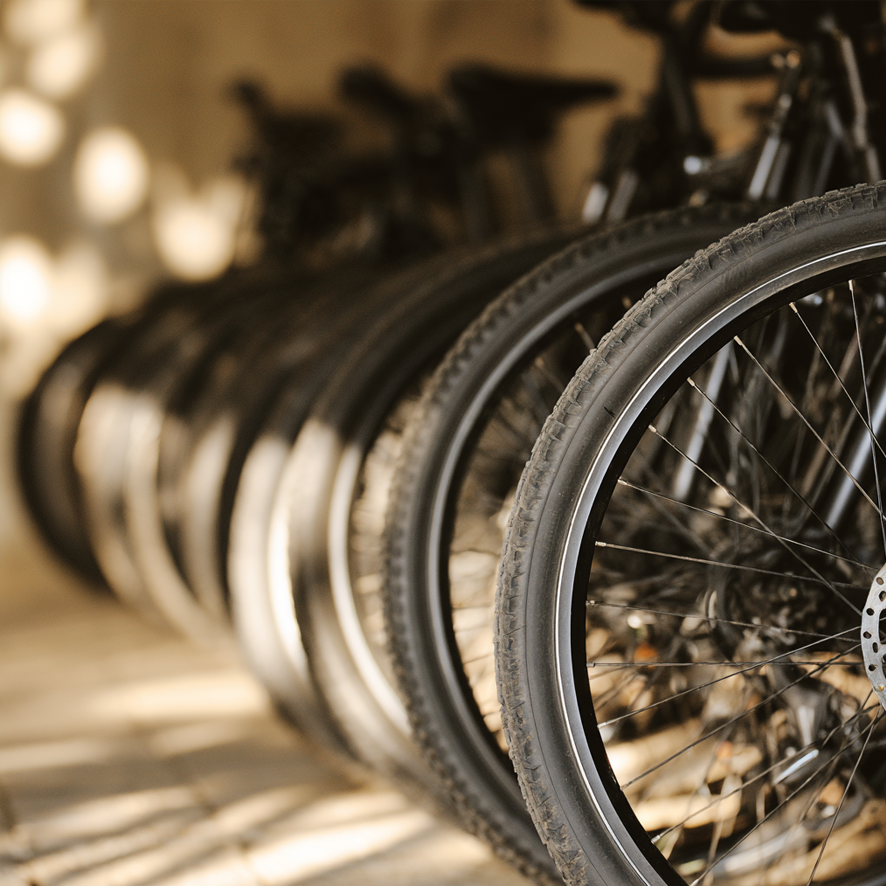
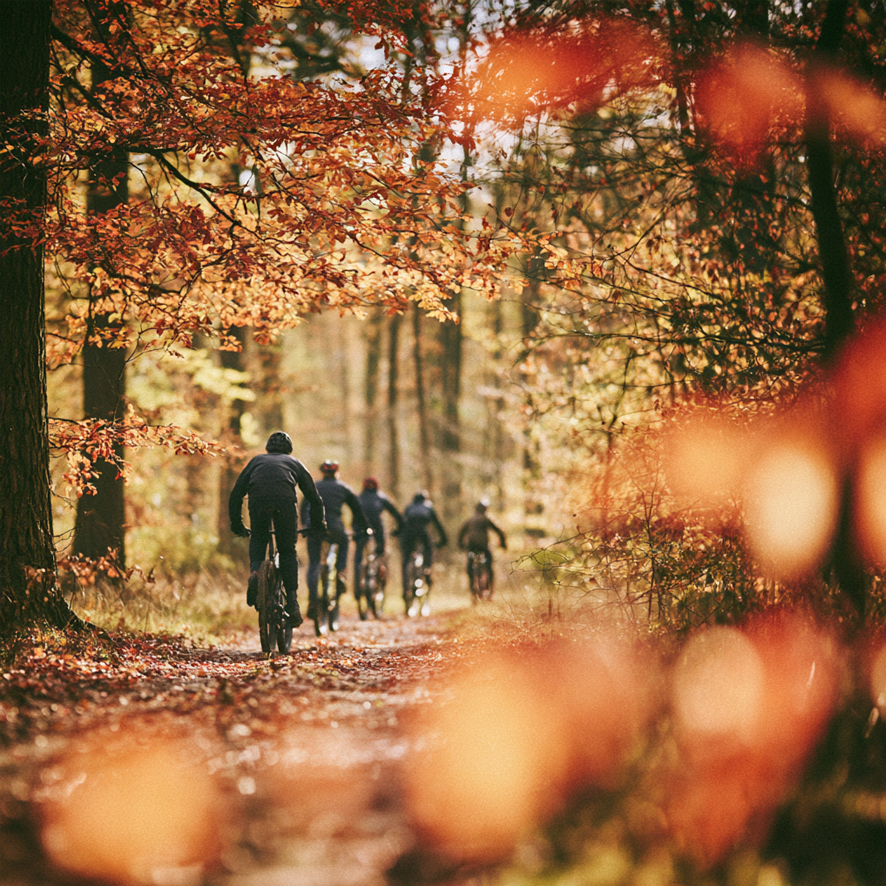
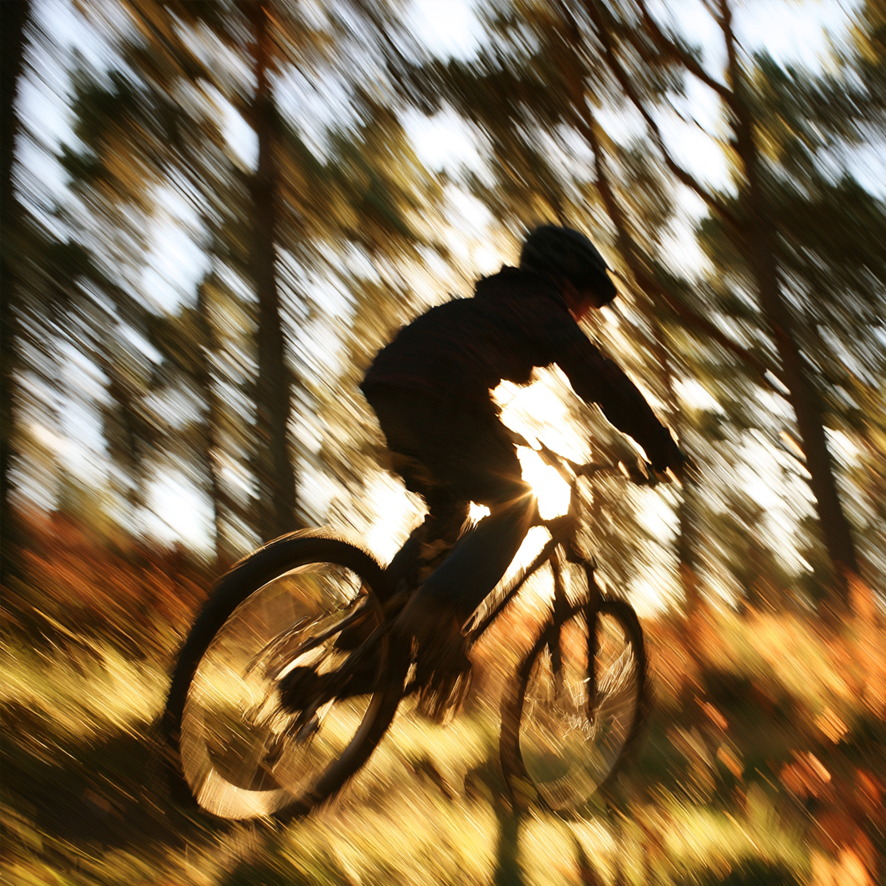
There is a reason mountain biking wins over so many young people so quickly: the trail never stops arriving, and every root, rock and bend asks for a small, immediate decision — where to look, how to shift your weight, when to ease off the brakes. Guided by a qualified instructor, you will start with the essentials of body position, braking and gears before heading out onto trails matched to your group's ability, and before long the section that looked impossible at the start of the session becomes the one everyone wants to ride again. Mountain biking asks something genuinely different of the body than people expect: not raw fitness, but balance, focus, and the nerve to trust your bike and let it roll.
SELF ■■■■■ OTHERS ■■■□□ ENVIRONMENT ■■■■□
Self: Every rider sets their own pace, and progress is easy to feel; a climb you had to walk earlier, or a descent you took with the brakes clamped on, soon becomes one you ride with control — and that sense of mastery stays with you long after the session ends.
Others: Riding as a group means looking out for one another — calling out hazards, regrouping at junctions and encouraging whoever is at the back — so that everyone finishes the trail together, and nobody is left to ride it alone.
Environment: Covering real distance through Scottish woodland and hillside lets you see far more of the landscape than you ever could on foot, and learning to ride responsibly — staying on the trail and respecting other users — shows how a wild place can be enjoyed without being worn away.

"I had to walk down the steep bit the first time, but by the end I rode it without stopping once!" — Pupil, age 10

"A few of them had barely ridden a bike before the week began, and by the last day they were leading the group down the trail." — PLACEHOLDER, class teacher

DOUNANS ✓

Hill Walk

Hill Walk

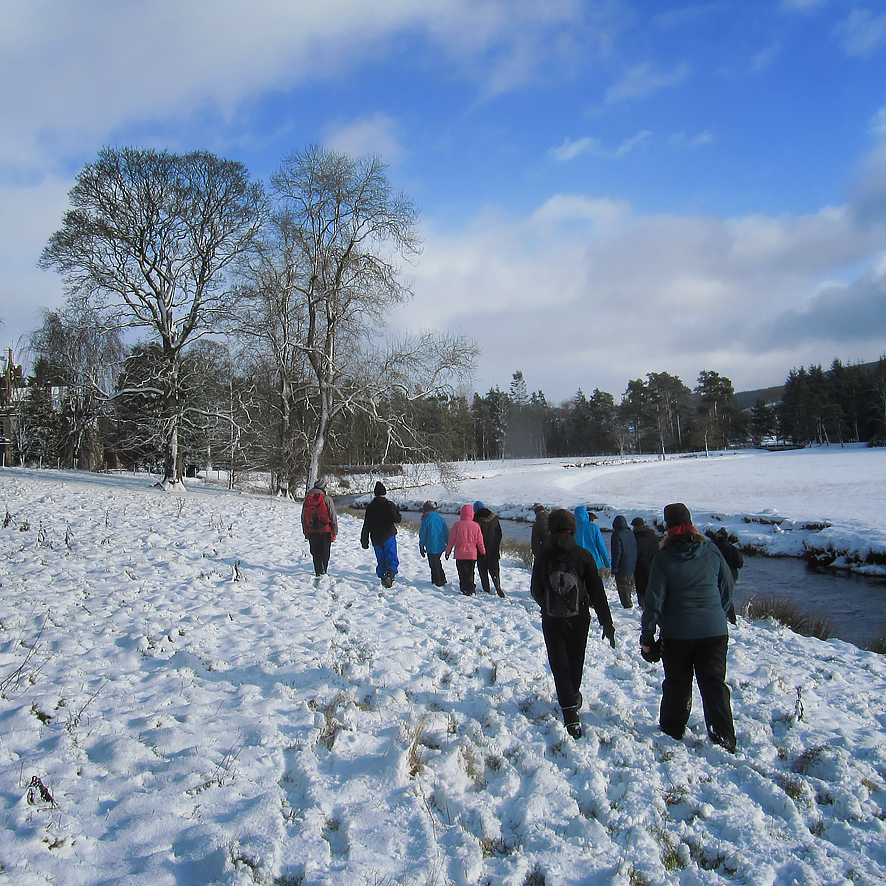
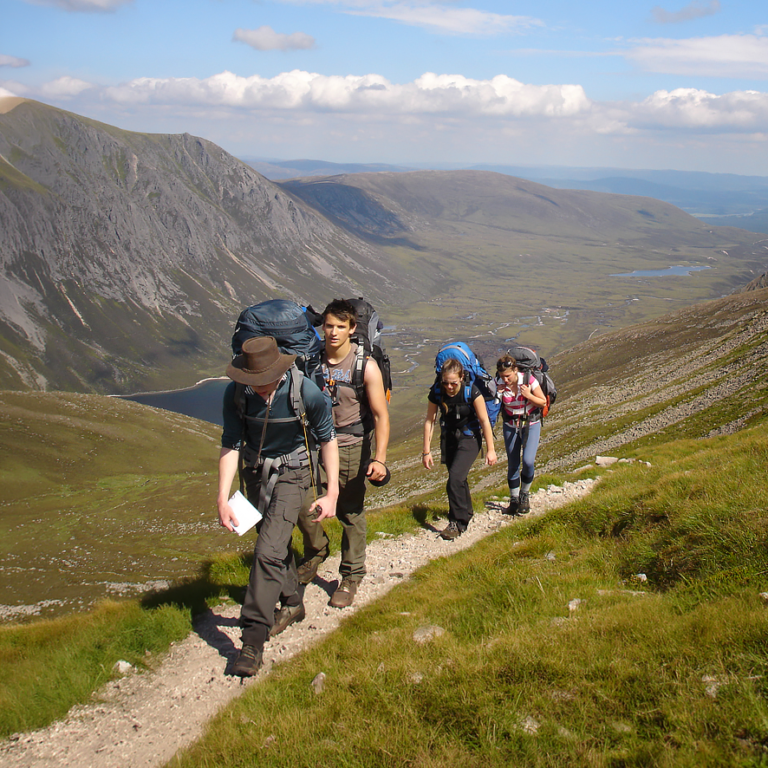
We head out into the local landscape to take on a local hill or ridge, at whatever pace suits the group. Whatever weather the day brings, there is a shared sense of simply getting on with it together. As we traverse the landscape we pay attention to our surroundings for anything interesting we come across, but also to each other, check in to make sure everyone has what they need. Like the exploration walk, we will mostly likely learn a few things about the local geology, wildlife, farming, history, land management etc. Most participants find the middle third the hardest, past the initial burst of energy and not yet within sight of the end — and it is exactly this stretch, walked on legs that are properly tired, that teaches a form of resilience no shorter or more intense activity quite manages to.
SELF ■■■□□ OTHERS ■■■□□ ENVIRONMENT ■■■■■
Self:Covering a somewhat challenging distance and elevation under your own steam, particularly through that tired middle section, tests and builds not just physical stamina, but mental resilience.
Others: Walking together, when it is easy going, gives time to talk with nothing demanding constant attention, which can be excellent for forging friendships in the group; when it gets challenging, whether because of the weather, or someone is struggling or injured, or the map is difficult to follow, then it becomes a team challenge to figure it out and support one another through.
Environment: Hours spent genuinely immersed in a landscape, on foot, whatever the weather decides to do, builds a familiarity with the outdoors that is difficult to come by any other way.

By half way up I really didn't think that my legs would let me go any further, but once we'd had a snack we were taught how to zigzag to make it easier, and then I found a bit more energy and somehow made it. — Thomas, aged 10

We were dreading this one, if I'm honest, but even though some of us found it really tested us, there was such a sense of achievement in getting to the top! It ended up being the thing the kids have talked about most all week. — Class teacher, P7 group

BELMONT ✓ BROOMLEE ✓ DOUNANS ✓

Rock Climbing
Rock Climbing

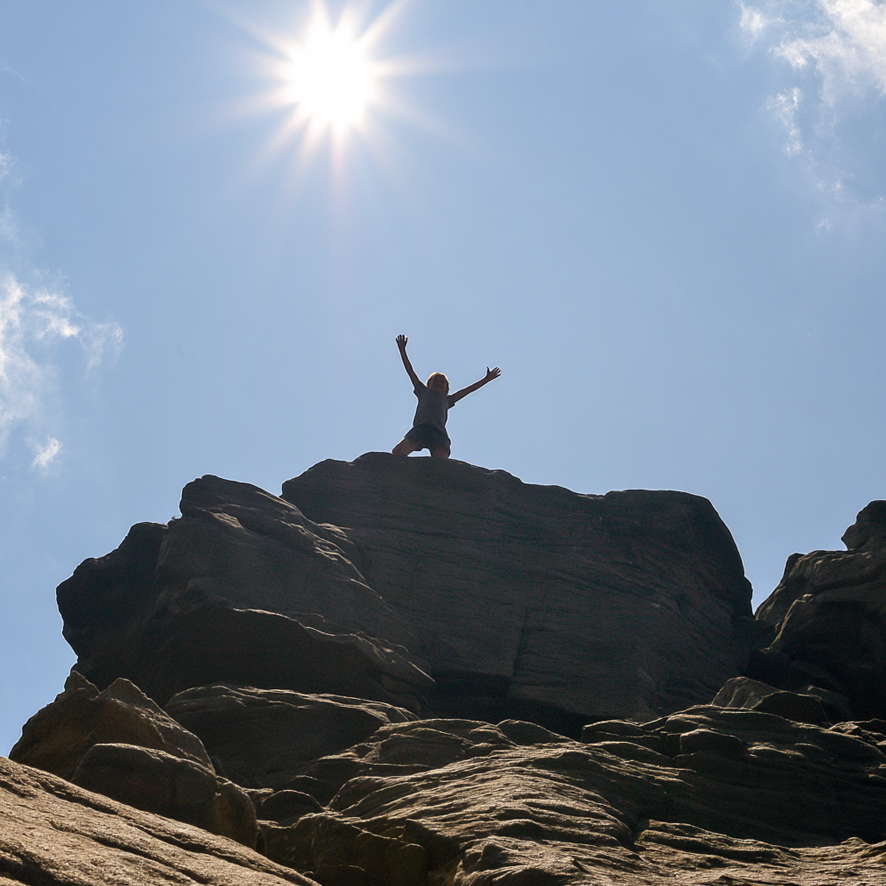
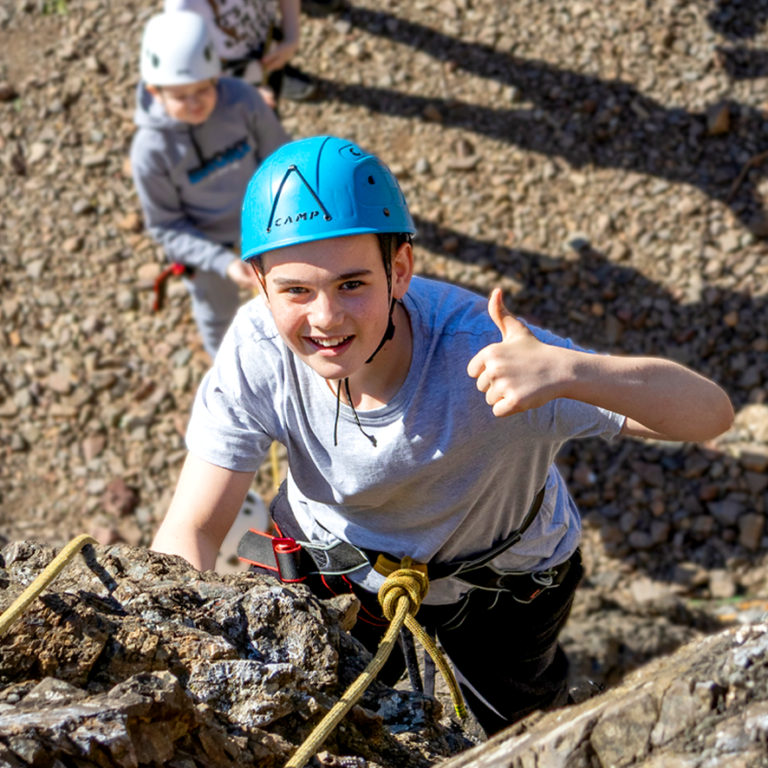
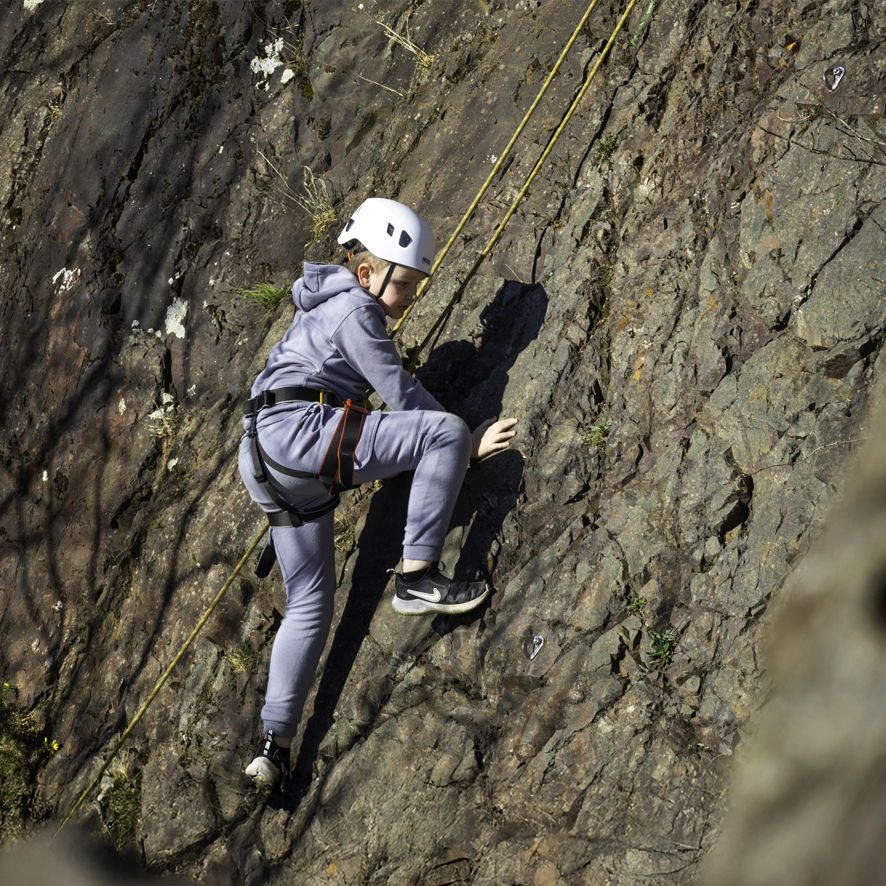
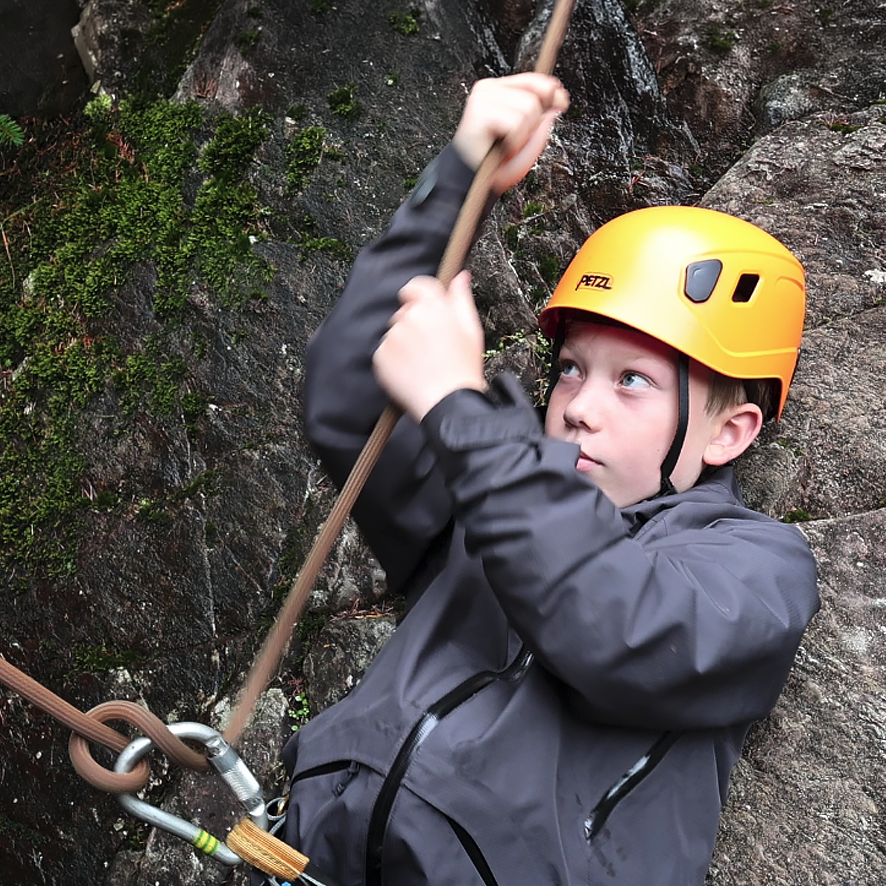
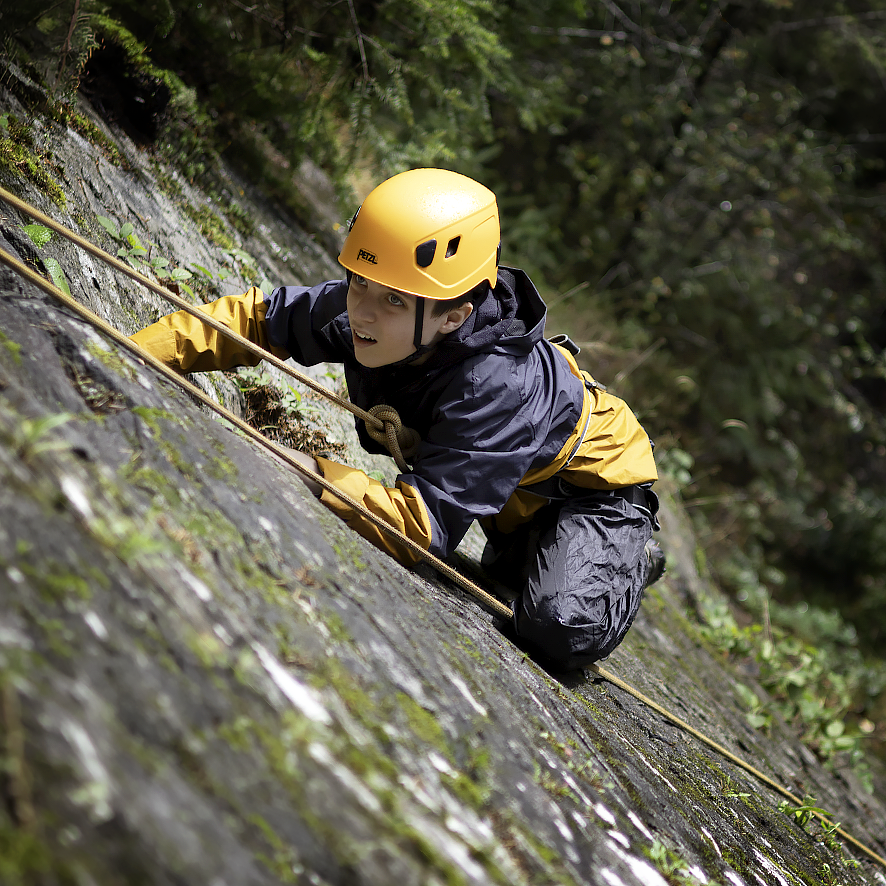
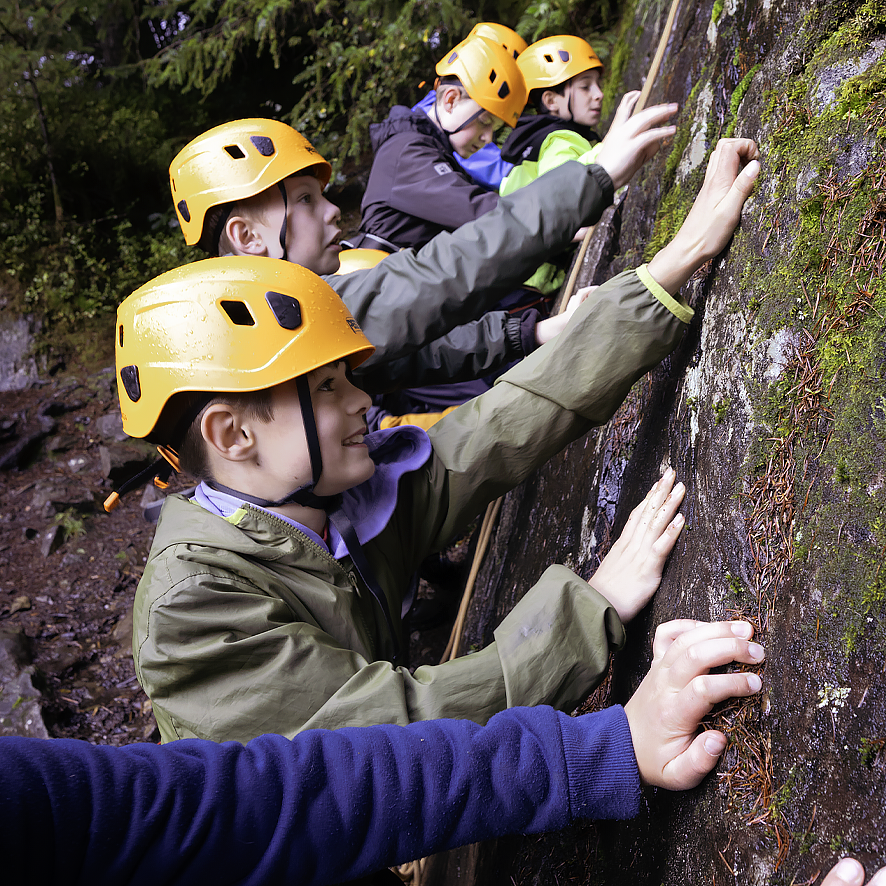
There is a reason climbing sits at the heart of almost every outdoor education programme worldwide: nothing quite replicates the honest, immediate feedback of hanging by your own hands and feet on real rock, working out your next move. At a real crag off-site, guided by a qualified tutor through routes matched to your ability, you will spend time wholly absorbed — reading the rock, testing a hold, committing to a move — and come down having done something that felt, for a few minutes, entirely beyond what you believed yourself capable of. Climbing asks something genuinely different of the body than most activities: not raw strength, but precision, balance, and the confidence to trust a foothold you cannot fully see.
SELF ■■■■■ OTHERS ■■□□□ ENVIRONMENT ■■■□□
Self: How far you climb, and how demanding a route you attempt, is entirely your own decision; like with archery, you will find yourself quickly picking up little skills that help you improve noticeably by the end of the session.
Others: Belaying — holding the rope for someone else's climb — is as much a part of the experience as climbing itself, and it teaches a very particular kind of trust: someone else's safety is, quite literally, in your hand, as will yours be in theirs in due course.
Environment: Climbing on real rock, in a real Scottish landscape, connects the physical challenge directly to the place in which it is happening — and rock faces will most likely be looked upon with just a bit more awe than before each time you see one.

My legs were shaking so much at the start, but I was so much more confident on my second attempt. — Callum, age 11

"Watching her choose her own route up, not just follow instructions, said everything about how far she'd come that week." — Class teacher, P7 group

BELMONT ✓ BROOMLEE ✓ DOUNANS ✓

Evening Activities...

Residential groups can choose from the following evening activities, typically run at a ratio of one tutor to thirty-six participants or fewer — for smaller groups, that means the whole group coming together as one. Although not required, group leaders quite often choose to join in as participants in these activities rather than just supervising from the sidelines.

Bridge Build
Bridge Build

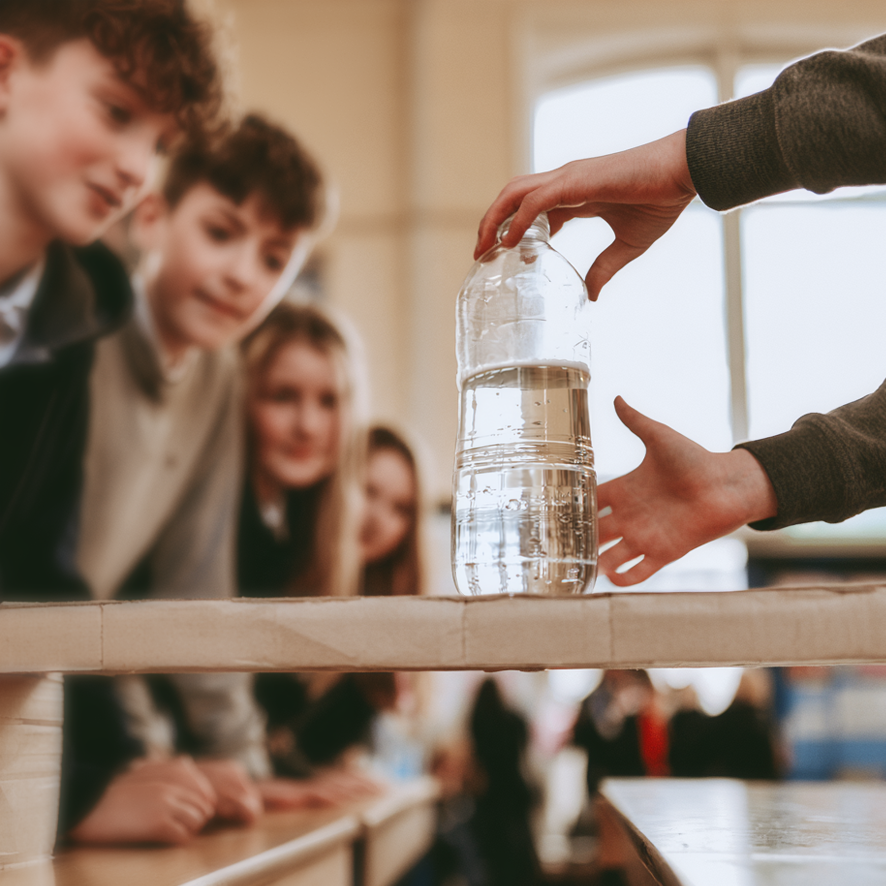
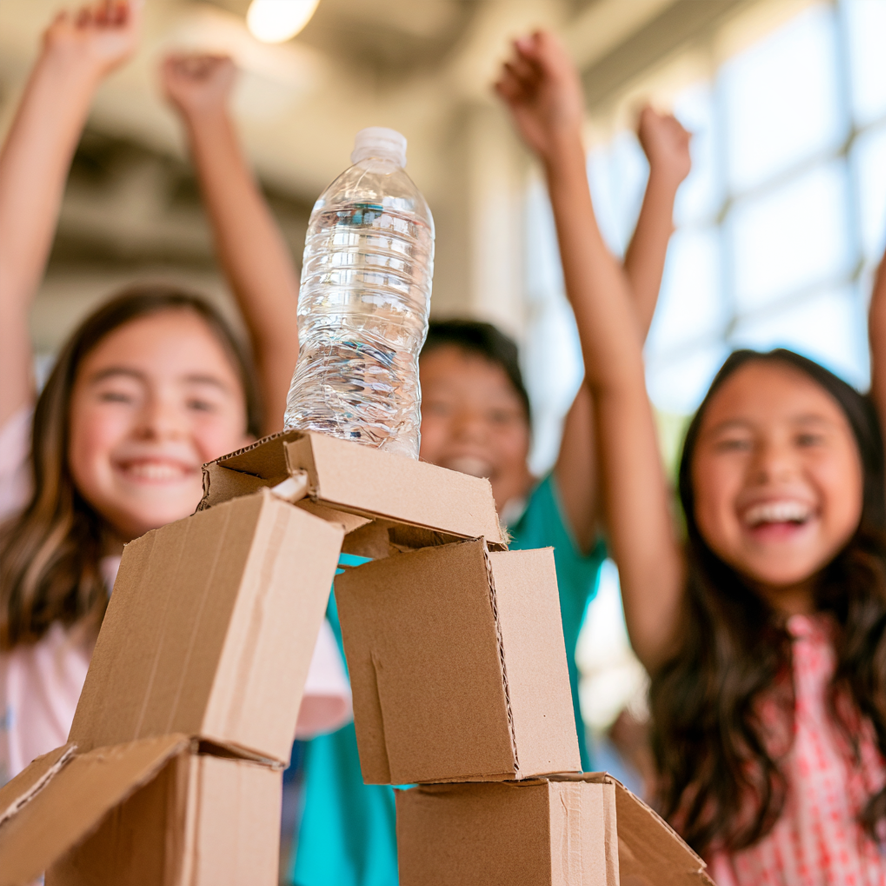
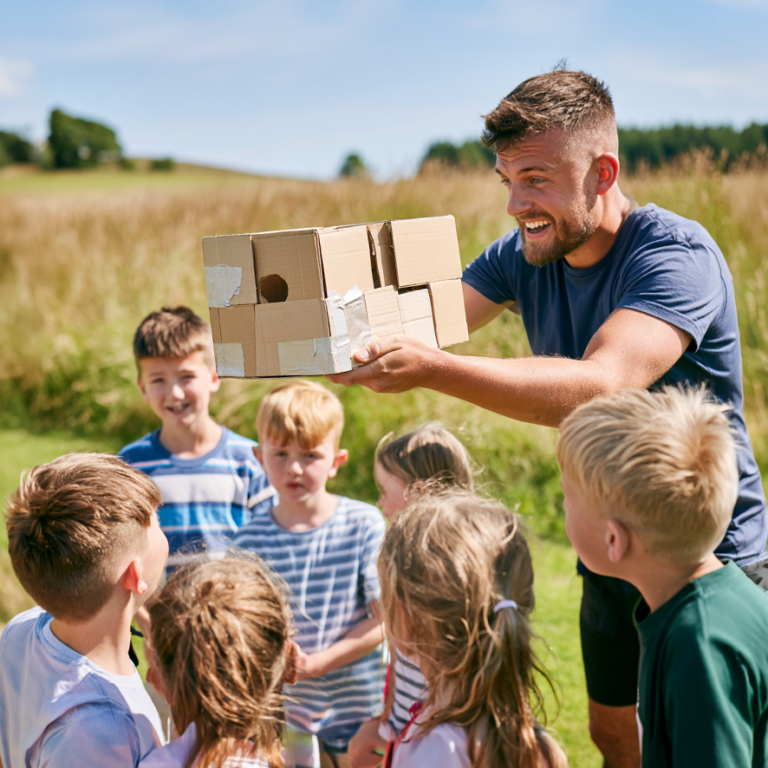
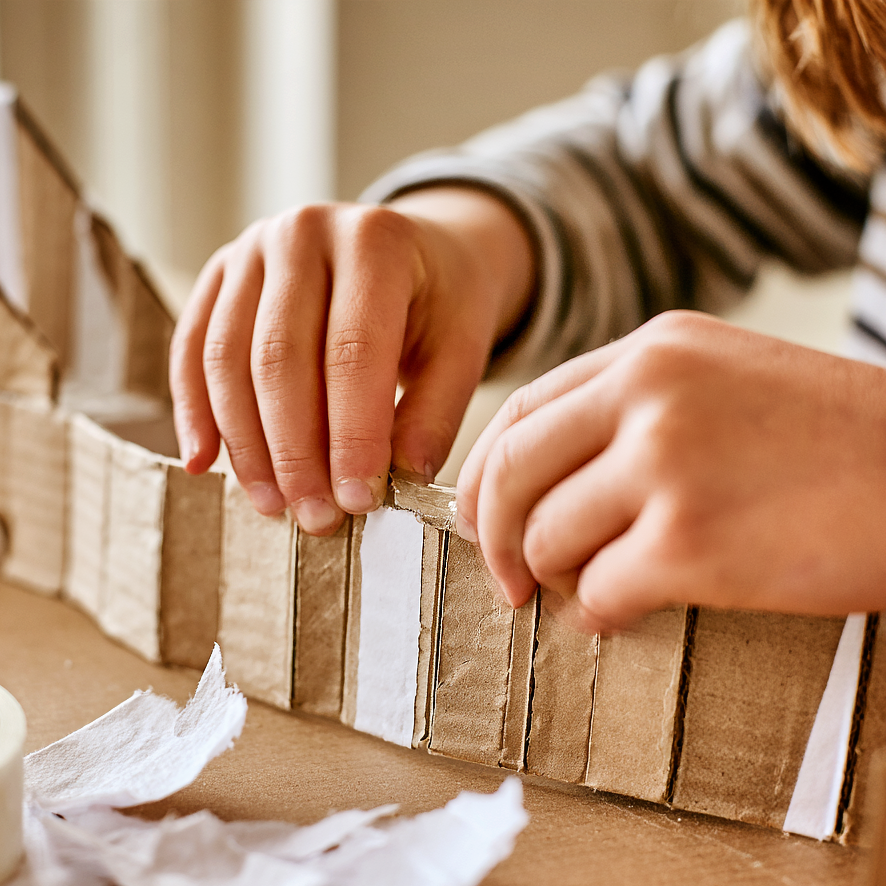
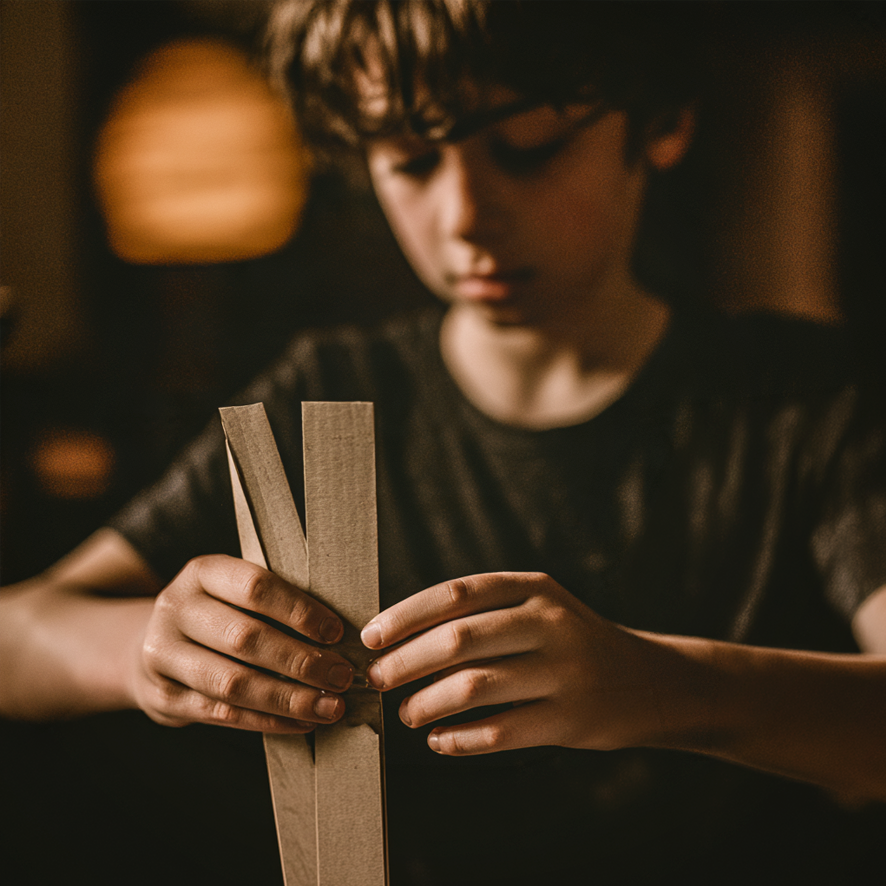
Teams first compete in a quiz, or a run of challenges, earning points they then spend "purchasing" the materials for their bridge; so the finished design ends up shaped as much by what was chosen to spend on as by who the builders are. Working in teams, you design and construct a bridge across a gap of around 30cm between two tabletops, ideally strong enough to bear a large bottle of water without giving way. Part economics, part engineering, part good-natured chaos. Teams are given time to plan, test, and rebuild before the moment of truth arrives — the bottle goes on, and the bridge either holds or it does not.
SELF ■■□□□ OTHERS ■■■■■ ENVIRONMENT ■□□□□
Self: There is a real thrill in watching an idea you contributed actually bear weight.
Others: This only succeeds through genuine collaboration.
Environment: Not applicable as this is an indoor challenge.

Our bridge collapsed twice before it finally held. We didn't win but I was proud of our effort.

Some of the best engineering came from the team with the fewest points to spend. — Class teacher, S1 group

BELMONT ✓ BROOMLEE ✓ DOUNANS ✓

Campfire
Campfire

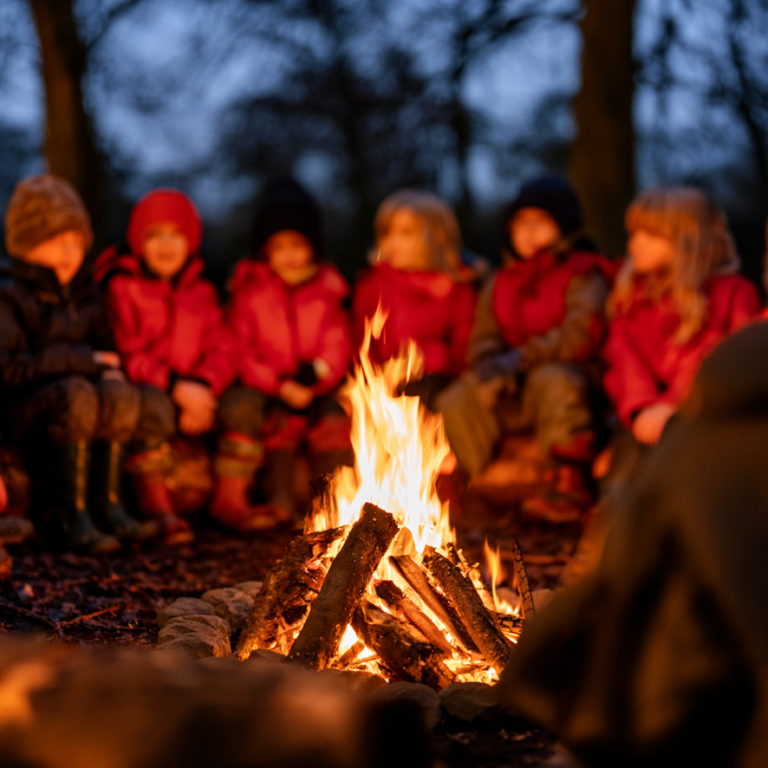
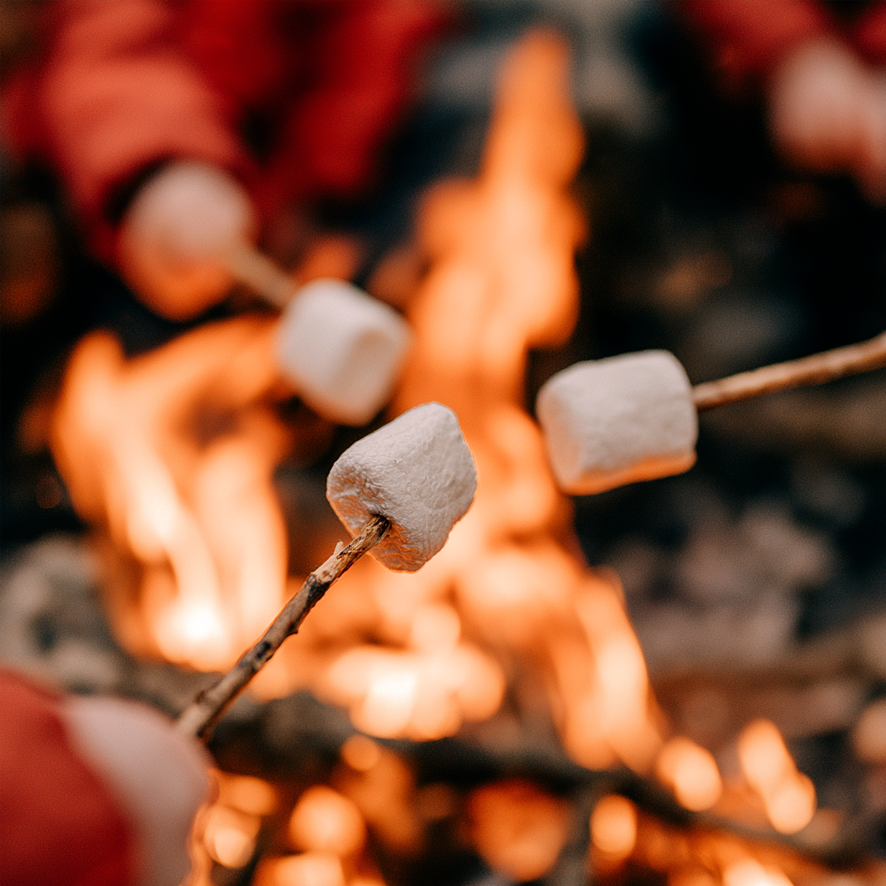
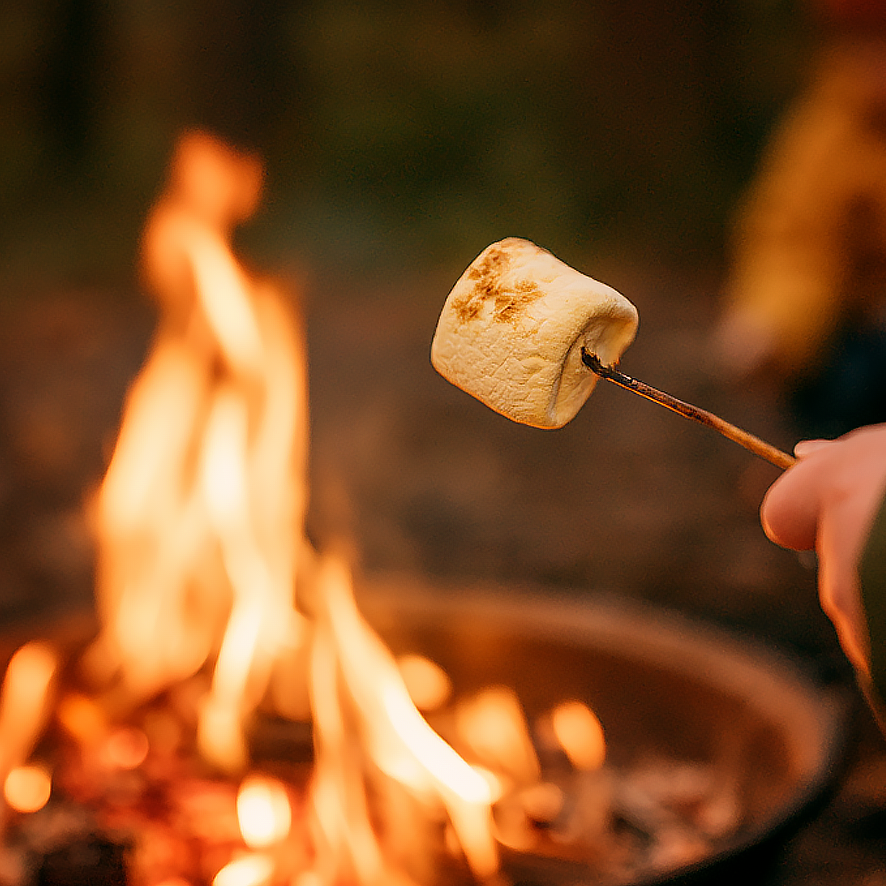
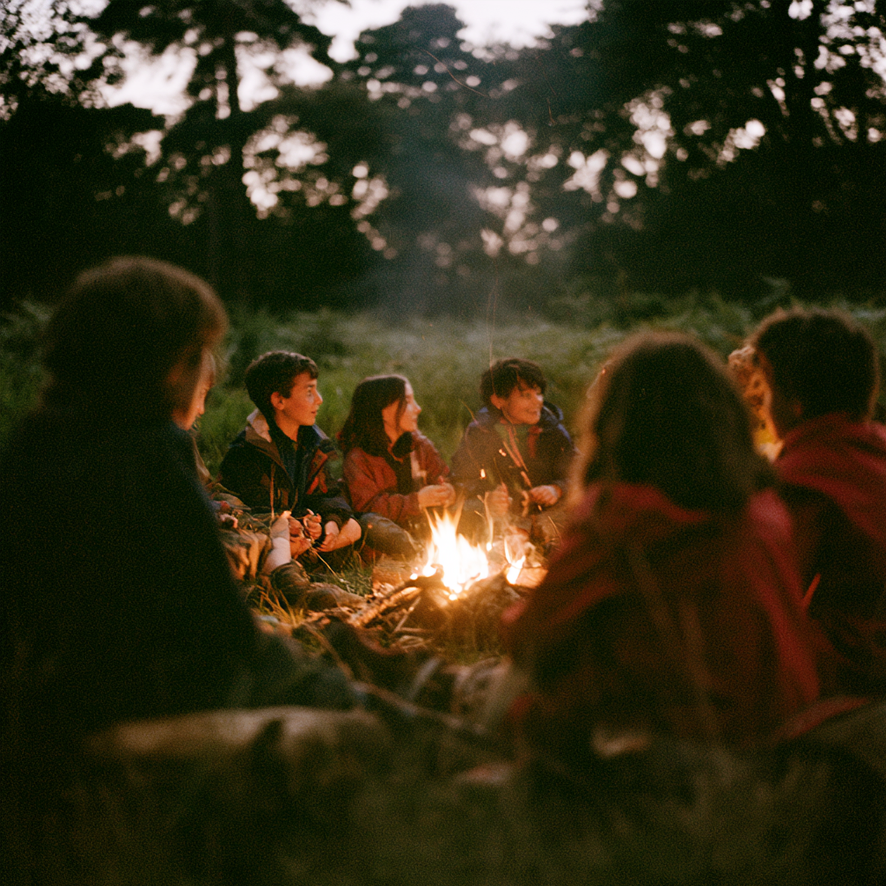
Sitting round a fire after dark is one of the oldest, most universal things people do together — long before campfires had marshmallows to toast, they had stories to tell, and something about firelight still draws conversation the way it always has: away from the practical and everyday, toward storytelling, imagination, and the kind of talk that comes less easily in daylight or indoors. What actually fills the evening changes from group to group and tutor to tutor — songs and music, games, storytelling, terrible jokes, even an impromptu talent show — there is no fixed programme, only a slower, warmer close to the day that looks a little different each time. Quite why sitting round a fire loosens people up the way it does, nobody entirely knows, but a single evening round the SOEC fire — with marshmallows and hot chocolate, if arranged in advance — is usually enough to see it happen.
SELF ■□□□□ OTHERS ■■■■■ ENVIRONMENT ■■□□□
Self: Campfire often challenges each of us to step out of our comfort zone a little in order to share a story, a joke, a song, a talent, etc.
Others: Campfire almost always becomes one of the core memories of a residential. Sometimes it is a serious occasion where deep reflection and thoughtful conversation goes on; sometimes there is a lot of laughter, singing or silliness. Sometimes all the above. But always it is a good bonding experience.
Environment: Sitting around a fire outside after dark is something generation after generation for thousands of years have done. Following in these footsteps draws out some different kinds of connection to the landscape.

I don't know what was better, my teacher's impression of an chicken or the fact I got 3 marshmallows. It doesn't matter since I got to enjoy both! — Emma, age 12

Campfire was when the real conversations happened; I knew the residential had been impactful for them all, but to hear them all sharing what they had learnt and praising each other for their achievements was really special. — Class teacher, P7 group

BELMONT ✓ BROOMLEE ✓ DOUNANS ✓

Egg Challenge
Egg Challenge

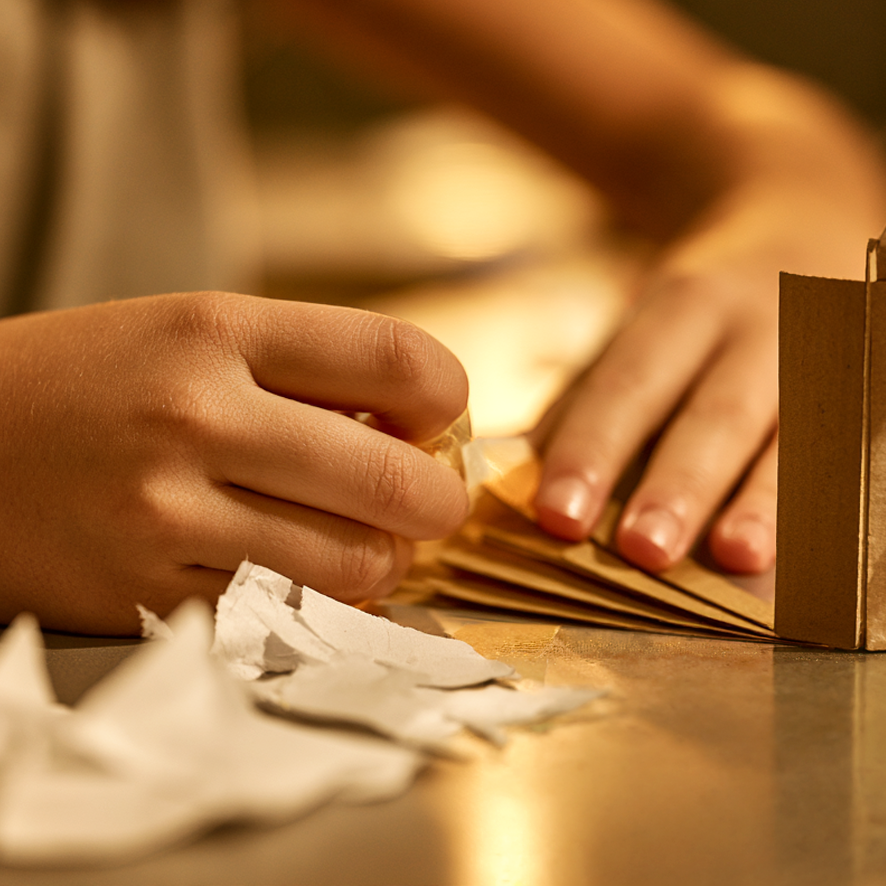
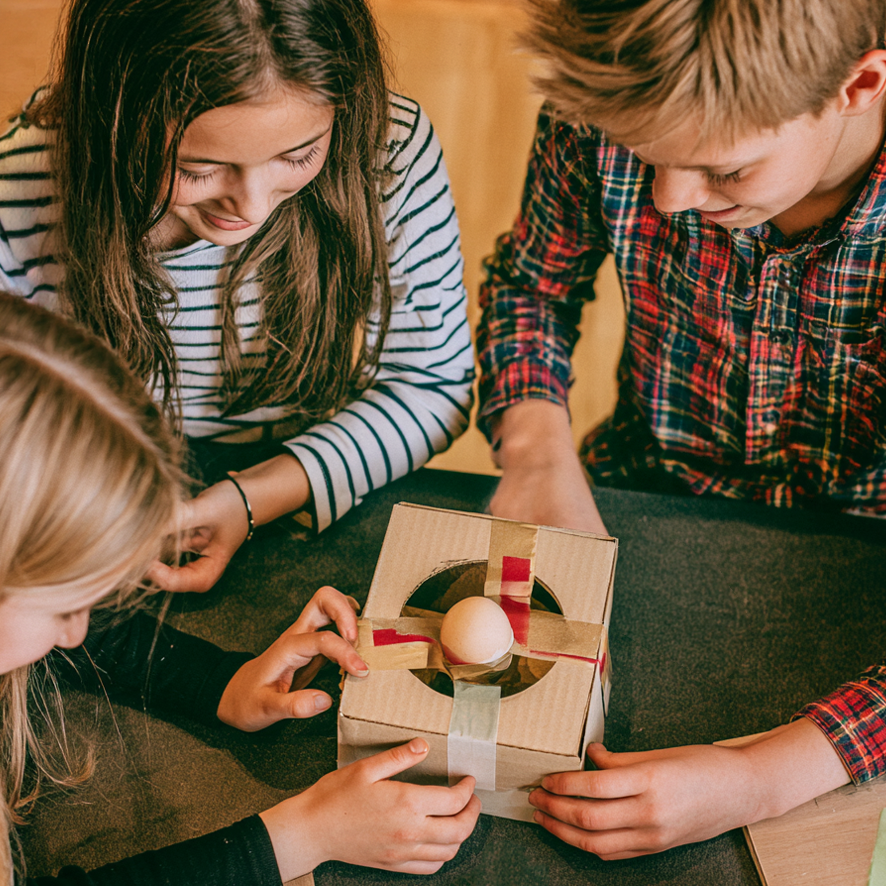
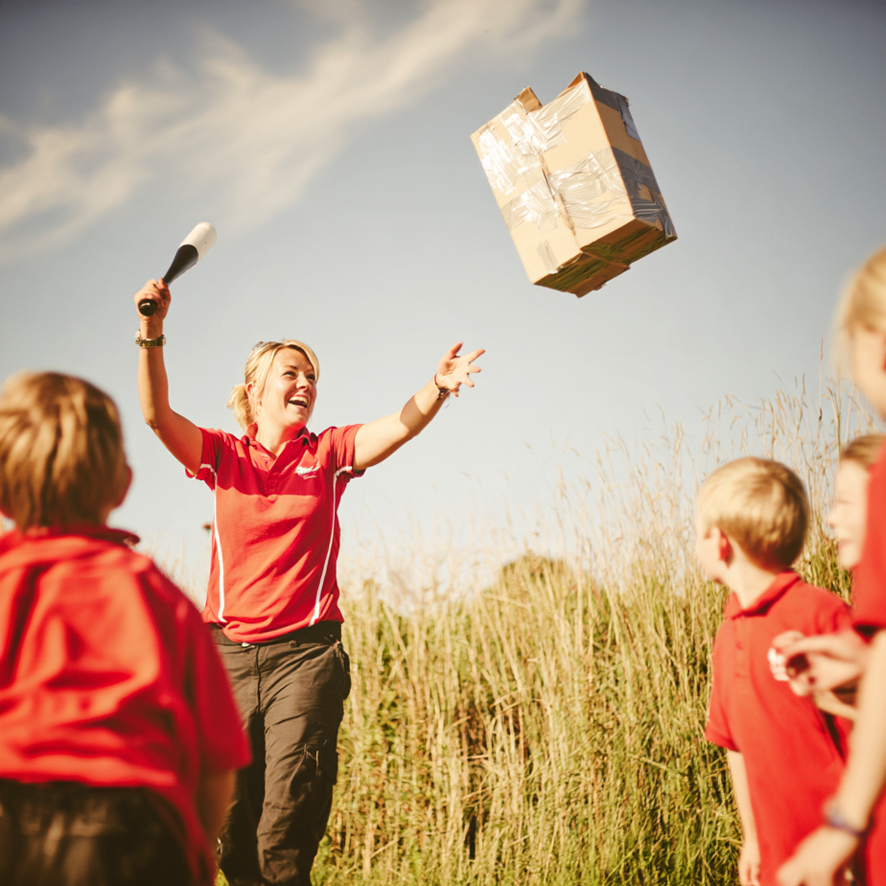
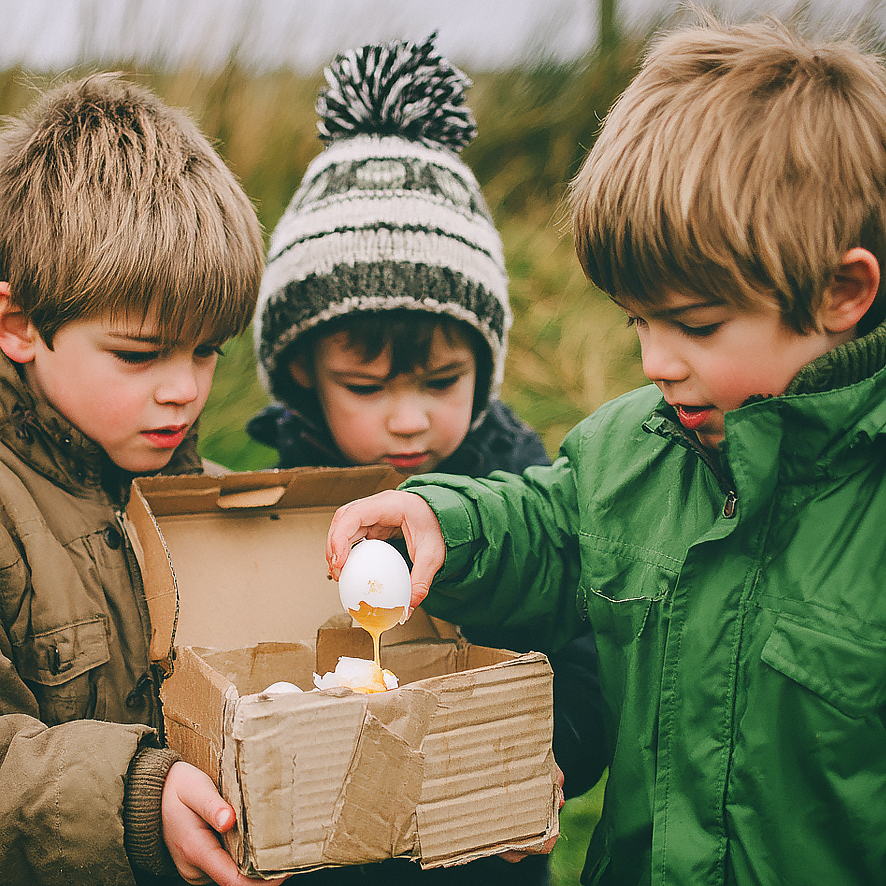
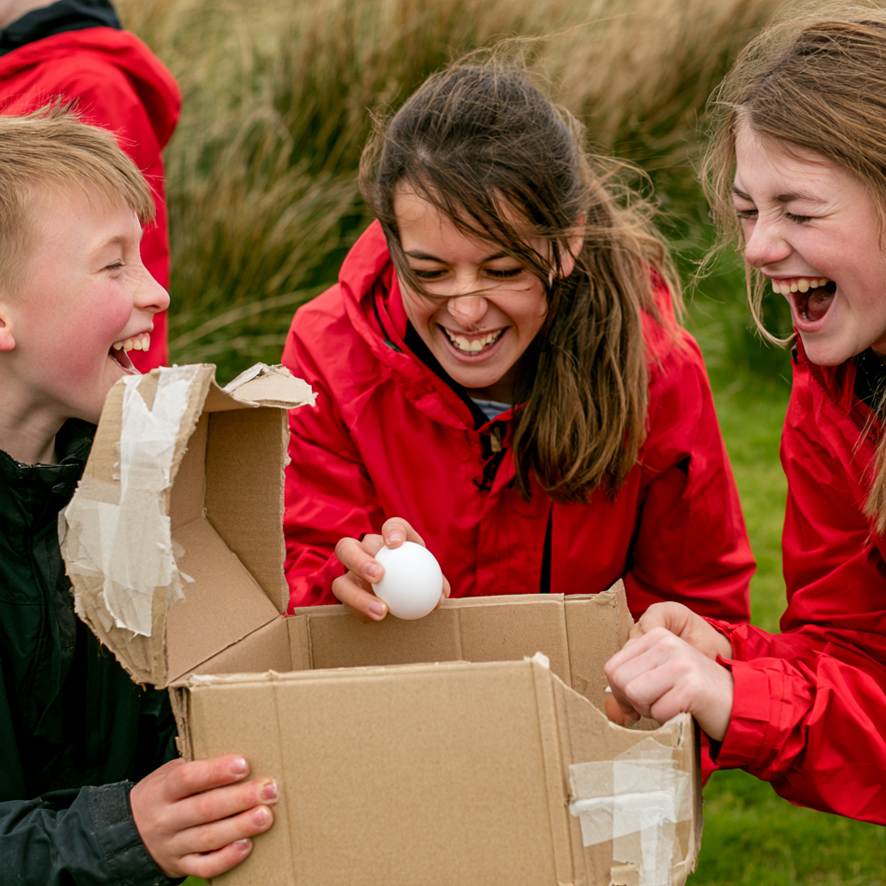
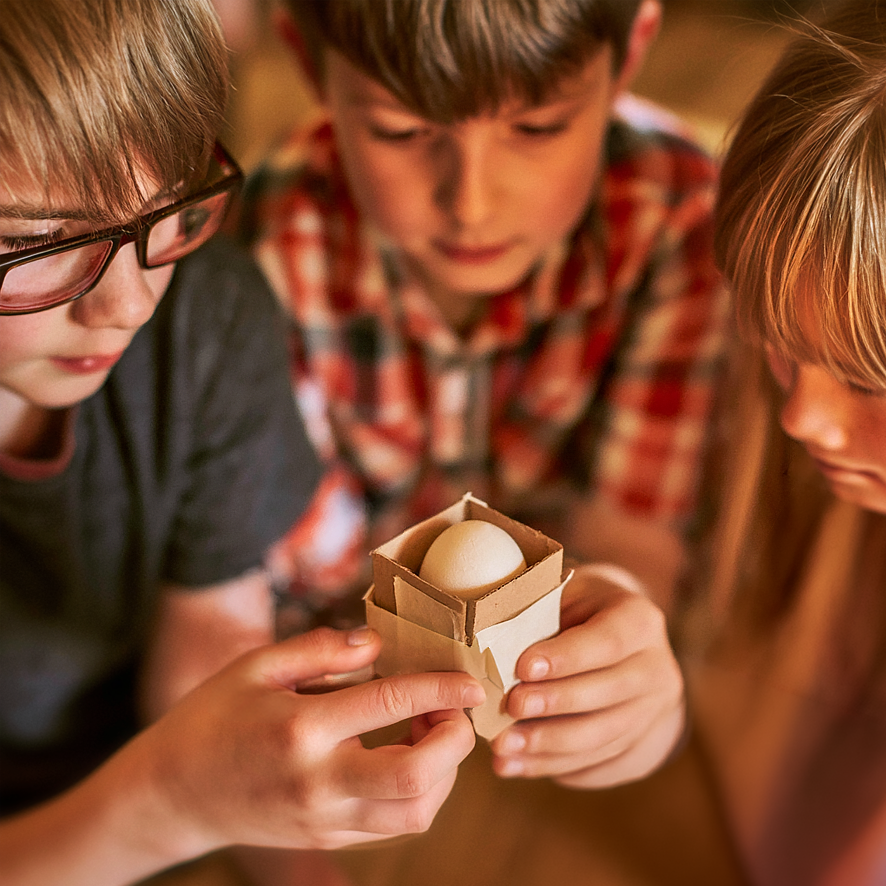
In teams, you compete to earn materials from which you will then design and build a container / contraption to protect a raw egg, which will be dropped and/or struck with a bat. It is a game of trial and error, and at the end there can only be one winner...
SELF ■■□□□ OTHERS ■■■■■ ENVIRONMENT ■□□□□
Self: There is a surprising amount of satisfaction in an idea — yours or the group's — actually holding up once it is tested.
Others: Success depends on the team reaching agreement on a lot of different things: answers in a quiz, ideas for what and how to build, and actually approaching and seeing that build through.
Environment: Not really applicable here — this one is indoors-or-out, materials-based fun.

Our egg survived the drop and then broke when someone stepped on it by accident — Sam, age 10

It's chaos, but the good kind — by the end the whole hall was cheering for an egg called Colin — Class teacher, S1 group

BELMONT ✓ BROOMLEE ✓ DOUNANS ✓

Giant Snakes & Ladders
Giant Snakes & Ladders

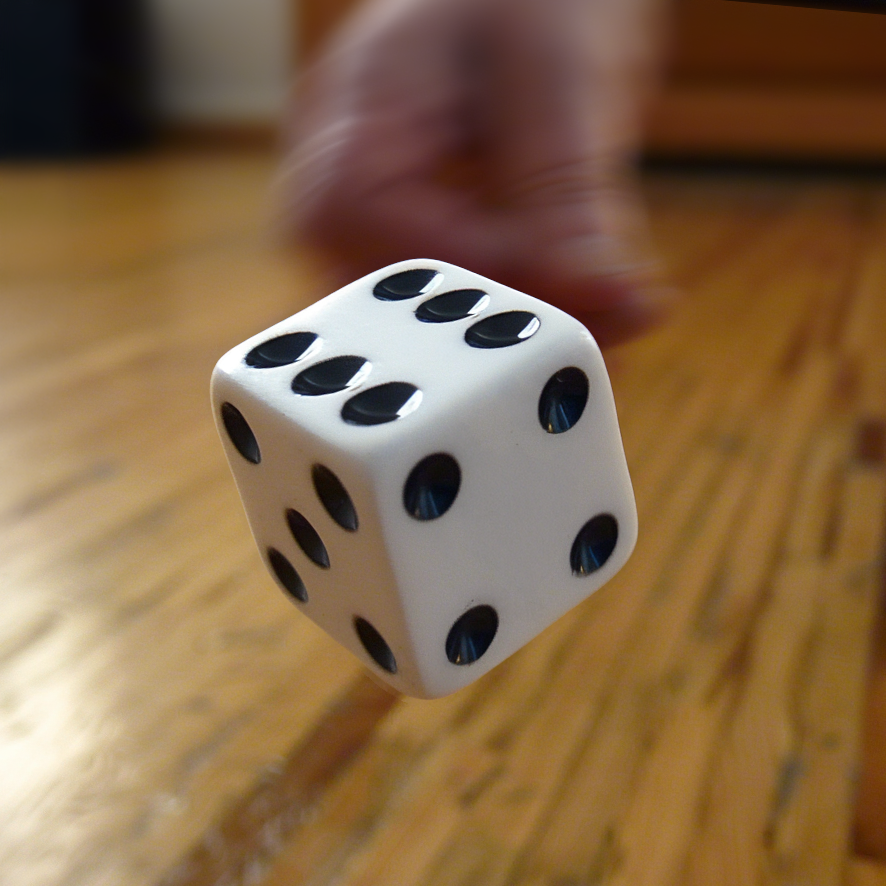
Our giant, almost life-size version of the classic board game, is a little different: with every one of the hundred squares on the board linked to a question or challenge that must be completed before you can move again, unlike the traditional game, no team has to wait for their second turn! The instant your first challenge is finished, you roll and press straight on, up or down the board as the dice, the snakes and the ladders decide; it's a race to the finish, with the whole board in motion at once. Questions and challenges range from the topical to the ridiculous, including testing a bit of recall about the week's activities, the site itself, and Scottish wildlife and landscapes, so wit, skill and determination matter just as much as the luck on this board.
SELF ■□□□□ OTHERS ■■■■■ ENVIRONMENT ■■□□□
Self: This game requires a bit of everything - physical speed, mental speed, skill and ingenuity; there is a chance for everyone to shine in one way or another.
Others: Teams must pool what different people know between them, and simple, silly competition proves a great leveller regardless of how anyone fared in the day's more physical pursuits.
Environment: Played outdoors around the grounds, it sends you looking rather more closely at what is actually around you.

We landed on a snake three times in a row and somehow still won — Ruby, age 10

It was all go and the kids absolutely loved this activity! — Youth group leader, Falkirk

BELMONT ✓ BROOMLEE ✓ DOUNANS ✓

Highland Games

Highland Games

A joyfully chaotic evening of games inspired by traditional Highland Games — Tug of War, a scaled-down Caber Toss, Welly Wanging, Wacky Relay Races, Capture the Flag, and more, the exact mix depending on the group and the evening. No skill is required, only team spirit, and a willingness to get stuck in and have fun. There is a reason games of this kind have endured for centuries in one form or another: they are simple enough for anyone to join immediately, and challenging enough that everyone finds them a little tricky. This is the most unapologetically silly set of activities on our list, and often, perhaps for that reason, among the most comical and memorable; the shared, physical absurdity accomplishes something for group spirit that a more serious activity simply cannot.
SELF ■□□□□ OTHERS ■■■■■ ENVIRONMENT ■■□□□
Self: Whilst these games are a test of strength, speed, technique and finesse, they are perhaps more of a test of your readiness to look a bit daft and give it a go anyway!
Others: Team events such as tug of war succeed only when everyone pulls together, quite literally, and that physical effort builds a fast, unmistakable kind of camaraderie.
Environment: Played outdoors on the grass in the evening light, it is a properly Scottish way to close the day, linking us to ancient traditions from far and wide across Scotland.

I've never laughed so hard as when our whole team fell over in the tug of war — Mia, age 12

Even the shyest kids in the group were right in the thick of it — nobody wanted to miss out. — Class teacher, P6 group

BELMONT ✓ BROOMLEE ✓ DOUNANS ✓

Night Walk

Night Walk

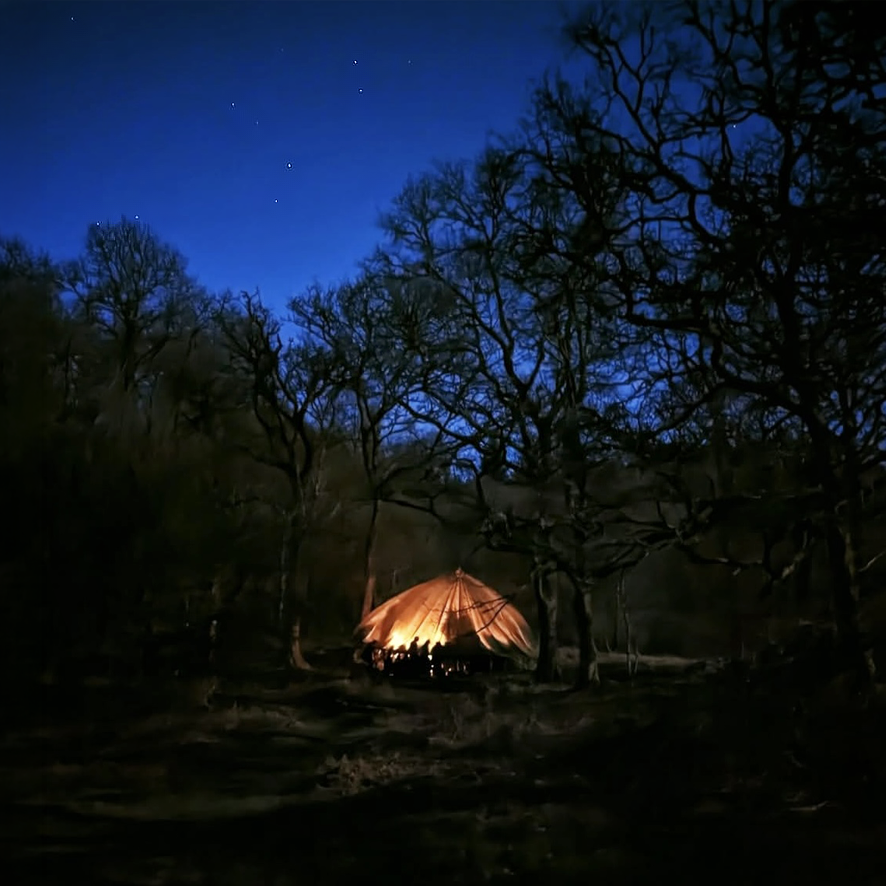
A Night Walk feels very different depending on the season. In winter, darkness falls early and completely, and there is a real thrill in exploring the woods and navigating the terrain in the dark; a quiet group with sharp ears might spot bats overhead, or even an owl calling somewhere close. On a clear night a full canopy of stars can be taken in. In summer, an early evening walk often means golden light filtering low through the trees rather than darkness at all; other wildlife might be glimpsed such as roe deer, stoats or buzzards. Either way, our night walks tend to be an unhurried stroll which allows everyone a chance to experience and interact with the natural environment in a different kind of way.
SELF ■■□□□ OTHERS ■■■□□ ENVIRONMENT ■■■■■
Self: Exploring after dark can be a gentle test of nerve, without any real physical risk.
Others: Without full light people naturally begin looking out for one another.
Environment: Familiar paths are in every meaningful way, different places to what is walked through during the day. It is a different way to experience the landscape.

I saw more stars that I've ever seen in my whole life before and we even recognised some of the constellations. — Ben, age 9

We saw a deer leaping across a field, which we all thought was awesome. — Class teacher, P5 group

BELMONT ✓ BROOMLEE ✓ DOUNANS ✓

Quiz Night

Quiz Night

Teams go head to head over a series of trivia question rounds, competing for the top spot on the leaderboard by the end of the night. We have some pre-prepared rounds, but sometimes groups bring their own quiz or request themes to be included. It is a relaxed way to wind down after a day of physical activity — no harnesses, no mud, just teams putting their heads together to see who remembers of can make a good guess at the answers.
SELF ■□□□□ OTHERS ■■■■■ ENVIRONMENT ■□□□□
Self: Low-key and low-pressure — there is real, if gentle, satisfaction in playing your part to help the team.
Others: A genuinely social, easy way to bond, whether within your own group or through a friendly bit of rivalry between teams.
Environment: Mostly not applicable — this is a downtime, indoors activity; though we do have environment/nature based questions which draw on the experiences a group has had on programme.

Watching my teachers get competitive over pop music trivia was hilarious! — Ivy, age 12

It was a lovely low key indoor activity which was just what we all needed after a full day outdoors. — Class teacher, P7 group

BELMONT ✓ BROOMLEE ✓ DOUNANS ✓

Help us deliver life changing programmes to young people for whom outdoor education is currently out of reach.